Multi-Robot Fleet Secures 2.4 km² Industrial Park Perimeter 24/7
38 Guards, Inconsistent Coverage, and Rising Security Labor Costs
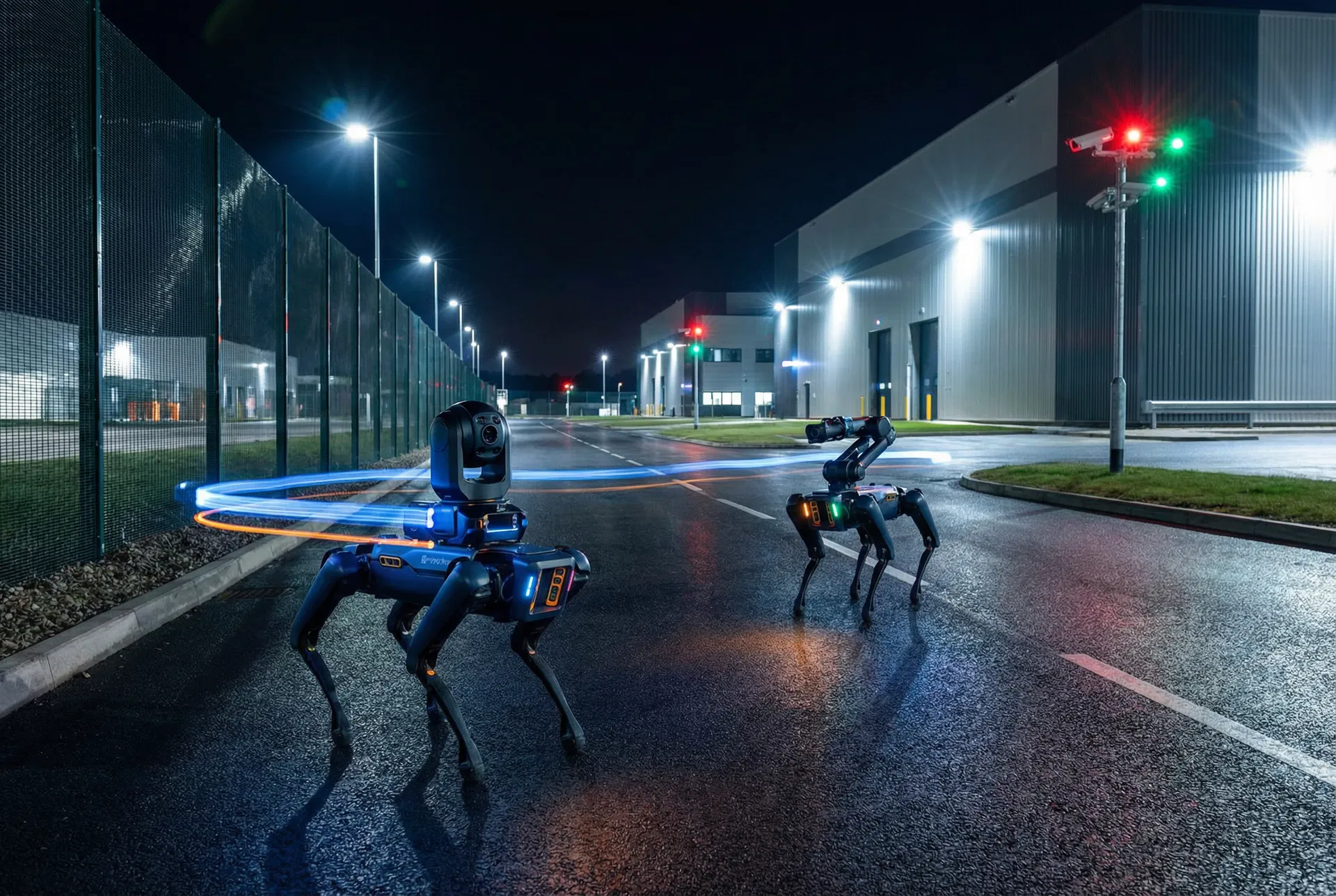
A state-owned industrial park in eastern China spanning 2.4 km² and housing 47 tenant enterprises required comprehensive around-the-clock perimeter security and internal patrol coverage. The park’s 6.2 km perimeter fence and extensive internal road network presented a significant security management challenge: maintaining consistent coverage across all areas simultaneously, particularly during night shifts and adverse weather conditions.
The existing security model relied on 38 human guards working three rotating shifts, supplemented by a network of 124 fixed CCTV cameras. Despite this investment, the park authority identified persistent coverage gaps: fixed cameras had blind spots at fence corners and between buildings, guard patrol routes were predictable and could be observed by potential intruders, and response times to perimeter alerts averaged 4–7 minutes due to the park’s size. Three unauthorized access incidents in the preceding 18 months had prompted the park authority to evaluate autonomous patrol solutions.
Beyond security effectiveness, the park authority faced escalating labor costs for security personnel, including wages, benefits, training, and management overhead. The combination of coverage inconsistency and cost pressure created a compelling case for an autonomous patrol solution that could provide more consistent coverage at lower long-term operational cost.
“We had 38 guards and 124 cameras, but we still had blind spots and inconsistent coverage. The robot fleet gave us something we couldn’t achieve with human guards alone: truly continuous, predictable patrol coverage across the entire park, every hour of every day.”
— Security Director, State-Owned Industrial Park Authority
Mixed ZSL-1 / ZSM-1 Fleet with AI Recognition and Centralized Command
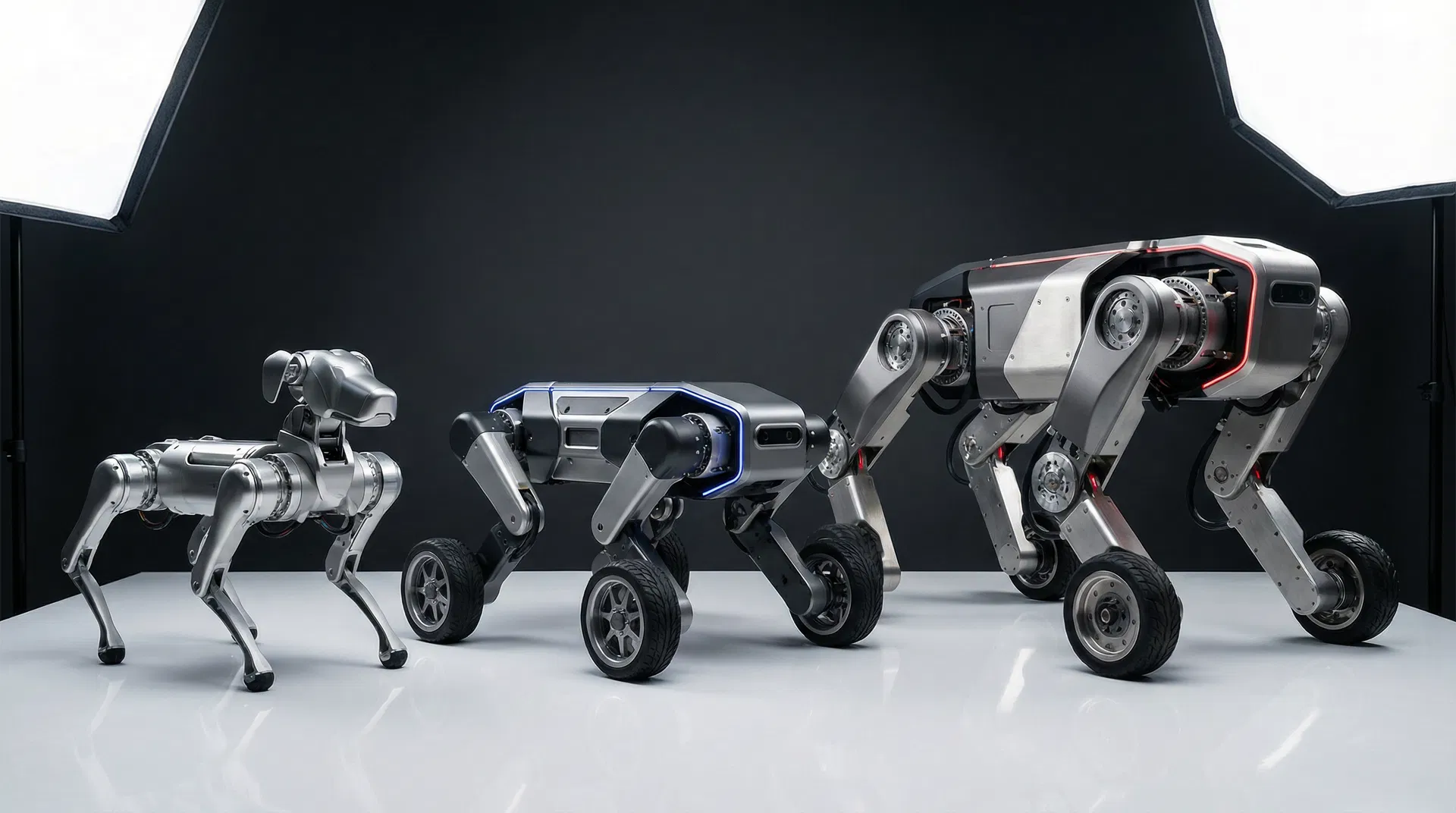
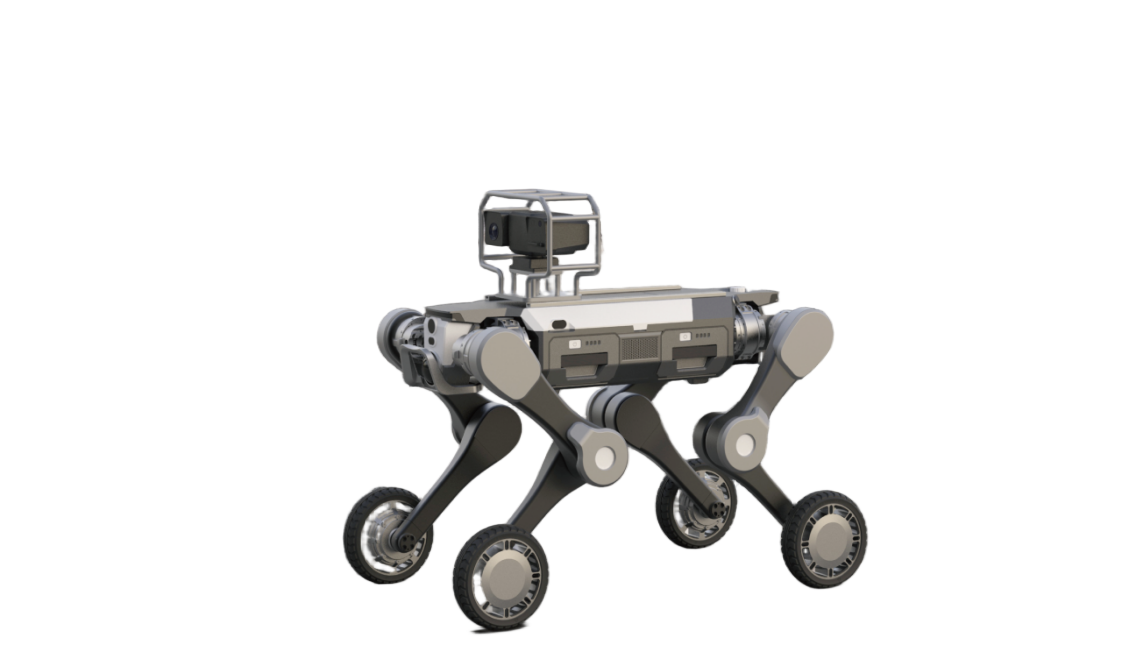
Shaanxi Smart Innovation Future Technology’s solution engineers designed a mixed-fleet deployment strategy combining the agile ZSL-1 for internal building-area patrol and the heavy-duty ZSM-1 for perimeter patrol and rapid response. The ZSL-1’s compact dimensions (63 × 36 cm) and 3.7+ m/s speed made it well-suited for navigating the park’s internal road network and building surrounds, while the ZSM-1’s 8+ m/s wheeled speed and IP67 rating provided the performance needed for perimeter patrol in all weather conditions.
Each robot was equipped with a dual-spectrum AI camera system configured for facial recognition, behavior analysis, and vehicle identification. The AI recognition models were trained on the park’s authorized personnel database and vehicle registry, enabling automatic identification of authorized individuals and flagging of unrecognized persons. The behavior analysis module was configured to detect loitering near fence lines, unauthorized access to restricted zones, and abnormal movement patterns associated with potential security threats.
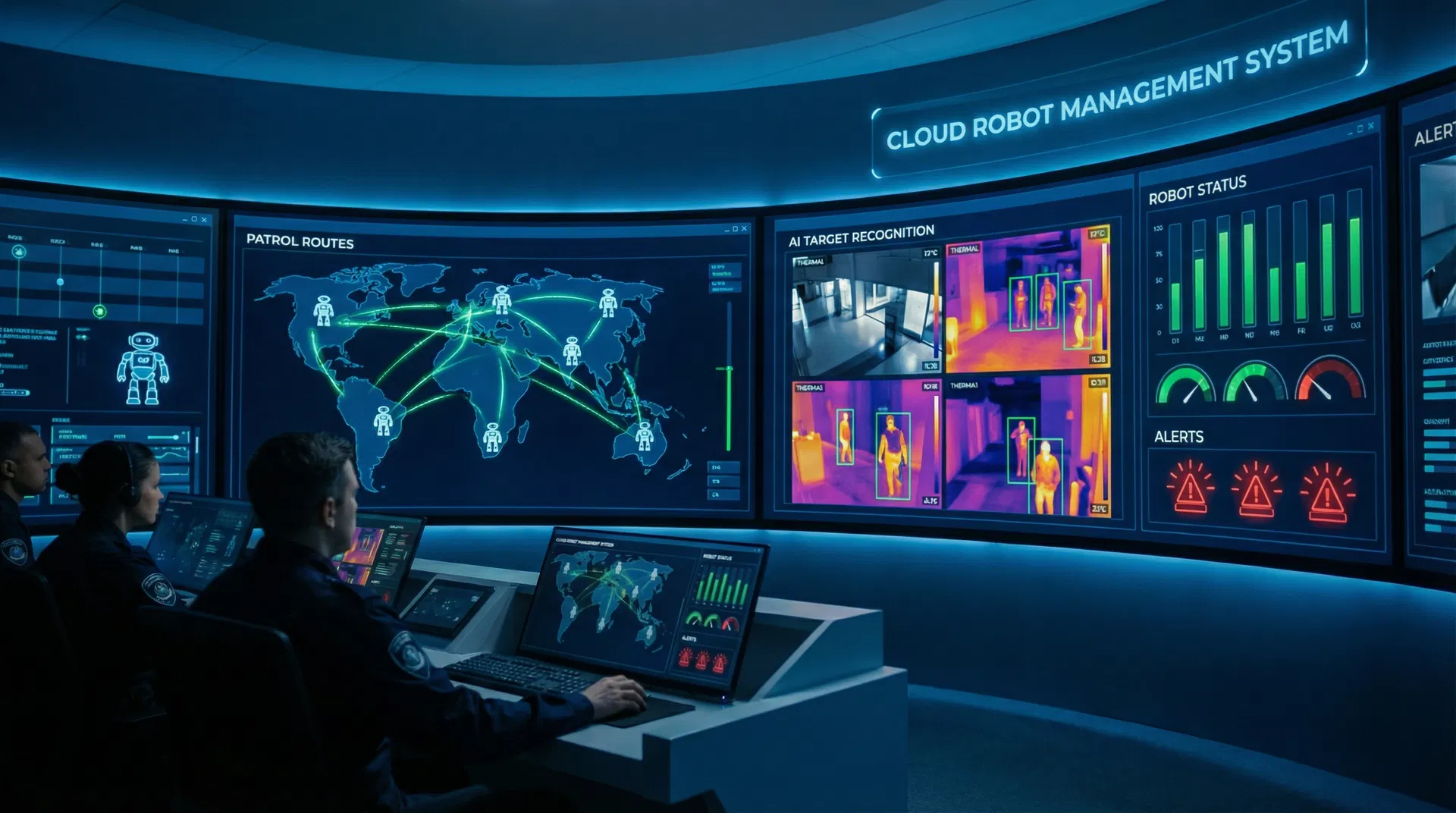
The Shaanxi Smart Innovation Future Technology Cloud Management Platform served as the unified command center, integrating robot feeds with the park’s existing CCTV network to provide complete situational awareness from a single interface. The platform’s smart alert system was configured with three priority tiers: informational alerts for minor anomalies, warning alerts requiring guard verification, and critical alerts triggering immediate guard dispatch and automatic notification to park management.
AI Model Training, CCTV Integration, and Guard Workflow Redesign
The implementation process began with a comprehensive data collection phase: authorized personnel photographs were collected from HR records and access control databases to train the facial recognition model, while vehicle registration data was used to build the authorized vehicle database. Shaanxi Smart Innovation Future Technology’s AI team conducted a two-week model training and validation process, achieving 97.8% recognition accuracy on the park’s authorized personnel before deployment.
The existing CCTV network was integrated with the Cloud Management Platform via API, allowing the platform to correlate robot-detected alerts with fixed camera footage for rapid situational assessment. Guard workflows were redesigned to focus on alert verification and response rather than routine patrol, with the security team reduced from 38 to 14 guards — sufficient for alert response, access control management, and emergency response — while maintaining or improving overall security effectiveness.
62% Cost Reduction, Zero Unauthorized Access Incidents, and Faster Response
In the 18 months following full deployment, the industrial park recorded zero unauthorized access incidents — compared to three in the equivalent prior period. The average intrusion alert response time decreased from 4–7 minutes under the manual patrol model to under 45 seconds, as the robot fleet detected perimeter anomalies in real time and the cloud platform immediately dispatched the nearest available guard.
The security workforce was restructured from 38 guards to 14, with the reduction achieved through natural attrition and redeployment rather than redundancy. The resulting reduction in security labor costs — approximately 62% — provided a return on the robot fleet investment within 14 months of deployment. The park authority also noted a qualitative improvement in security effectiveness: the robot fleet’s unpredictable patrol patterns (varied by the AI scheduling system) eliminated the predictability that had been a vulnerability of the fixed human patrol routes.
The AI facial recognition system processed an average of 2,400 individual recognition events per day across all entry points and internal patrol routes, with a false positive rate of less than 0.3%. The behavior analysis module generated an average of 8 warning-tier alerts per day, of which approximately 85% were confirmed as genuine anomalies requiring guard attention — a precision rate that the security director described as “transformative” compared to the false alarm rates from the legacy CCTV motion detection system.
Deployment Summary
Get a Free Consultation
Discuss how our robots can replicate these results in your facility. No commitment required.
Industrial Park & Port Patrol Solution
Discover how our mixed-fleet autonomous patrol system delivers 24/7 perimeter coverage, AI behavioral recognition, and unified command for large-scale industrial facilities.
Related Case Studies
 Campus Security
University Campus Autonomous Security Patrol Deployment
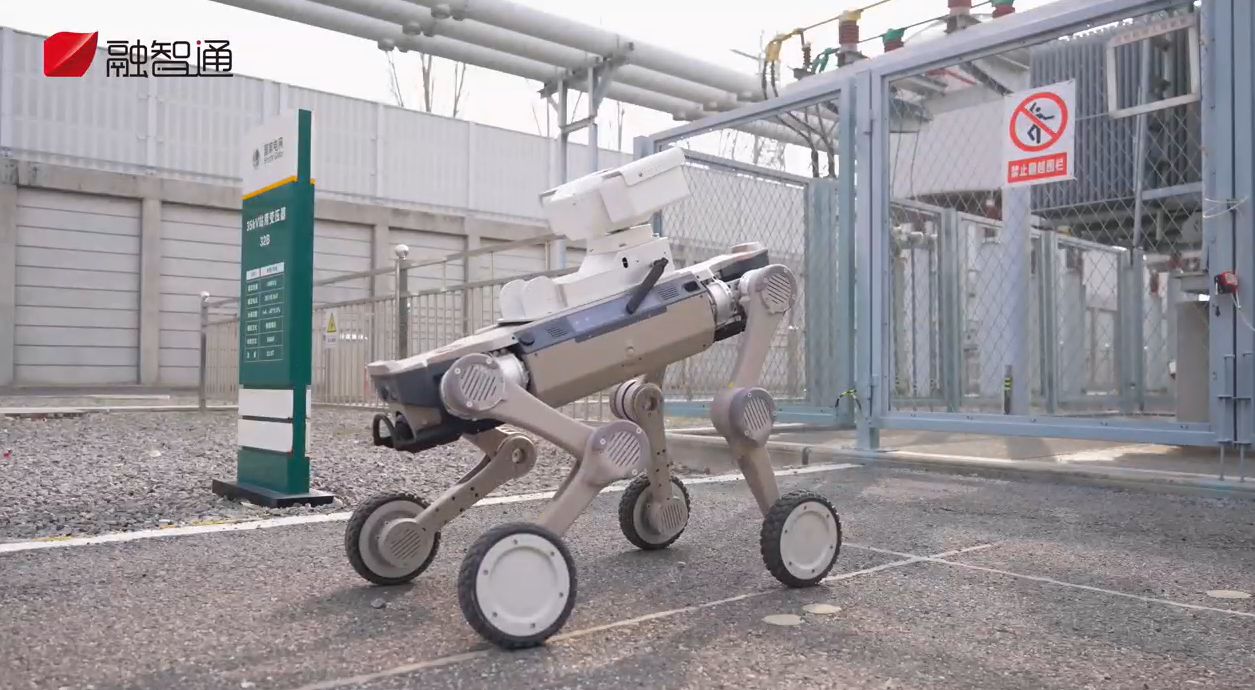
A major university deployed RZTL-1W robots for 24/7 campus security patrol, reducing security personnel costs by 45% while improving incident response time.
 Retail Security
Shopping Mall Autonomous Security Patrol Reduces Incidents by 62%
A 180,000 m² shopping complex deployed RZTL-1W patrol robots across 3 floors, achieving comprehensive coverage during peak hours and overnight with AI-powered anomaly detection.
 Power & Energy
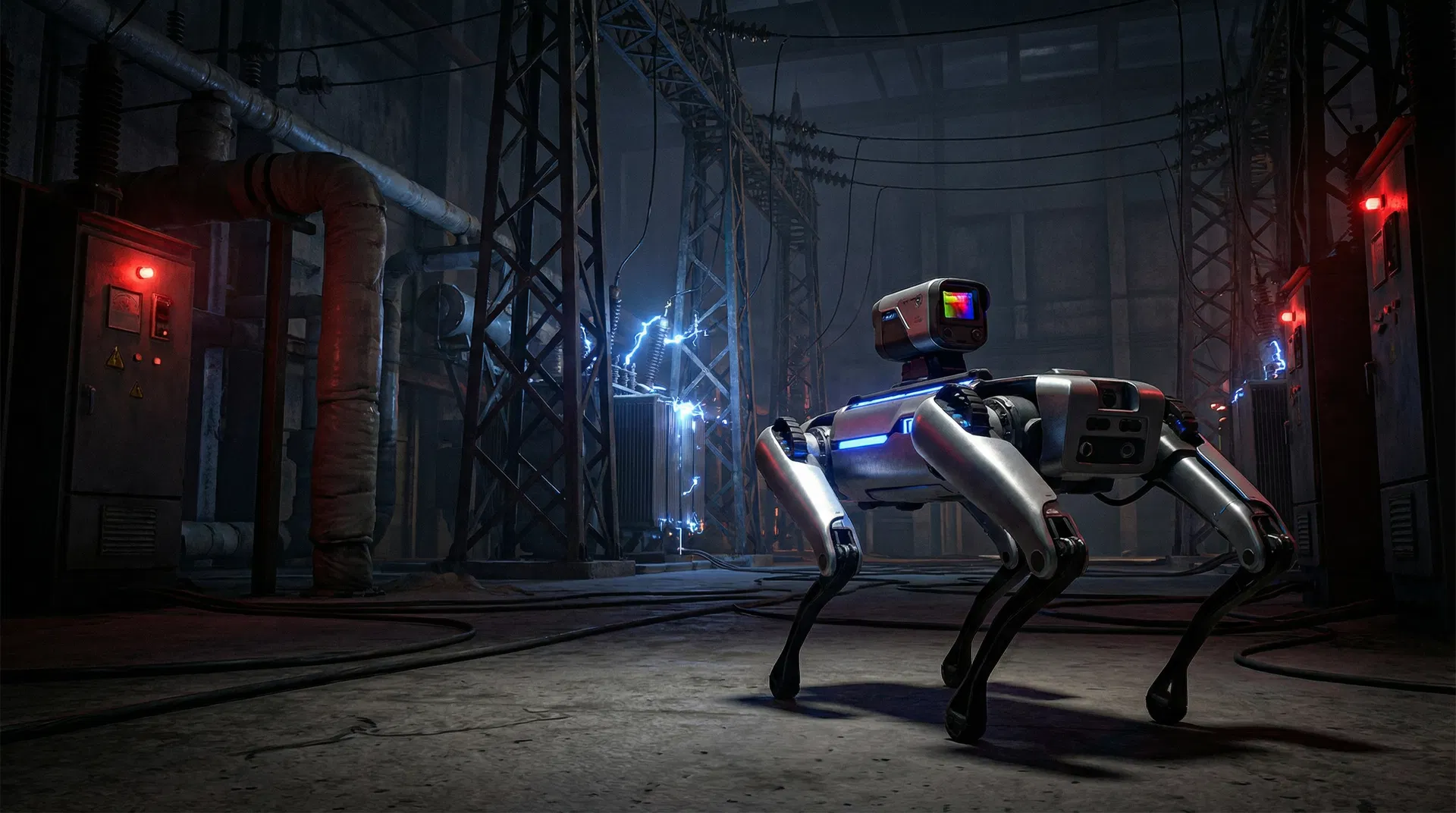
Autonomous Substation Inspection Reduces Manual Rounds by 85%
A regional grid operator deployed the RZTL-1W across 12 substations, cutting inspection cycles from 4 hours to 45 minutes with real-time thermal anomaly detection.