Underground Coal Mine Gas Monitoring: 68% Reduction in Personnel Exposure
Manual Gas Checks in Confined Underground Tunnels: A Persistent Safety Risk
A regional coal mining operator managing 14 km of active underground tunnels faced a critical safety challenge: mandatory gas monitoring rounds required inspectors to enter confined tunnel sections multiple times per shift to manually check methane (CH4), carbon monoxide (CO), and oxygen (O2) levels. These manual checks exposed personnel to the very hazards they were trying to measure.
The existing fixed-sensor network provided point measurements at designated locations but could not detect gas accumulations in dead-end headings, ventilation shadow zones, or newly excavated sections. Regulatory requirements mandated continuous monitoring, but the cost and safety risk of increasing manual patrol frequency was unsustainable. The operator needed a solution that could provide mobile, continuous gas monitoring coverage without increasing personnel exposure.
Additional complexity came from the underground environment itself: narrow tunnel profiles, uneven rock floors, standing water, high humidity (often exceeding 95% RH), and complete GPS denial made conventional wheeled robots and drone-based solutions impractical. The operator required a platform capable of navigating the full tunnel network autonomously, carrying a certified multi-gas sensor payload, and communicating reliably via the existing underground WiFi mesh network.
“We needed to get our people out of the gas-check loop without compromising monitoring coverage. The robot gives us continuous data from every section of the tunnel — including the areas our fixed sensors can’t reach.”
— Safety Manager, Regional Coal Mining Operator
RZTL-1W Deployment with Multi-Gas Payload and SLAM-Based Tunnel Navigation
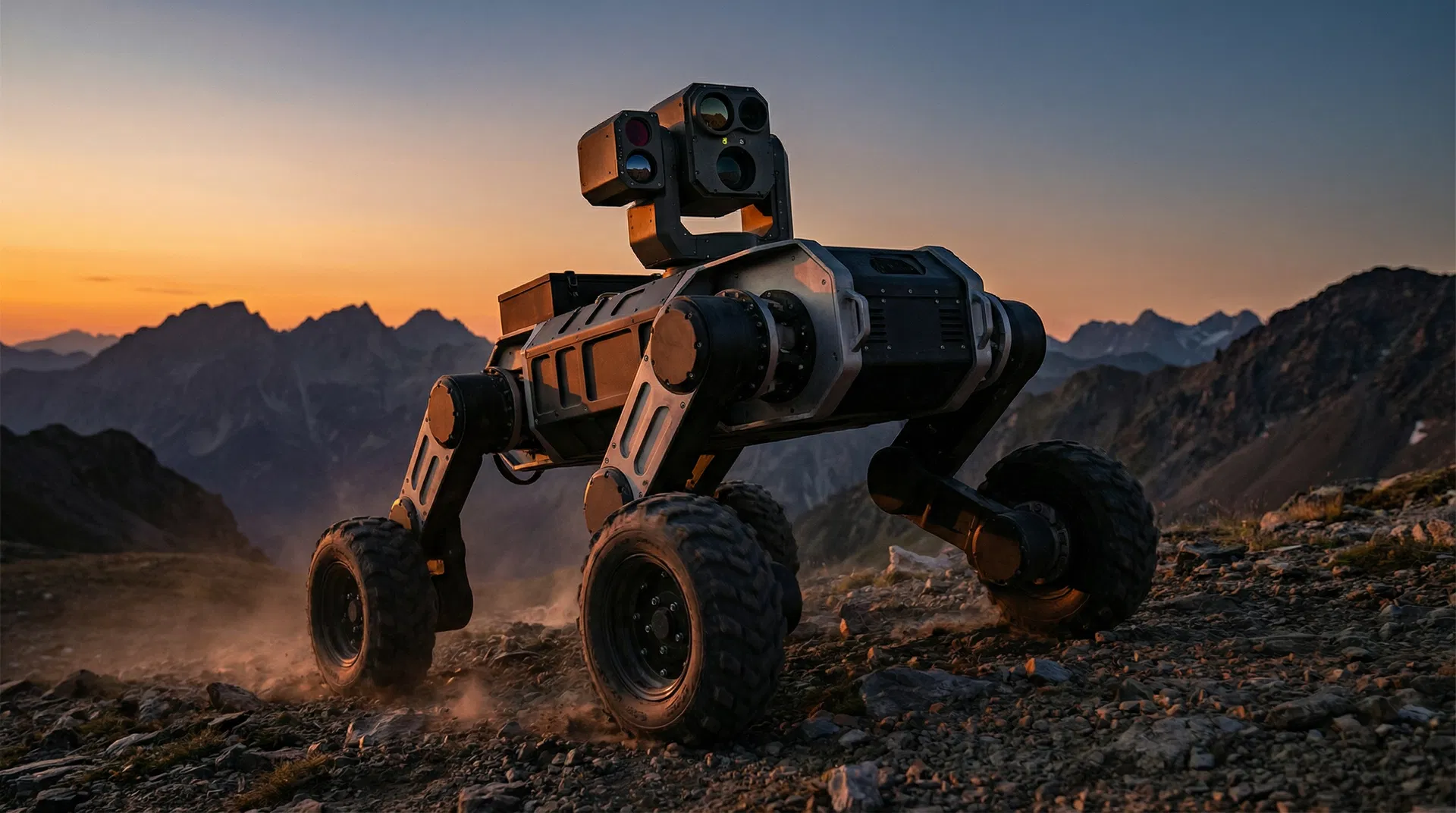
Shaanxi Smart Innovation Future Technology deployed the RZTL-1W quadruped robot equipped with a certified multi-gas sensor payload (CH4, CO, O2, H2S) and a LiDAR-based SLAM navigation system configured for GPS-denied underground operation. The robot’s IP67 protection rating and sealed electronics ensured reliable operation in the high-humidity, dusty tunnel environment.
The SLAM navigation system was initialized using a pre-mapped tunnel model, allowing the robot to autonomously navigate the full 14 km tunnel network without GPS or external positioning infrastructure. Patrol routes were programmed to cover all active working sections, ventilation shadow zones, and dead-end headings on a rotating schedule, with the ability to dispatch the robot to specific locations on demand from the surface control room.
Gas sensor data was transmitted in real-time via the existing underground WiFi mesh network to the Shaanxi Smart Innovation Future Technology Cloud Management Platform, where AI-powered algorithms compared readings against regulatory thresholds and historical baselines. Tiered alerts were automatically generated and routed to the shift supervisor, ventilation engineer, and safety officer when readings exceeded warning or evacuation thresholds.
68% Reduction in Personnel Hazard Exposure Within 6 Months
Within six months of deployment, the coal mining operator recorded a 68% reduction in the number of personnel entries into high-risk tunnel sections for gas monitoring purposes. Manual gas checks were eliminated from the routine patrol schedule, with human inspectors only entering sections when the robot’s data indicated a clear-atmosphere condition or when maintenance activities required physical presence.
The robot’s continuous monitoring coverage identified three previously undetected CH4 accumulation zones in ventilation shadow areas — locations that the fixed-sensor network had not covered. Early detection of these accumulations allowed the ventilation team to adjust airflow before concentrations reached warning levels, preventing potential evacuation events.
The operator also achieved regulatory compliance improvements: the continuous monitoring data log provided auditable evidence of gas monitoring frequency and coverage that exceeded the minimum requirements of the applicable mining safety regulations, reducing the risk of regulatory penalties and improving the operator’s safety record.
Deployment Summary
Related Solution
Learn more about our Mining Inspection solutions and how we address the specific challenges of underground and surface mining environments.
Mining Inspection SolutionsDiscuss Your Project
Our mining specialists can assess your underground environment and recommend the right robot configuration for your gas monitoring and inspection requirements.
Contact a SpecialistRelated Case Studies
 Mining
Copper Mine Conveyor Belt Inspection Reduces Unplanned Downtime by 41%
A copper mining facility replaced manual conveyor belt inspections with autonomous robots, achieving continuous thermal and acoustic monitoring across 8 km of conveyor systems.
Power & EnergyAutonomous Substation Inspection Reduces Manual Rounds by 85%
A regional grid operator deployed the RZTL-1W across 12 substations, cutting inspection cycles from 4 hours to 45 minutes with real-time thermal anomaly detection.
Oil & GasIP67 Quadruped Robots Cut Inspection Labor Costs 58% at Petrochemical Facility
A major petrochemical refinery replaced 6 manual inspection teams with 2 RZTL-1W units, achieving continuous 24/7 gas leak detection and thermal imaging across 3 km of process piping.