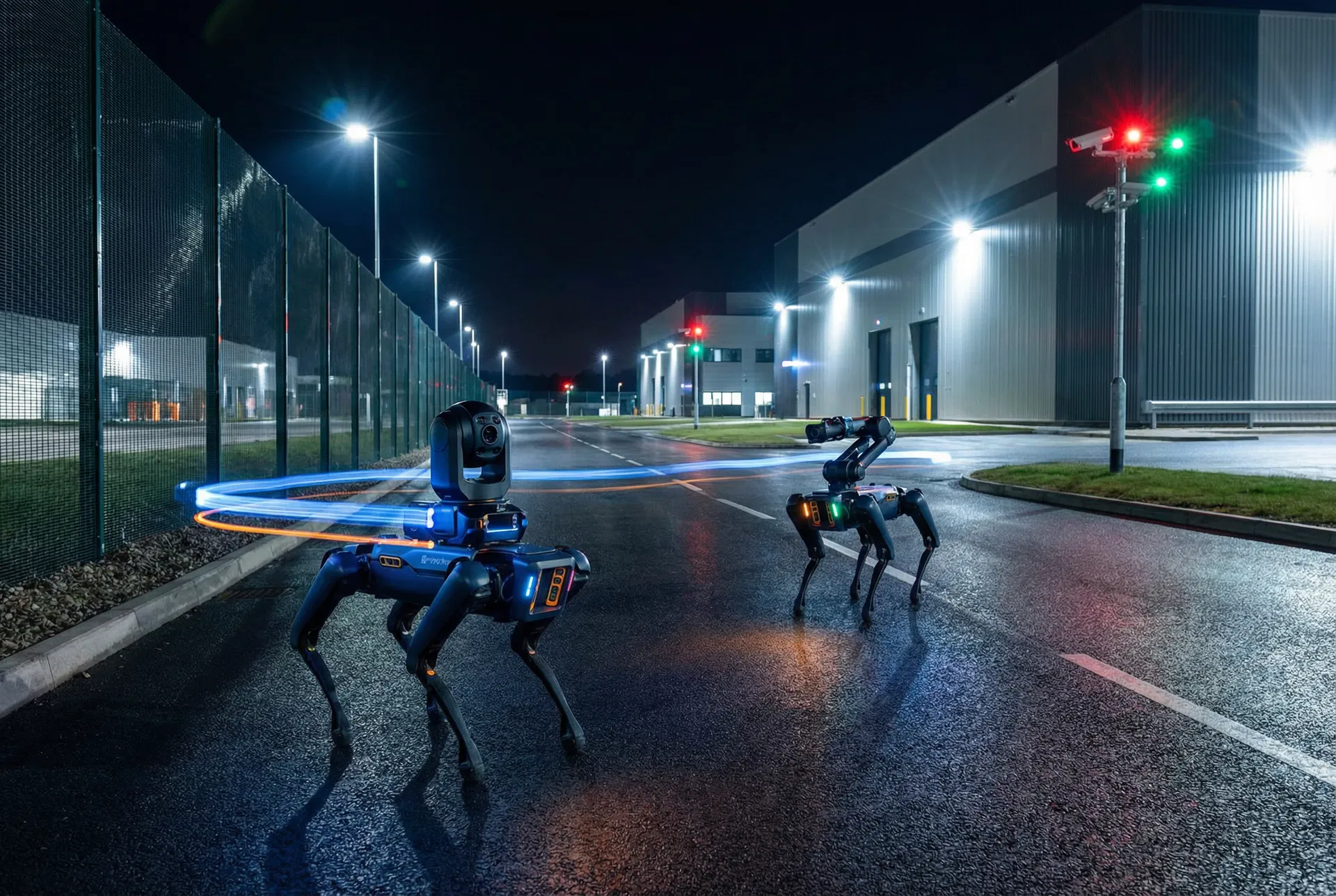
Multi-Modal
Sensor Payloads
Modular sensor payload architecture for thermal imaging, gas detection, AI vision, and acoustic sensing — configurable for any industrial inspection requirement, with ATEX-certified options for hazardous environments.
Six Sensor Payload Categories
Each payload module is independently configurable and can be combined with others to create a multi-modal sensing system tailored to your specific inspection requirements.
Thermal Imaging (Infrared)
Uncooled infrared detectors capture thermal profiles of equipment surfaces, electrical connections, and mechanical components. AI algorithms identify thermal anomalies — hotspots, cold spots, and temperature gradients — against configurable alert thresholds.
Gas Detection Array
Electrochemical and catalytic bead sensors detect toxic, flammable, and asphyxiant gases in real-time. Multi-gas detection arrays provide comprehensive hazardous atmosphere monitoring for oil & gas, chemical, and confined space environments.
Bi-Spectrum PTZ Camera
Dual-sensor PTZ (pan-tilt-zoom) units combine high-resolution visible imaging with thermal imaging in a single gimbaled payload. Enables simultaneous visual and thermal inspection without payload changes, with remote zoom for detailed inspection of elevated or distant equipment.
AI Vision Module
Onboard AI vision processors run pre-trained and custom-trained models for automated defect detection, meter reading, equipment status recognition, and anomaly classification. Results are available in real-time without cloud round-trip latency.
Acoustic & Vibration Sensing
Acoustic emission sensors and vibration transducers detect abnormal signatures from rotating machinery, pumps, compressors, and electrical equipment. Early-stage bearing wear, partial discharge, and structural resonance are identified before they escalate to failures.
Environmental Monitoring
Integrated environmental sensor arrays monitor ambient conditions throughout the inspection route. Data is logged with GPS/SLAM coordinates and timestamps, providing environmental context for anomaly analysis and regulatory compliance reporting.
Open Platform for Custom Integration
The robot platform provides a full SDK with REST API and ROS2 interface, enabling OEM partners, system integrators, and enterprise customers to build custom inspection applications, integrate third-party sensors, and connect to existing enterprise systems.
Secondary development support is available for customers who need custom AI models, specialized sensor integration, or proprietary data pipeline development. Our applications engineering team provides technical guidance throughout the integration process.
OEM/ODM PartnershipOpen SDK & API
Full SDK with REST API and ROS2 interface for custom payload integration, mission programming, and data pipeline development. Enables OEM partners and system integrators to build custom inspection applications on the robot platform.
CMMS/EAM Integration
Pre-built connectors for SAP PM, IBM Maximo, Oracle EAM, and custom CMMS systems. Inspection findings, anomaly alerts, and maintenance recommendations are automatically exported as structured work orders.
Custom Payload Mounting
Standardized payload mounting interface (top rail + rear bay) accommodates customer-supplied sensor modules, specialized instruments, and third-party payloads. Mechanical, electrical, and data interfaces are fully documented.
Data Export & Analytics
All inspection data is available via API in standard formats (JSON, CSV, MQTT). Integration with BI platforms, digital twin systems, and custom analytics pipelines is supported through the cloud platform’s data export capabilities.
Sensor Payload FAQs
Technical questions about sensor configuration, certification, and integration.
Common Questions About Sensor Payload Modules
Answers to the most common questions from procurement managers, system integrators, and engineering teams evaluating our robotic platforms.
Our inspection robots support a modular payload architecture including: thermal imaging (infrared), multi-gas detection, bi-spectrum PTZ cameras, AI vision modules, acoustic/vibration sensors, and environmental monitoring arrays. Payloads can be combined and configured for specific inspection requirements. ATEX-certified and intrinsically safe versions are available for hazardous area deployments.
Yes. Our gas detection payload modules detect methane (CH₄), carbon monoxide (CO), hydrogen sulfide (H₂S), nitrogen dioxide (NO₂), sulfur dioxide (SO₂), oxygen deficiency, and LEL combustible gases. Multi-gas arrays provide comprehensive hazardous atmosphere monitoring. Intrinsically safe sensor modules are available for ATEX Zone 1 and Zone 2 environments.
Our thermal imaging payloads use 640×512 uncooled infrared detectors with NETD (Noise Equivalent Temperature Difference) of less than 50mK — enabling detection of temperature differences as small as 0.05°C. Temperature measurement range is -20°C to +550°C with ±2°C or ±2% accuracy. Thermal data is geo-referenced to equipment location for trend analysis.
Yes. The robot platform provides a full SDK with REST API and ROS2 interface for custom payload integration, mission programming, and data pipeline development. OEM partners and system integrators can build custom inspection applications on the platform. Pre-built CMMS/EAM connectors are available for SAP PM, IBM Maximo, and Oracle EAM.
Yes. The standardized payload mounting interface (top rail and rear bay) accommodates customer-supplied sensor modules, specialized instruments, and third-party payloads. Mechanical, electrical, and data interfaces are fully documented. Our applications engineering team provides integration support for custom payload development.
ATEX-certified and IECEx-certified payload configurations are available for deployment in explosive atmospheres (Zone 1 and Zone 2). Intrinsically safe sensor modules meet the requirements for use in oil & gas, chemical, and other hazardous area environments. Certification documentation is provided with each ATEX-rated system.
Still have questions?
Our application engineers are available to answer technical questions, discuss deployment requirements, and provide custom quotations.
Talk to an EngineerRelated Resources
Average response time: within 24 hours on business days
Configure Your Inspection System
Our applications engineering team will help you select the right sensor payload combination for your specific inspection requirements, environment, and regulatory constraints.