Autonomous Substation Inspection Reduces Manual Rounds by 85%
Manual Inspection in High-Voltage Environments: Costly, Inconsistent, and Dangerous
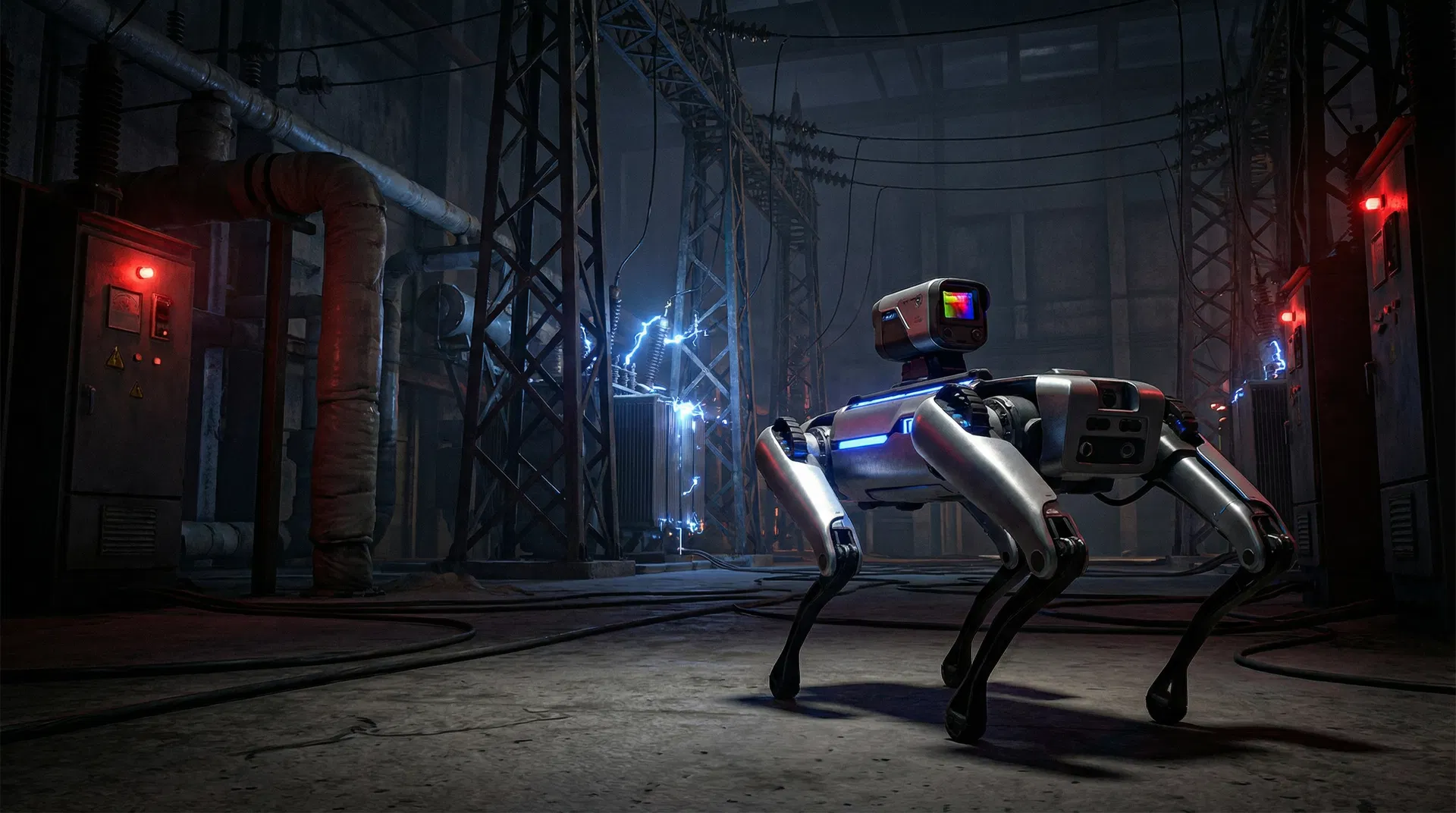
A regional power grid operator responsible for 12 high-voltage substations across northern China faced a persistent operational challenge: the cost, safety risk, and inconsistency of manual inspection rounds. Each substation required inspectors to walk patrol routes of 1.5–3 km per shift, examining transformers, switchgear, cable connections, and auxiliary equipment for signs of overheating, mechanical wear, or electrical anomalies.
In northern China’s climate, inspectors regularly worked in temperatures below -15°C during winter months and above 38°C in summer, creating significant occupational health risks. The inspection frequency was limited to two rounds per day per substation — a cadence insufficient to catch rapidly developing thermal faults in high-load transformers, which can escalate from early warning to critical failure within hours.
Beyond safety and frequency limitations, the operator identified a data quality problem: manual inspection records were inconsistent across shifts and inspectors, making it difficult to establish reliable equipment health baselines or detect gradual degradation trends. The organization needed a solution that could deliver higher inspection frequency, objective data collection, and real-time anomaly alerting — without increasing headcount or exposing personnel to unnecessary risk.
“We needed to inspect 12 substations more frequently, more consistently, and with better data quality — while reducing the risk exposure for our inspection teams. The combination of autonomous patrol and thermal imaging was exactly the capability gap we were trying to fill.”
— Operations Director, Regional Power Grid Operator
ZSL-1W Deployment with Dual-Spectrum Imaging and Cloud-Based Fleet Management
Shaanxi Smart Innovation Future Technology’s solution engineers conducted a site survey of all 12 substations, mapping patrol routes, identifying critical inspection points, and assessing terrain conditions. The ZSL-1W was selected as the primary platform for its combination of all-terrain mobility, IP54 protection rating, and 10 kg payload capacity — sufficient to carry the dual-spectrum imaging payload required for simultaneous visible-light and thermal inspection.
Each substation was equipped with one ZSL-1W unit integrated with a dual-spectrum (visible + thermal infrared) pan-tilt camera system. The robots were programmed with custom waypoint inspection routes covering all critical equipment positions, with specific dwell times and camera angles configured for each inspection point. The patrol schedule was set to six rounds per day — three times the previous manual frequency — with additional on-demand patrol capability triggered remotely from the control center.
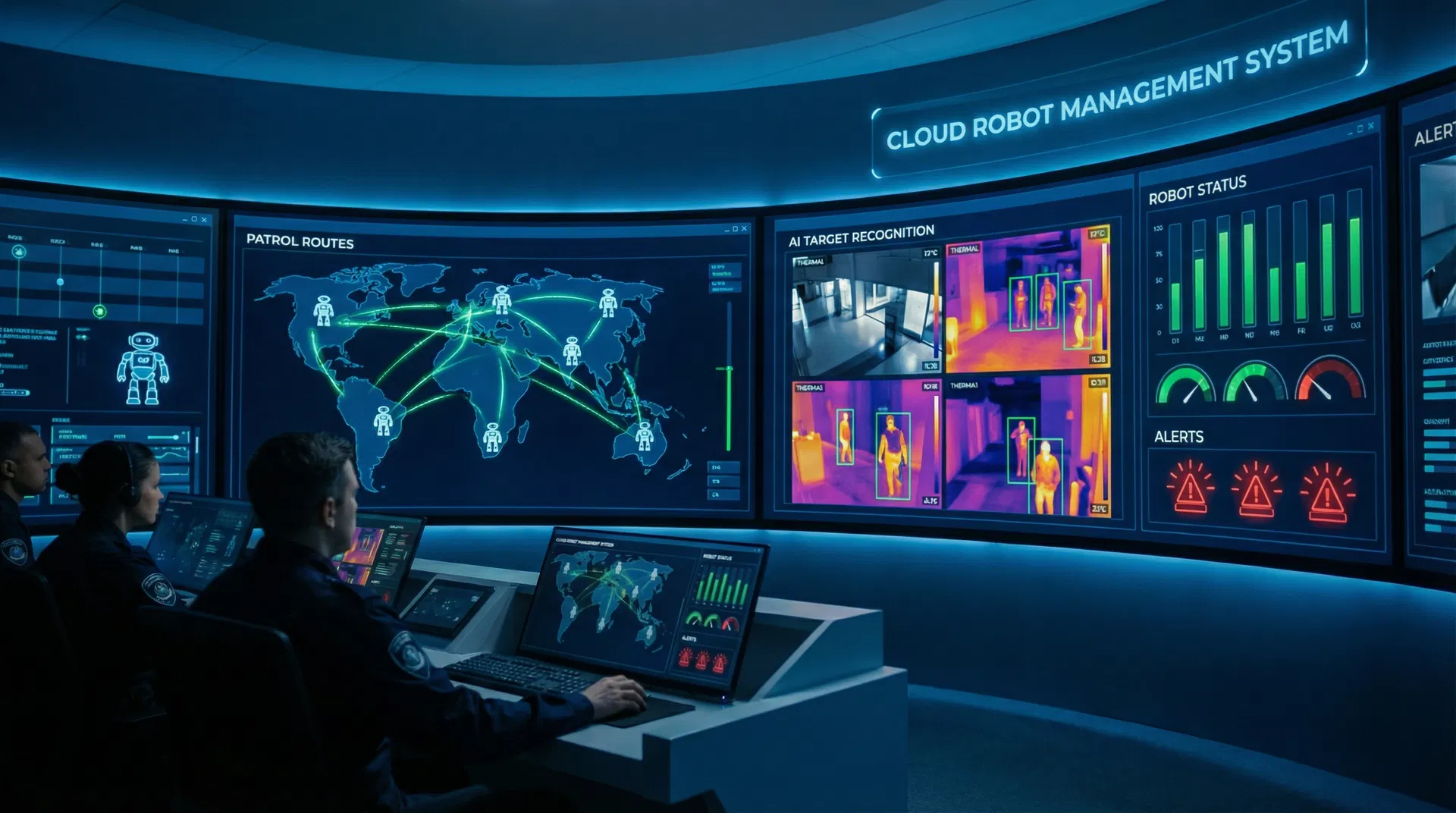
The Shaanxi Smart Innovation Future Technology Cloud Management Platform was deployed as the central command and data management system, aggregating real-time video feeds, thermal imaging data, and robot status information from all 12 substations. AI-powered thermal anomaly detection algorithms were configured with equipment-specific temperature thresholds, automatically generating tiered alerts when readings exceeded warning or critical levels.
Phased Rollout Across 12 Substations Over 8 Weeks
The deployment was structured as a phased rollout, beginning with a pilot at two substations to validate route programming, thermal threshold calibration, and cloud platform integration. During the four-week pilot phase, Shaanxi Smart Innovation Future Technology engineers worked alongside the operator’s maintenance team to fine-tune inspection waypoints, adjust camera angles for optimal equipment coverage, and calibrate thermal alert thresholds based on historical equipment temperature data.
Following successful pilot validation, the remaining 10 substations were equipped over a four-week period. Operator personnel received training on the cloud management platform, including dashboard navigation, alert management workflows, video review procedures, and basic robot maintenance. The platform’s centralized architecture allowed the operator’s control center to monitor all 12 substations from a single interface, with automated alert routing to the relevant substation maintenance team.
Measurable Improvements in Safety, Efficiency, and Equipment Reliability
Within three months of full deployment, the operator documented an 85% reduction in manual inspection rounds across the 12 substations. Human inspectors were redeployed from routine patrol duties to higher-value maintenance and fault-response activities. The inspection frequency increased from two manual rounds per day to six autonomous rounds, with the ability to trigger additional on-demand inspections remotely.
The thermal imaging capability proved particularly valuable: during the first six months of operation, the system detected 14 early-stage thermal anomalies in transformer connections and switchgear that would not have been identified through visual inspection alone. In three cases, the anomalies were classified as high-priority alerts requiring immediate maintenance intervention — preventing potential equipment failures that could have resulted in unplanned outages affecting downstream customers.
The cloud platform’s AI data analytics module enabled the operator’s engineering team to identify a recurring thermal pattern in a specific transformer model under high-load conditions, leading to a proactive maintenance program that extended equipment service life. The structured inspection data also simplified regulatory compliance reporting, reducing the time required to prepare quarterly inspection documentation by approximately 70%.
Deployment Summary
Platform Used
Get a Free Consultation
Discuss how our robots can replicate these results in your facility. No commitment required.
Power Substation Inspection Solution
Learn how our autonomous inspection system addresses every challenge in high-voltage substation environments — from thermal fault detection to multi-site fleet management.
Related Case Studies
Data CenterData Center Achieves 99.99% Uptime with Autonomous Thermal Inspection
A Tier-4 data center eliminated unplanned downtime by deploying autonomous robots for continuous thermal monitoring of server racks and cooling infrastructure.
Rail TransitUrban Rail Transit Authority Cuts Tunnel Inspection Labor by 62%
A metropolitan rail authority deployed autonomous robots for tunnel inspection across 87 km of underground track, eliminating track possession windows and reducing inspection costs.
 Electrical
Electrical Room Autonomous Inspection Prevents 3 Critical Failures
A manufacturing plant’s high-voltage electrical rooms were equipped with autonomous inspection robots, detecting thermal anomalies 72 hours before potential transformer failures.