Autonomous Campus Patrol Reduces Security Labour Costs by 60%
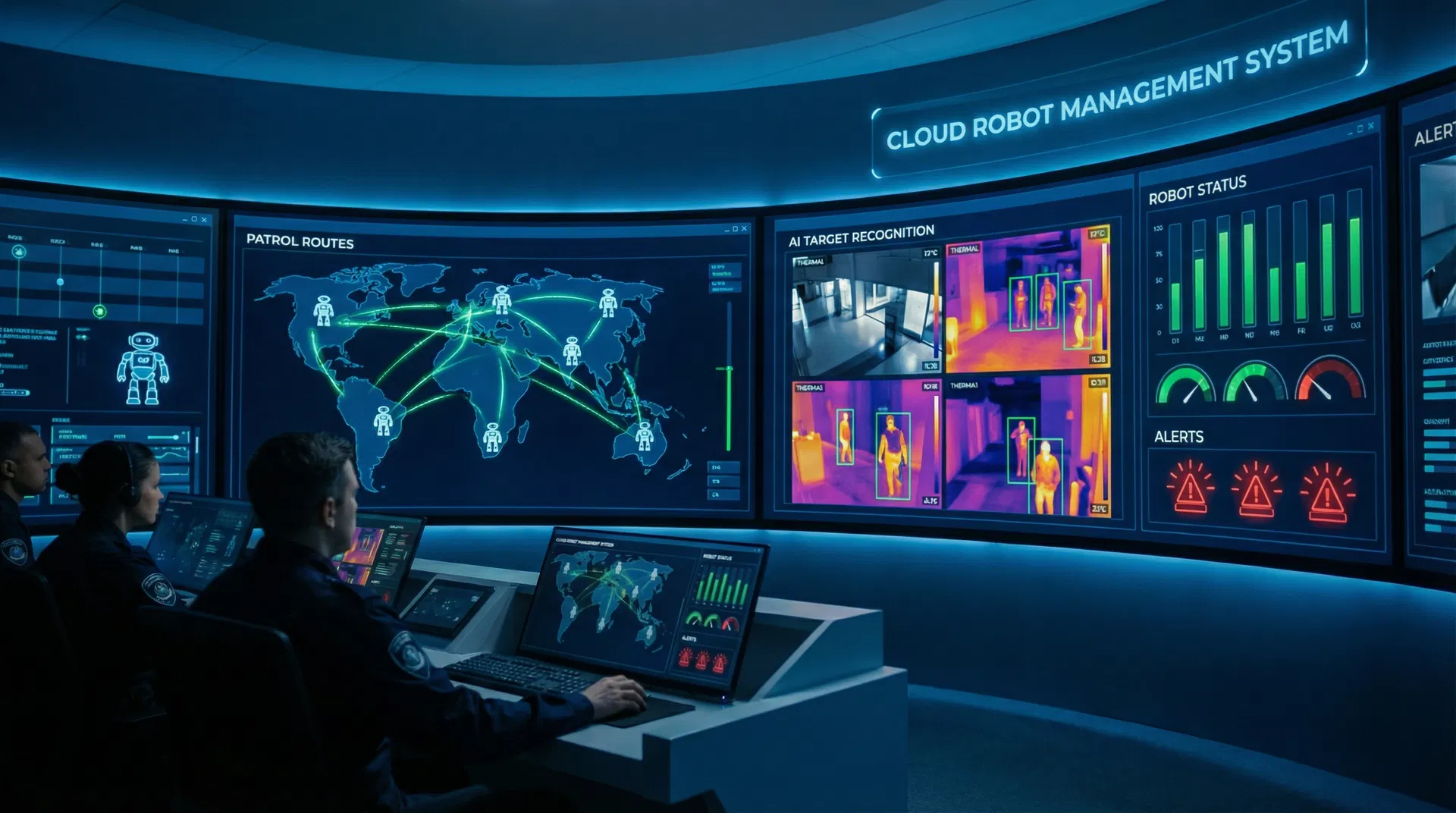
Securing a 120-Hectare Campus with Shrinking Security Budgets and Rising Incident Rates
A large provincial university with over 35,000 students and faculty across a 120-hectare campus faced mounting pressure to improve security coverage while managing tightening operational budgets. The campus security team of 48 guards was responsible for patrolling dormitory zones, teaching buildings, sports facilities, underground car parks, and perimeter access points — a workload that routinely exceeded capacity during peak hours and overnight shifts.
Three persistent problems drove the decision to evaluate robotic patrol solutions. First, coverage gaps: with static guard posts and limited patrol frequency, large sections of the campus — particularly underground car parks and peripheral service roads — went uninspected for extended periods. Second, human fatigue: overnight shift guards reported significantly reduced alertness after 2:00 AM, a pattern confirmed by incident log analysis showing that 67% of on-campus thefts and disturbances occurred between midnight and 5:00 AM. Third, inconsistent response: without real-time location tracking of security personnel, dispatch to reported incidents averaged 8–12 minutes — unacceptably slow for situations requiring immediate intervention.
The university’s security director identified a need for a solution that could maintain consistent patrol coverage overnight, provide real-time visual verification of reported incidents, and integrate with the existing access control and CCTV infrastructure — without requiring a significant increase in permanent security headcount.
“Our biggest challenge was the overnight coverage gap. We couldn’t justify the staffing cost to double our night shift, but we also couldn’t accept the security risk of leaving large areas unpatrolled. The robot patrol system changed that equation entirely.”
— Director of Campus Security, Provincial University
RZTL-1W Deployment with AI Facial Recognition and Autonomous Multi-Zone Patrol
Following a two-week site assessment, Shaanxi Smart Innovation Future Technology’s deployment team proposed a fleet of four RZTL-1W wheeled-legged robots covering the campus’s highest-priority zones: the main dormitory cluster (3 buildings), the central teaching area, the sports complex and surrounding grounds, and the underground car park network. The RZTL-1W was selected for its ultra-quiet wheeled locomotion — critical for overnight dormitory patrols — combined with the leg-based obstacle clearance capability needed to navigate campus terrain including kerbs, ramps, and outdoor pathways.
Each robot was equipped with a dual-spectrum pan-tilt camera (visible light + thermal imaging), a two-way audio module for remote guard communication, and an AI inference module running Shaanxi Smart Innovation Future Technology’s facial recognition and behaviour analysis algorithms. The AI system was trained on a database of authorised personnel (students, faculty, and staff) and configured to generate alerts for unrecognised individuals in restricted zones after 22:00, as well as for detected behaviours including loitering, running, and physical altercations.
Patrol routes were mapped using the RZTL-1W’s onboard SLAM capability during a three-day commissioning phase. The cloud management platform was integrated with the university’s existing access control system, enabling automatic correlation between robot-detected anomalies and access log data. Alert notifications were configured to push directly to the duty security officer’s mobile device with a live video feed, reducing response decision time from minutes to seconds.
Phased Deployment Over Six Weeks with Full Integration in Week Four
The deployment was structured in three phases to minimise disruption to campus operations. Phase one (weeks one and two) covered infrastructure preparation: installation of four robot charging docks in weatherproof enclosures at strategic locations across the campus, network extension to ensure Wi-Fi coverage in all patrol zones, and cloud platform configuration with the university’s IT security team.
Phase two (weeks three and four) focused on robot commissioning and AI training. Each RZTL-1W unit was driven manually through its assigned patrol zone to build the initial SLAM map, then transitioned to autonomous operation with a Shaanxi Smart Innovation Future Technology engineer monitoring remotely. The facial recognition database was populated with 34,000 authorised personnel records from the university’s student information system. AI alert thresholds were calibrated over a two-week observation period to minimise false positives while maintaining high sensitivity to genuine security events.
Phase three (weeks five and six) involved security staff training and handover. The university’s 12 duty officers completed a half-day training programme covering the cloud dashboard, alert management workflow, and remote robot control procedures. The system went live with full autonomous operation at the start of the new academic semester.
60% Cost Reduction, 4× Faster Detection, Zero Coverage Gaps
In the first full semester of operation, the autonomous patrol system delivered measurable improvements across all three of the university’s original problem areas. Security labour costs fell by 60% as the overnight shift was reduced from 12 guards to 5 — with the robot fleet providing consistent coverage of all previously understaffed zones. The remaining human guards shifted from reactive patrol to proactive incident management, responding to robot-generated alerts rather than conducting manual rounds.
Incident detection speed improved by 4× compared to the manual patrol baseline. The AI behaviour analysis system detected 23 security incidents during the first semester — including 14 cases of unauthorised after-hours access, 6 instances of suspicious loitering, and 3 vehicle break-in attempts — with an average alert-to-response time of under 90 seconds. All 23 incidents were confirmed as genuine security events, with a false positive rate of 1.8% across the full semester.
The thermal imaging capability identified two previously unknown electrical faults in campus buildings during overnight patrols — a benefit not originally anticipated in the project scope. The university’s facilities management team subsequently added thermal inspection of electrical distribution rooms to the robot patrol schedule, extending the system’s value beyond its original security mandate.
Related solution:
Campus & Fixed-Site Patrol Solution →Get a Free Consultation
Discuss how our robots can replicate these results in your facility. No commitment required.
Related Case Studies
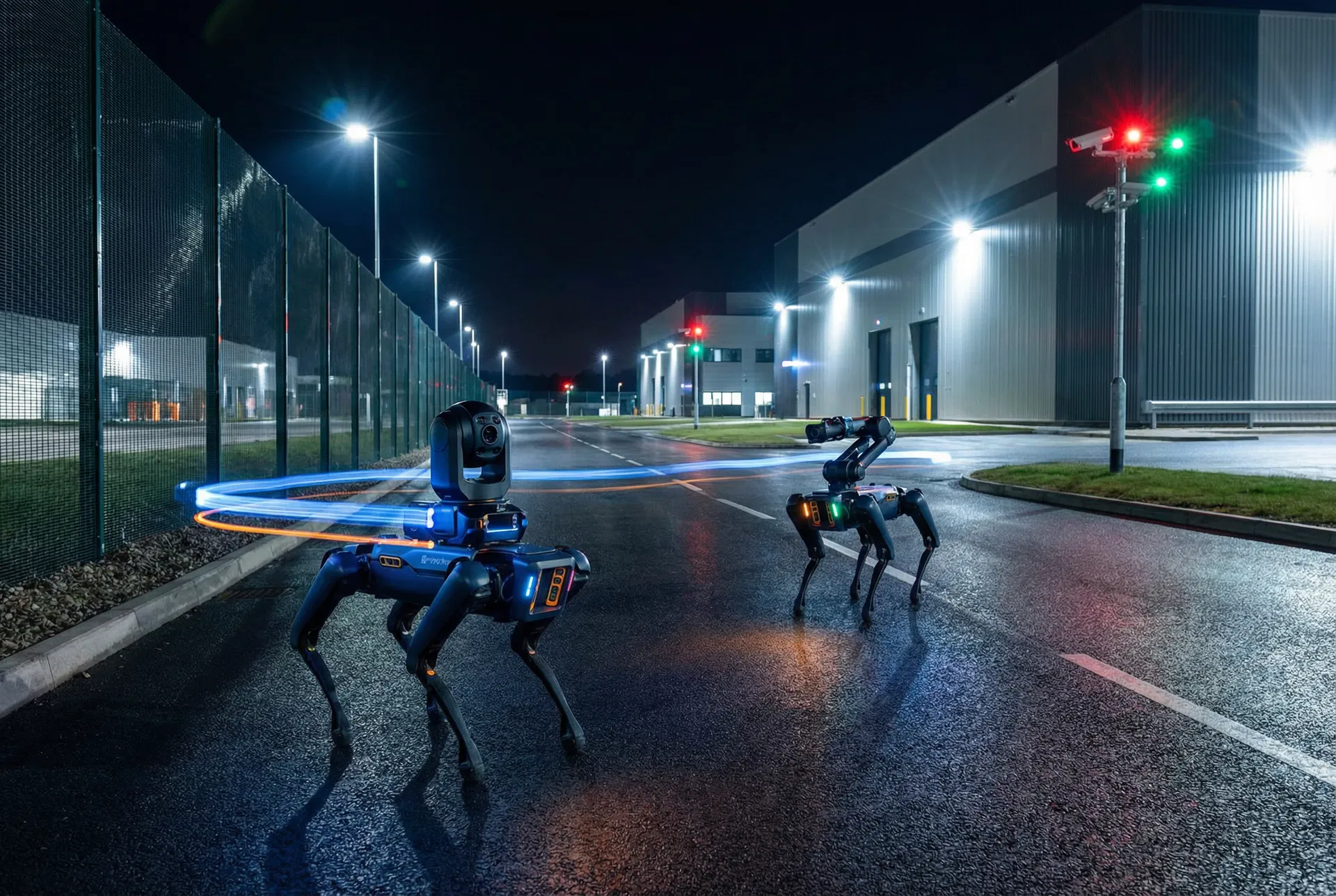 Security
Smart Industrial Park Deploys Quadruped Security Patrol Fleet
A 2.4 km² industrial park replaced night-shift security patrols with an autonomous robot fleet, achieving 100% perimeter coverage and 40% reduction in security incidents.
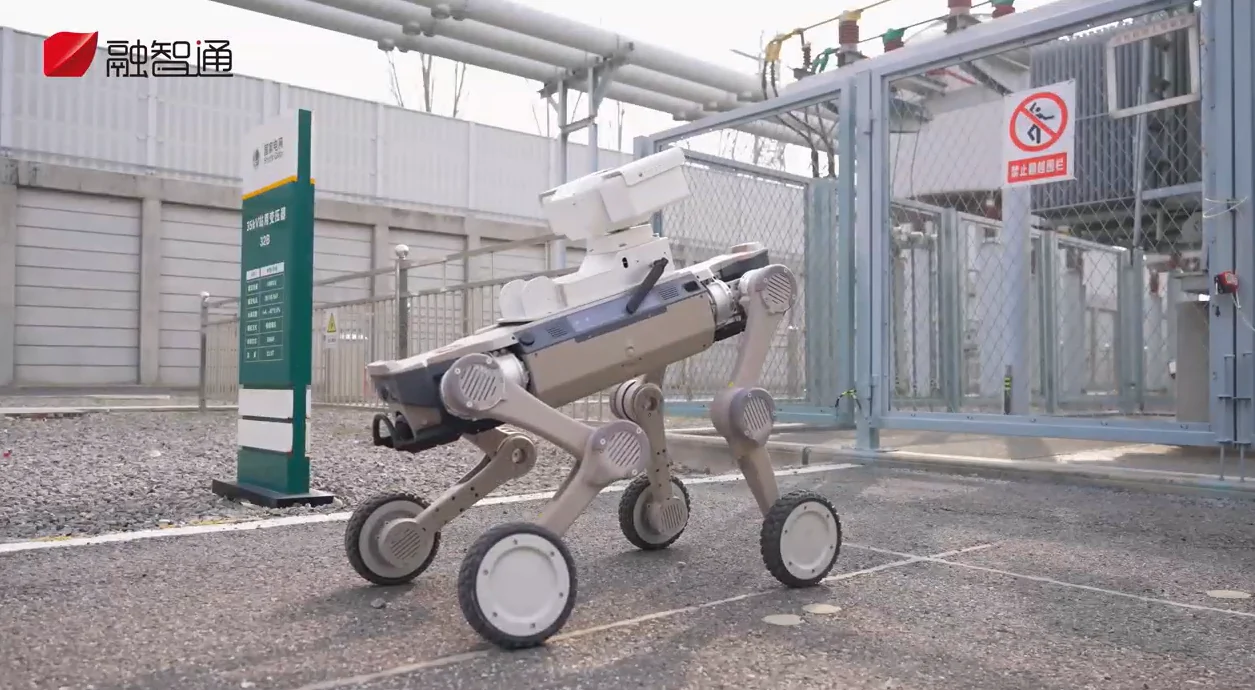 Retail Security
Shopping Mall Autonomous Security Patrol Reduces Incidents by 62%
A 180,000 m² shopping complex deployed RZTL-1W patrol robots across 3 floors, achieving comprehensive coverage during peak hours and overnight with AI-powered anomaly detection.
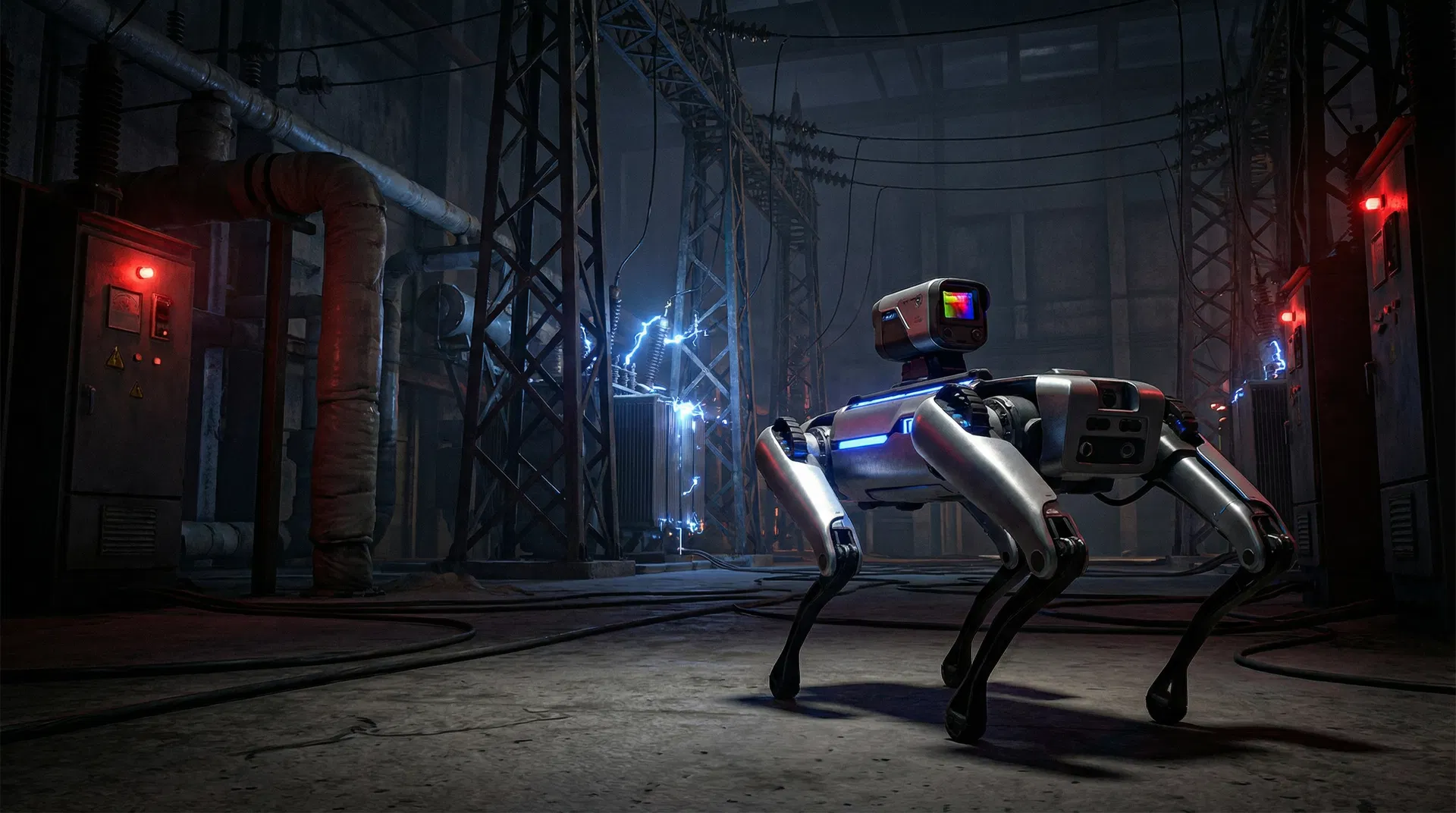 Power & Energy
Autonomous Substation Inspection Reduces Manual Rounds by 85%
A regional grid operator deployed the RZTL-1W across 12 substations, cutting inspection cycles from 4 hours to 45 minutes with real-time thermal anomaly detection.