Autonomous Security Patrol for
Industrial Parks,
Ports & Logistics Hubs
Replace costly manual security rounds with a 24/7 robotic patrol system. AI behavioral recognition, night vision, and all-terrain capability — continuous coverage across large facilities at a fraction of the cost of equivalent manual staffing.
Why Manual Security Is Falling Short
Industrial facilities and ports face growing security demands with rising labour costs and shrinking guard availability. Manual patrol cannot provide the coverage frequency, consistency, or response speed that modern facilities require.
Large Area Coverage Gaps
Industrial parks and port facilities often span hundreds of hectares — far beyond what manual security teams can patrol comprehensively. Coverage gaps are exploited by intruders and go undetected until after incidents occur.
Night Shift Vulnerability
Security incidents are disproportionately concentrated in night hours and weekends when guard staffing is reduced and fatigue degrades performance. Manual patrol quality is lowest exactly when security risk is highest.
Rising Labour Costs
Security guard labour costs continue to increase while coverage requirements grow. Industrial facilities face a structural challenge: the cost of adequate manual security coverage is unsustainable at current staffing rates.
Incident Response Latency
Manual patrols detect incidents only when a guard is physically present. AI-powered robotic patrol detects incidents in real time and alerts operators immediately — reducing response time from minutes to seconds.
Intelligent Security Patrol Capabilities
Perimeter & Access Control Patrol
Continuous patrol of perimeter fencing, access gates, and boundary zones. AI behavioral recognition detects unauthorized intrusion, fence climbing, and loitering near restricted areas. Immediate alerts with geo-tagged video evidence.
AI Behavioral Recognition
On-board AI identifies suspicious behaviors — unauthorized entry, unattended packages, vehicle intrusion, and crowd formation. Recognition algorithms are tuned for industrial and port environments, minimizing false positives from normal operations.
Night Vision & Low-Light Patrol
Multi-spectrum cameras with IR illumination provide clear imaging in complete darkness. The robot maintains full patrol capability during night shifts — the highest-risk period for security incidents — without requiring additional lighting infrastructure.
Two-Way Communication & Deterrence
On-board speaker and microphone enable real-time two-way communication between the robot and security operators. Voice warnings can be broadcast to deter intruders, and operators can communicate with personnel encountered during patrol.
Hazard & Environmental Monitoring
Gas sensors, smoke detectors, and environmental monitors extend patrol coverage beyond security to facility hazards. Simultaneous detection of security threats and physical hazards in a single patrol operation.
Large-Area Coverage
29 km single-charge range and 8 m/s maximum speed enable coverage of large industrial parks and port facilities that are impractical for manual patrol. Multi-robot coordination enables simultaneous coverage of multiple zones.
Where Our Robots Operate
Industrial Park Perimeter Patrol
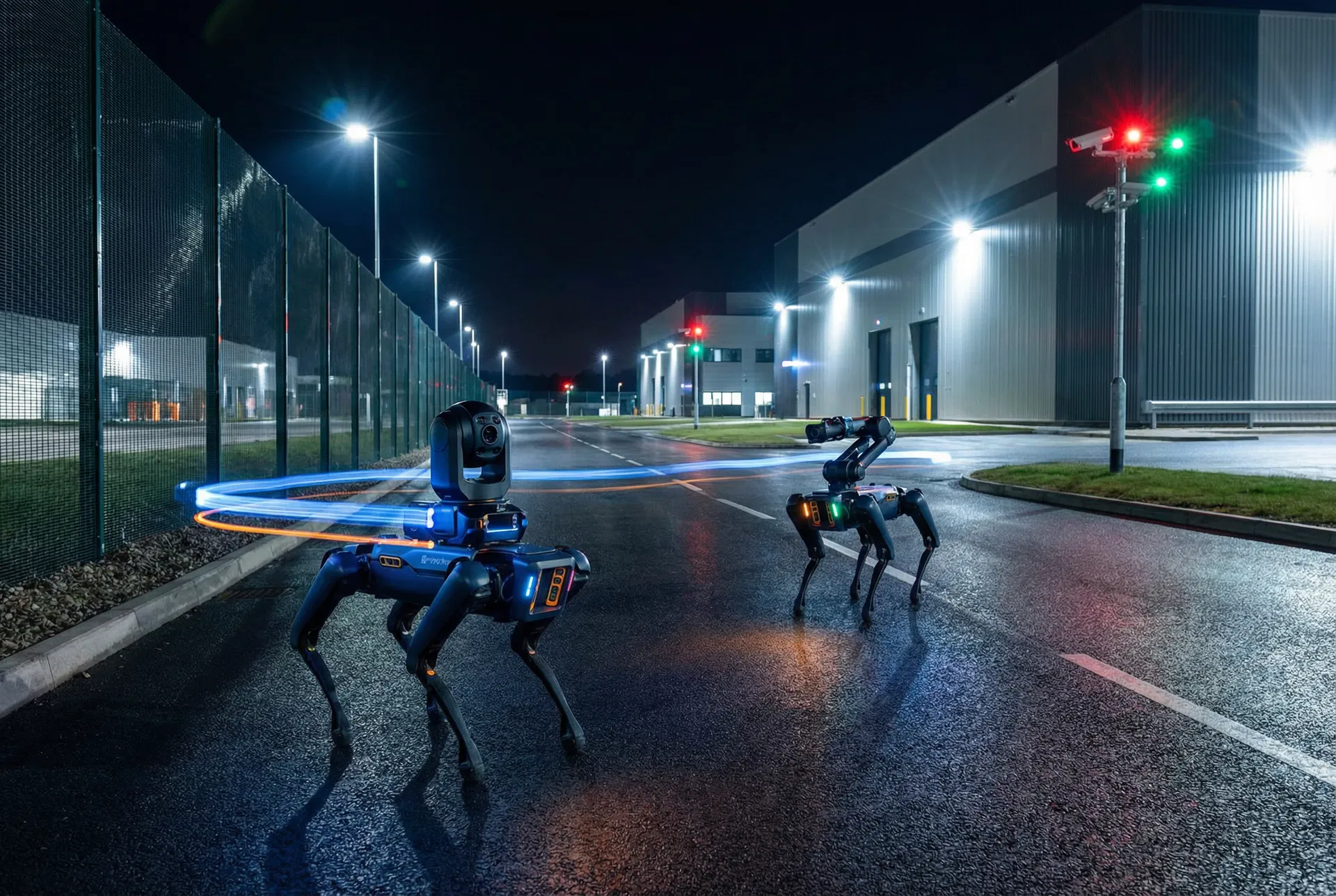
Continuous perimeter patrol of industrial parks and manufacturing facilities. The robot covers fence lines, access roads, and boundary zones on a programmed schedule — providing consistent coverage that manual guards cannot match across large sites.
Port & Logistics Hub Security
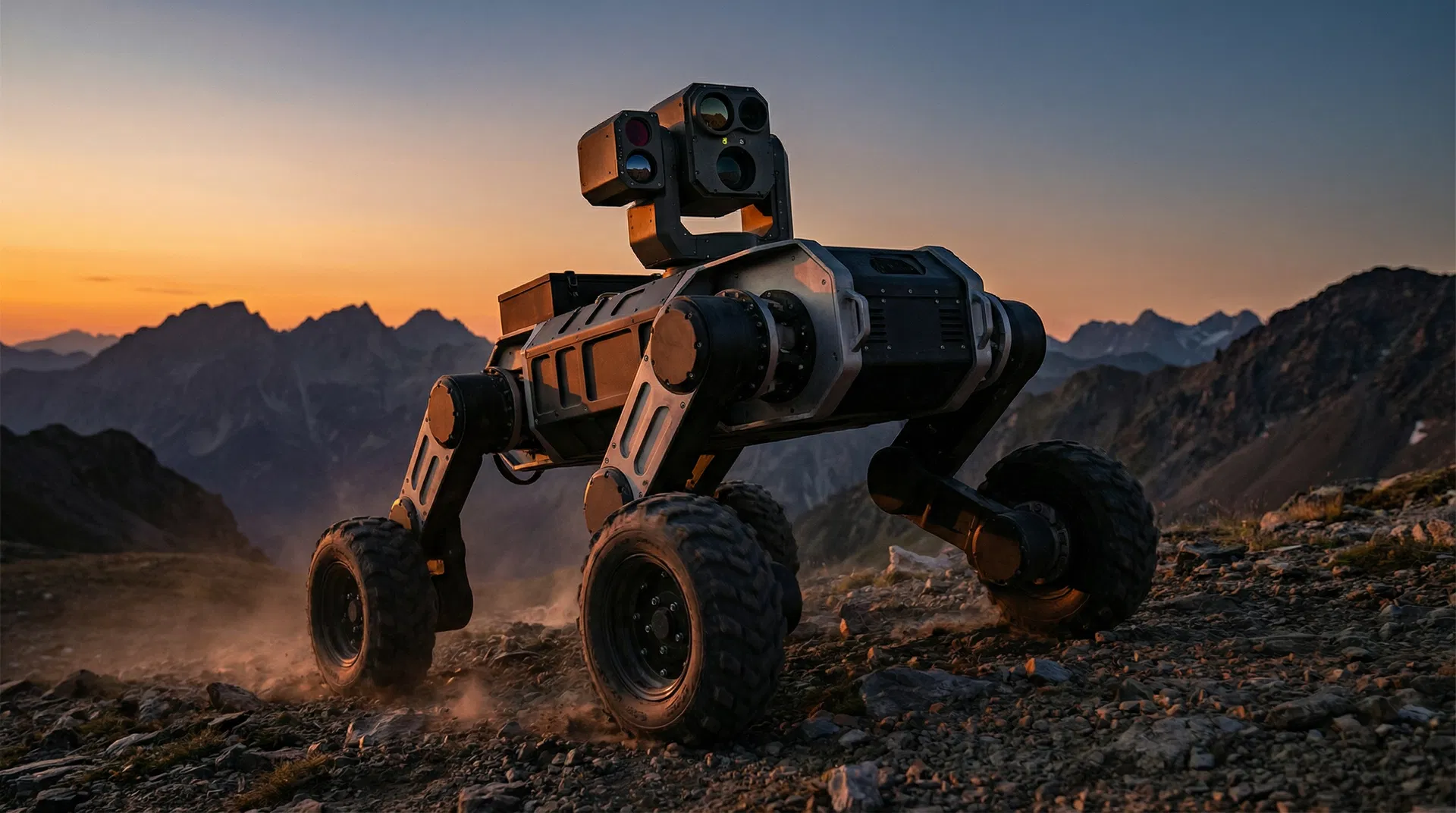
Security patrol of port terminals, container yards, and logistics hubs. The robot’s all-terrain capability enables patrol across uneven surfaces, ramps, and outdoor areas in all weather conditions — critical for 24/7 port operations.
Warehouse & Storage Facility Patrol
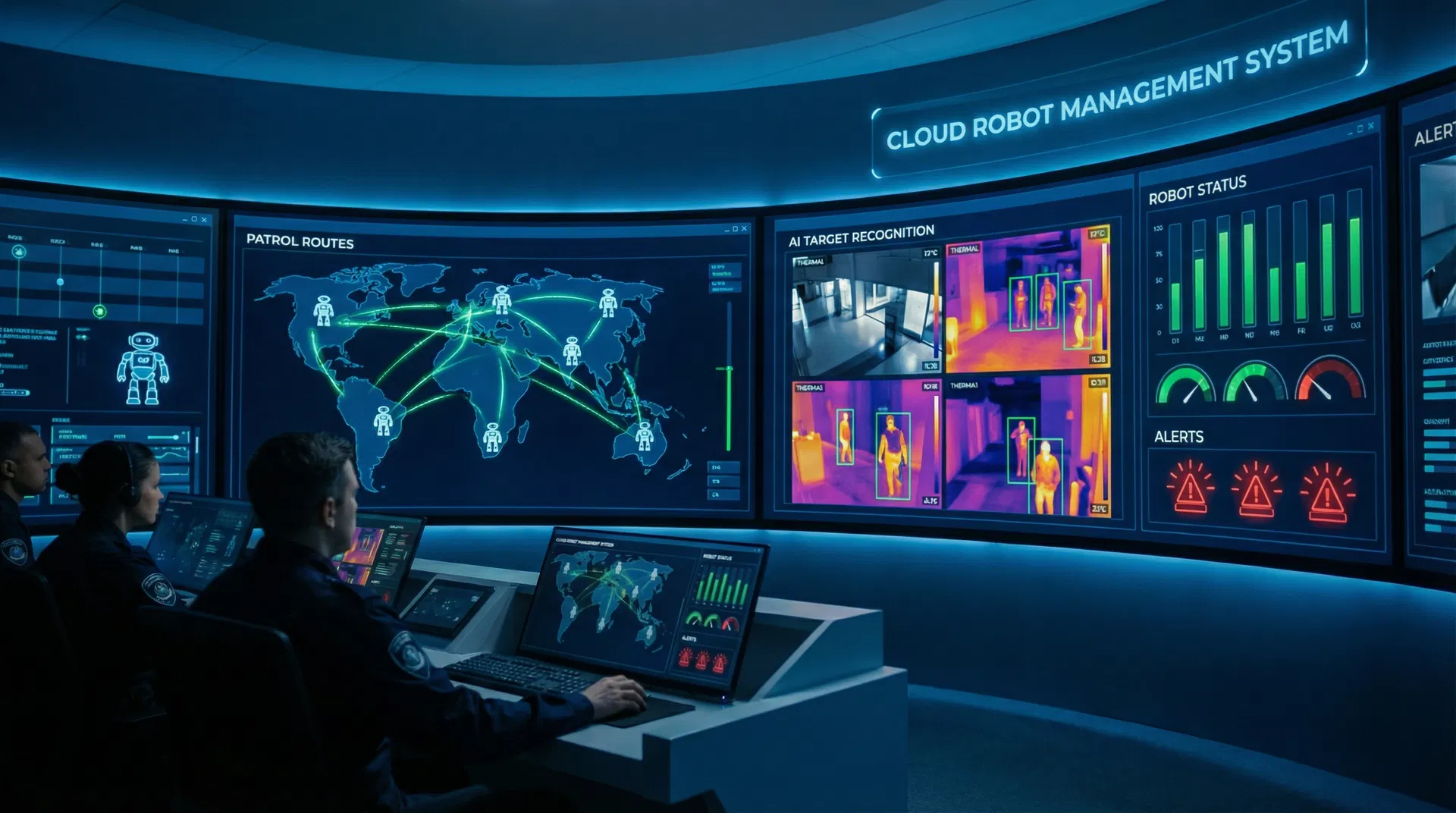
Combined security and inspection patrol of warehouse facilities and storage areas. Intrusion detection, fire hazard monitoring, and inventory area surveillance in a single autonomous operation.
Construction Site Security
After-hours security patrol of construction sites — high-value, high-risk environments with complex terrain and frequent layout changes. The robot’s adaptive navigation handles changing site conditions without re-programming.
Complete Industrial Security Patrol System
| Component | Role | Key Specifications |
|---|---|---|
| TongChui M1 / RZTL-1W | Primary Patrol Platform | IP67, -20°C to 55°C, 8 m/s max speed, 29 km range, all-terrain capability |
| Multi-Spectrum Camera Array | Visual Surveillance | Visible + IR cameras, 360° coverage, AI behavioral recognition, night vision |
| AI Behavioral Analysis | Threat Detection | Intrusion detection, loitering recognition, vehicle intrusion, crowd detection |
| Gas & Environmental Sensors | Hazard Detection | Combustible gas, CO, smoke detection; environmental monitoring integration |
| Two-Way Communication System | Operator Interaction | Speaker, microphone, live video streaming, remote control capability |
| Cloud Security Platform | Incident Management | Real-time alerts, video evidence, patrol records, VMS/PSIM integration |
Patrol Capability in Hazardous Classified Zones
Industrial parks and port facilities routinely include areas classified as hazardous under international safety standards. Chemical warehouses, solvent storage yards, LPG tank farms, fuel bunkering areas, and paint storage facilities are typically designated as ATEX Zone 2 or equivalent — environments where flammable vapours or combustible dust may be present under abnormal conditions. Conventional security patrol robots are not designed for these zones; deploying them creates an ignition risk that the robot is supposed to prevent.
Our industrial patrol robots are engineered with explosion-proof design principles: sealed electronics, non-sparking drive components, and enclosures rated to IP67 that prevent ingress of flammable vapours. The platform’s intrinsically safe sensor interfaces ensure that gas detection, thermal imaging, and communication systems cannot generate sufficient energy to ignite a hazardous atmosphere — meeting the fundamental safety requirement for operation in classified areas.
The onboard multi-gas detection module continuously monitors for combustible gas concentrations (LEL monitoring), toxic gas presence (H₂S, NH₃, Cl₂), and oxygen deficiency across the patrol route. When gas concentrations approach alarm thresholds, the robot transmits an immediate alert to the control centre and continues monitoring while keeping human responders safely away from the hazard zone. This capability transforms the robot from a passive patrol asset into an active hazardous gas detection system integrated into the facility’s safety infrastructure.
Hazardous Zone Patrol Specifications
For facilities with Zone 1 classified areas or requiring formal IECEx certification documentation, contact our engineering team to discuss site-specific compliance requirements.
Secure Your Facility Around the Clock
Our security robotics specialists will assess your facility layout, threat profile, and coverage requirements to design a patrol deployment plan that meets your security objectives.
Common Questions About Industrial Park Autonomous Patrol Robot Solutions
Answers to the most common questions from procurement managers, system integrators, and engineering teams evaluating our robotic platforms.
Industrial park patrol robots handle perimeter security, unauthorized access detection, fire and gas leak monitoring, equipment status inspection, visitor and vehicle management, and emergency response coordination. They cover large outdoor areas cost-effectively compared to human guard deployments.
The Tongchui M1 industrial patrol robot handles grass, gravel, slopes up to 45°, stairs, curbs, and wet surfaces with its IP67-rated quadruped locomotion system. This allows comprehensive coverage of industrial park environments including areas inaccessible to wheeled patrol vehicles.
Yes. Industrial patrol robots are equipped with night vision cameras, thermal imaging, and LiDAR sensors that operate effectively in complete darkness and adverse weather conditions. Thermal imaging is particularly effective for detecting intruders and equipment anomalies at night.
Coverage requirements depend on patrol frequency, area size, and terrain complexity. As a general guideline, one Tongchui M1 robot can patrol approximately 50,000–100,000 m² per hour. Contact Shaanxi Smart Innovation Future Technology for a site assessment and deployment planning consultation.
Industrial patrol robots operate over Wi-Fi 5 GHz, 4G LTE, or 5G networks depending on coverage requirements. For large industrial parks, a combination of Wi-Fi access points and cellular connectivity ensures continuous communication coverage. The robots can also operate autonomously offline and sync data when connectivity is restored.
Still have questions?
Our application engineers are available to answer technical questions, discuss deployment requirements, and provide custom quotations.
Talk to an EngineerRelated Resources
Average response time: within 24 hours on business days