Reservoir Dam Inspection Automates 18 km Patrol Route, Saves SGD 480k/Year
18 km of Dam and Reservoir Perimeter: Inspection Costs Exceeding SGD 1.2M Annually
A regional water authority responsible for a major dam and reservoir complex serving 1.8 million residents faced escalating inspection costs. The facility’s 18 km of dam structure, reservoir perimeter, and associated infrastructure required daily structural inspection patrols to detect seepage, erosion, crack propagation, and unauthorized access — critical safety requirements for a high-consequence water infrastructure asset.
The existing inspection program employed 12 dedicated inspection personnel conducting daily patrols across the full perimeter. The annual cost of this inspection program — including personnel, vehicles, and equipment — exceeded SGD 1.2M. The authority’s management identified dam inspection as a high-cost, low-value-added activity that was a strong candidate for automation, provided that inspection quality and coverage could be maintained or improved.
The terrain complexity of the dam and reservoir perimeter — including steep embankment slopes, rocky outcrops, and seasonal flooding of low-lying sections — ruled out wheeled vehicles and required a platform capable of navigating challenging outdoor terrain in all weather conditions.
“The dam inspection program was our largest single inspection cost. The robot fleet covers the full 18 km three times a day, in all weather, and gives us better data than manual inspection — at a third of the cost.”
— Asset Management Director, Regional Water Authority
3-Robot RZTL-1W Fleet with Structural Monitoring and All-Terrain Navigation
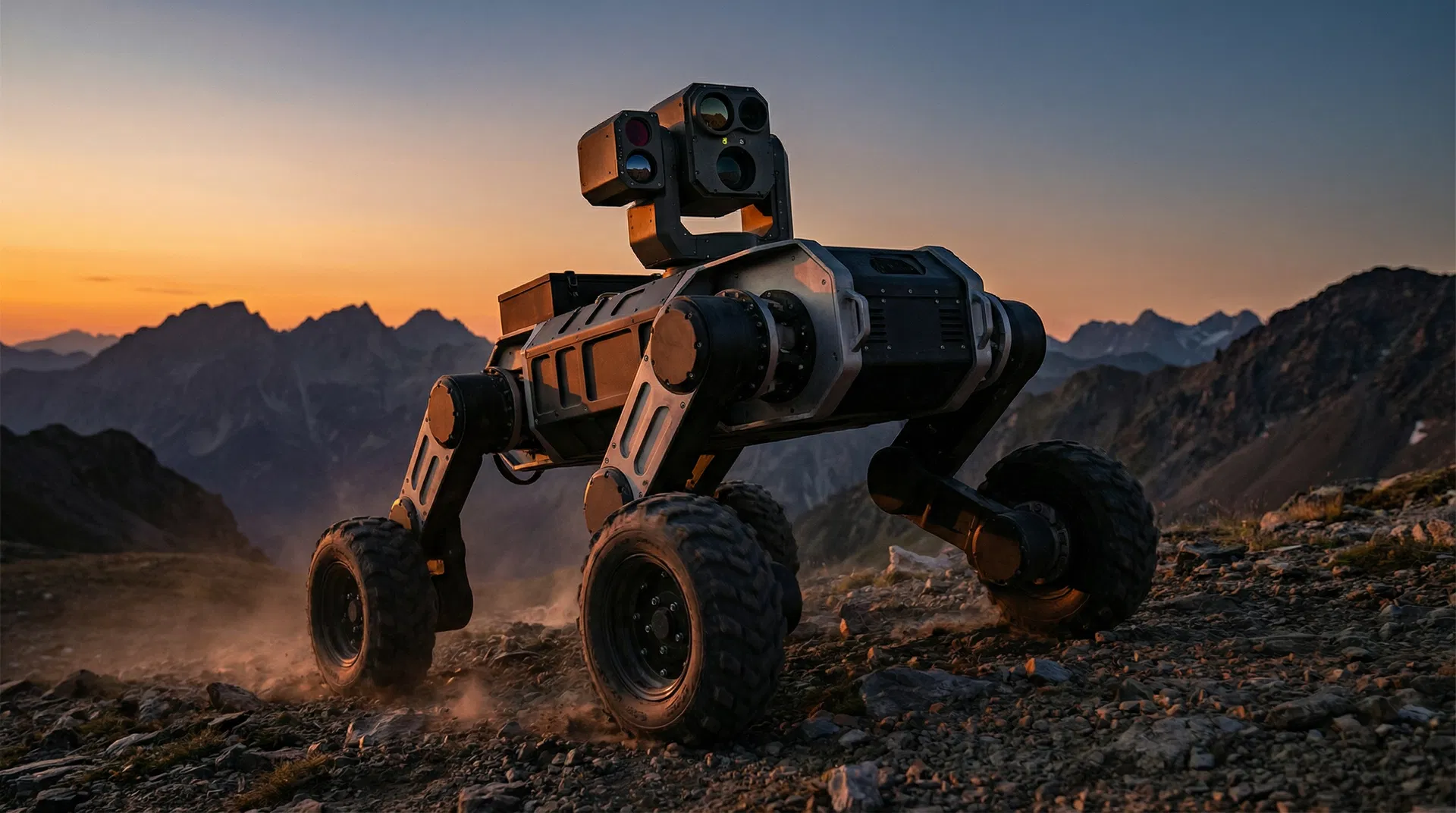
Shaanxi Smart Innovation Future Technology deployed a fleet of 3 RZTL-1W quadruped robots, each equipped with a structural inspection payload combining high-resolution visible cameras, thermal imaging, and crack detection AI algorithms. The robots’ all-terrain mobility — capable of navigating 45° slopes, rocky surfaces, and standing water up to 20 cm depth — allowed full coverage of the dam perimeter without terrain restrictions.
The 18 km perimeter was divided into three patrol zones, with each robot assigned to a dedicated zone and a shared charging station at the dam control building. Each robot conducted 3 full patrol cycles per day, with the patrol schedule designed to provide coverage during morning, afternoon, and evening hours. The robots operated autonomously using GPS-aided waypoint navigation, with LiDAR-based obstacle avoidance for dynamic terrain features.
SGD 480k Annual Savings and 3× Improvement in Inspection Frequency
The 3-robot fleet replaced 12 of the 12 inspection personnel previously assigned to dam patrol, reducing the annual inspection program cost from SGD 1.2M to approximately SGD 720k — a saving of SGD 480k per year. The retained staff were redeployed to higher-value asset management and maintenance planning roles.
Inspection frequency improved from 1 daily patrol per section to 3 patrols per day, with the AI crack detection algorithm identifying 8 early-stage crack propagation events and 2 seepage points during the first 12 months of operation — all of which were addressed through targeted maintenance before reaching reportable thresholds.
The authority’s dam safety regulator recognized the deployment as a model for water infrastructure inspection automation, and the authority was invited to present the case study at the regional dam safety conference.
Deployment Summary
Related Solutions
Related Case Studies
 Water Utility
Municipal Water Treatment Plant Achieves Zero Confined Space Incidents in 24 Months
A Southeast Asian municipal water authority deployed robots to inspect confined spaces including pump chambers and underground pipe galleries, eliminating the need for personnel entry.
Power & EnergyAutonomous Substation Inspection Reduces Manual Rounds by 85%
A regional grid operator deployed the RZTL-1W across 12 substations, cutting inspection cycles from 4 hours to 45 minutes with real-time thermal anomaly detection.
Oil & GasIP67 Quadruped Robots Cut Inspection Labor Costs 58% at Petrochemical Facility
A major petrochemical refinery replaced 6 manual inspection teams with 2 RZTL-1W units, achieving continuous 24/7 gas leak detection and thermal imaging across 3 km of process piping.