Locomotion Analysis: Wheeled vs. Legged vs. Wheel-Legged Architectures
Deploy a wheel-legged robot when an industrial facility demands high-speed transit across large, mixed-surface zones while retaining the ability to step over curbs, rail tracks, and steep stairways. This hybrid locomotion platform bridges the operational gap between energy-efficient wheeled autonomous ground vehicles (AGVs) and highly agile quadruped platforms.
Industrial asset inspection requires navigating harsh physical environments without sacrificing runtime. Standard wheeled robots excel at energy conservation on flat concrete but fail at simple 15-centimeter curbs. Conversely, pure legged robots clear rough terrain but burn substantial battery reserves keeping active balance motors engaged during transit.

Wheel-legged hybrid robotics integrate motorized hub wheels onto 3-axis articulated robotic limbs. This architecture allows plant operators to switch between high-speed rolling modes and dynamic multi-degree-of-freedom stepping gaits.
Integrating these systems with autonomous industrial inspection solutions ensures uninterrupted operations across petrochemical plants, high-voltage utility yards, and manufacturing facilities without structural site modifications.
Energy Efficiency Benchmarking: Rolling vs. Dynamic Stepping (Wh/km)
Locomotion energetics in mobile robotics are quantified by the Specific Cost of Transport (CoT), measuring the energy needed to move a unit mass over a unit distance.
Cost of Transport Definition: Dimensionless metric defined as CoT = P / (m g v), where P is total system power draw (Watts), m is gross platform mass (kg), g is gravitational acceleration (9.81 m/s²), and v is linear transit velocity (m/s).
In our R&D field tests, pure quadruped trot gaits yield an average CoT between 0.8 and 1.4 across compacted switchyard terrain. By contrast, a wheel-legged unit operating in rolling mode achieves a CoT of 0.15 to 0.35 on the same surfaces.
| Architecture Type | Max Transit Speed | Specific CoT | Energy Draw (Wh/km) | Single-Charge Range |
|---|---|---|---|---|
| Wheeled AGV (4WD) | 8.0 km/h | 0.12 – 0.22 | 35 – 55 Wh/km | 18 – 25 km |
| Quadruped Robot (Trot Gait) | 5.4 km/h | 0.85 – 1.35 | 160 – 240 Wh/km | 6 – 9 km |
| Hybrid Wheel-Legged (Active Mode) | 15.0 km/h | 0.18 – 0.38 | 55 – 90 Wh/km | 16 – 22 km |
Switching to rolling locomotion during perimeter transits reduces power draw by 45% to 65%. This efficiency enables high-speed perimeter patrol missions across sprawling industrial sites without frequent battery swap intervals.
Overcoming Transition Barriers: Curbs, Steps, Gravel, and Rails
Industrial terrains rarely feature uniform surfaces. A single 12-centimeter curb or gravel runoff ditch will halt a conventional AGV, demanding costly ramp retrofits.
Wheel-legged robots address this through mechanical hub locks and torque vectoring. When encountering unrollable obstacles, the on-board controller locks the hub actuators and switches to a dynamic quadruped step gait.
Engineering Insight: Based on continuous field trials by the Intelligent Robot Dog engineering team, locking hub actuators transforms the dynamic wheel edge into a high-friction foot contact. This provides up to 25 cm of vertical step clearance and handles inclines up to 35 degrees under heavy payloads.
Equipped with advanced LiDAR SLAM navigation systems, the robot autonomously maps elevation changes. The perception system dynamically selects between rolling, obstacle-crawling, or fully articulated stepping in real-time.
These real-time kinematics align with international safety and reliability standards such as ISO 18436 Condition Monitoring & Inspection protocols, ensuring safe autonomous navigation around energized equipment.
The Intelligent Robot Dog Mobility Matrix (IR-DMM Protocol)
To eliminate deployment guesswork, our robotics architects developed the Intelligent Robot Dog Mobility Matrix (IR-DMM Protocol). This structured framework directs robotics selection based on four measurable operating variables:
- Transit Distance per Mission (> 3 km): Favors wheel-legged platforms due to low Wh/km consumption during transit.
- Surface Ratio (> 60% Rollable Surface): If the route is mostly concrete, asphalt, or hard-packed gravel with intermittent obstacles, choose wheel-legged hybrid units.
- Obstacle Density (> 40% Continuous Stairs/Gratings): Dense vertical terrain with metal grating and steep multi-floor stairways demands dedicated quadruped platforms.
- Emergency Response Velocity (> 10 km/h): Wheel-legged systems provide fast incident response speeds for security and emergency monitoring.
IR-DMM Step-by-Step Selection Workflow
- Map the complete inspection route and calculate the ratio of flat/graded surfaces versus continuous vertical stairs.
- Evaluate required payload weight; high-mass sensor packages benefit from wheel-legged active suspension.
- Check target inspection cycle frequencies against total round-trip operational battery capacity.
- Deploy pure quadrupeds for exclusively vertical, multi-story industrial sites, or wheel-legged platforms for expansive, multi-terrain campuses.
Core Industrial Deployment Scenarios for Wheel-Legged Platforms
Hybrid locomotion delivers measurable efficiency gains across several industrial settings where conventional platforms fall short.

1. High-Voltage Electric Substations & Switchyards
Substations feature asphalt roads bordered by deep gravel beds and concrete cable trenches. Wheel-legged units roll along switchyard roads at 12 km/h and step directly over trenches to capture radiometric thermal readings on switchgear bushings.
2. Petrochemical Refineries & Long-Distance Pipeline Corridors
Refineries feature long access paths crossed by ground-level pipeline sleepers, safety curbs, and rail spurs. Hybrid robots monitor miles of pipe racks, using edge AI computer vision to detect flange leaks, valve corrosion, and thermal anomalies.
3. Multi-Building Manufacturing Campuses
Transporting sensors between discrete factory buildings requires crossing external access roads, speed bumps, and interior production lines. Wheel-legged robots complete indoor-outdoor transfers smoothly without manual hauling.
Review real-world deployment metrics and ROI figures in our enterprise autonomous patrol case studies.
Payload Modularity, Vibration Damping, and Sensor Protection
High-precision inspection payloads—including optical gas imaging (OGI) cameras, acoustic partial discharge sensors, and radiometric infrared imagers—are sensitive to mechanical shock.
Walking quadruped gaits generate cyclical footfall impacts that propagate vibration through the robot chassis. In contrast, wheel-legged rolling provides passive vibration dampening through pneumatic or elastomer wheel hubs paired with active leg suspension.
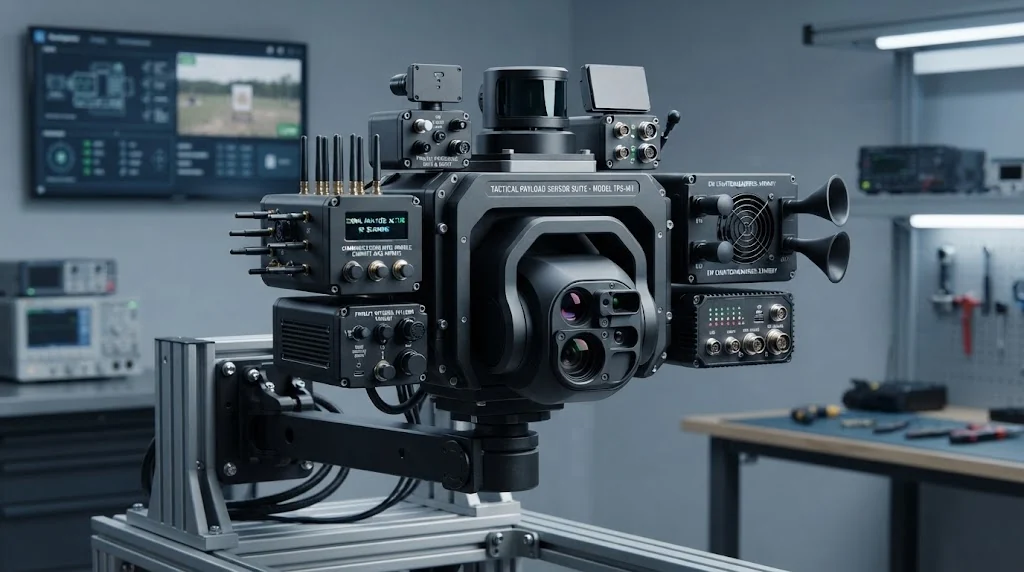
This suspension reduces high-frequency mechanical shock by up to 60%. This protects sensitive optical gimbals and significantly extends the Mean Time Between Failures (MTBF) for delicate sensor suites.
For operations requiring custom sensor packages, the RZTL-1 industrial quadruped platform provides modular quick-release rails, hot-swappable batteries, and regulated DC payload power interfaces.
ROI and Total Cost of Ownership: 12-to-24 Month Payback Analysis
Deploying hybrid wheel-legged robots delivers a quick return on investment (ROI) by maximizing asset coverage per deployed system.
- Reduced Fleet Size: Because a single wheel-legged unit covers 2.5x to 3x the range of a pure walking robot, fewer robots are required to patrol large facilities.
- Decreased Unplanned Downtime: Autonomous thermal and acoustic scanning detects hot spots and gas leaks early, reducing unplanned equipment outages by 15% to 30% per ASTM international maintenance guidelines.
- Lower Actuator Maintenance: Rolling on flat terrain reduces continuous cyclic load on leg gearboxes, extending mechanical joint service intervals beyond 3,500 operating hours.
For most industrial operations, the capital expenditure pays for itself within 12 to 18 months through labor reallocation and avoided equipment failures.
Frequently Asked Questions About Wheel-Legged Inspection Robots
Can wheel-legged robots climb standard industrial stairs?
Yes. By locking the wheel hubs and switching to dynamic leg stepping, hybrid robots can climb standard 30-degree industrial stairs and open metal grid steps up to 20 cm in height.
What ingress protection (IP) rating do these platforms feature?
Industrial-grade wheel-legged platforms feature IP66 or IP67 ratings, providing protection against high-pressure water jets, heavy rain, dust, and non-corrosive chemical splash environments.
How do wheel-legged platforms perform in snow and ice?
Deep snow and icy inclines favor dynamic walking gaits. Wheel-legged robots detect low-traction conditions via torque feedback and switch to stepping modes with ice-cleat treads to maintain stability.
Can wheel-legged robots integrate with SCADA and Fleet Management Systems?
Yes. Platforms communicate through 4G/5G and private industrial Wi-Fi, integrating directly with existing SCADA, SAP PM, and enterprise Fleet Management Systems via ROS 2 and REST APIs.