Core Definition & Quantitative Benchmarks for Robotic Inspection Acceptance
Inspection robot acceptance criteria represent the contractual, physical, and computational specifications required to validate an autonomous robotic system before and after deployment in hazardous industrial facilities. These criteria measure mechanical locomotion, sensor calibration accuracy, Edge AI inference reliability, safety interlocks, and supervisory control integration across standardized milestone gates.
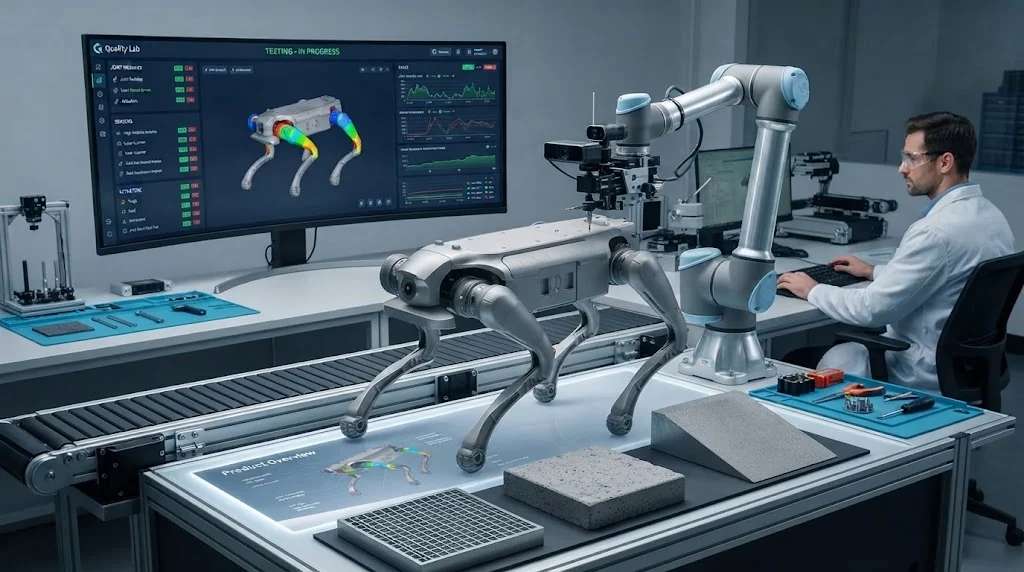
Deploying autonomous robotics into petrochemical plants, electrical substations, mining tunnels, and manufacturing facilities requires strict validation frameworks. Moving from a pilot trial to continuous uncrewed operation presents distinct mechanical, environmental, and software integration failure modes.
Procurement teams must move beyond vendor demonstrations and evaluate empirical performance data. Field-proven industrial inspection robot solutions must demonstrate deterministic uptime, sub-millimeter repeat localization, and zero false-negative anomaly detections under extreme ambient operating windows.
Acceptance Threshold Baseline: An industrial inspection robotic platform must achieve a minimum autonomous mission completion rate of ≥ 99.2% across 500 consecutive test cycles while sustaining zero Category 0 safety violations under ISO 10218 constraints.
The table below summarizes the core quantitative engineering benchmarks applied across preliminary robot evaluation phases:
| Performance Domain | Key Metric | Minimum Acceptance Threshold | Verification Standard |
|---|---|---|---|
| Kinematic Locomotion | Stair Incline & Grating Pass Rate | ≥ 35° continuous; 100% mesh crossing | ASTM E2521 / DIN EN 13000 |
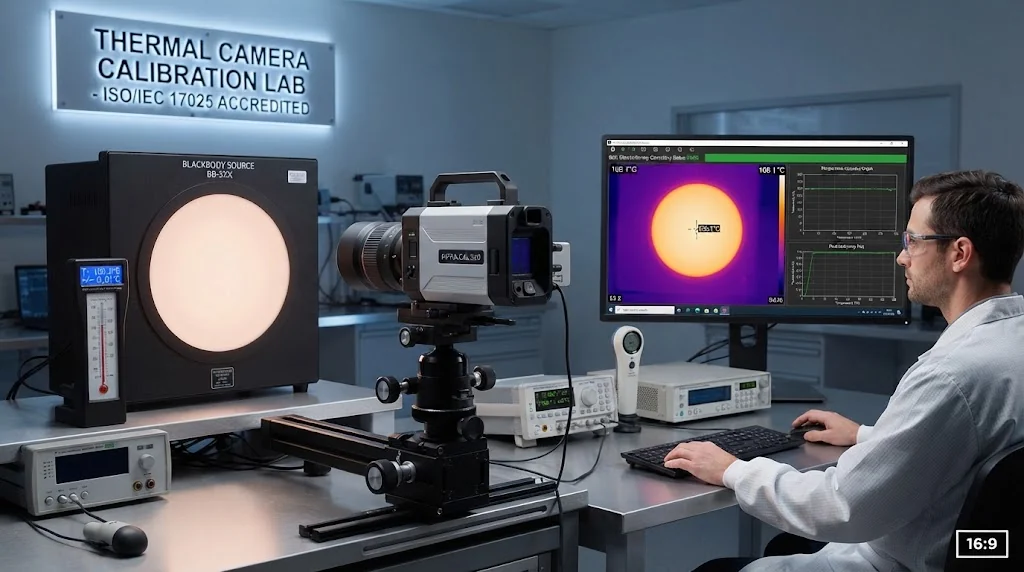
| Sensor Ingestion | Radiometric Thermal Accuracy | ±2.0°C or ±2% of reading | NIST Traceable Blackbody Calibration |
| Edge AI Vision | Analog Gauge & Defect Inference | ≥ 98.5% Precision; ≤ 1.0% False Positive | F1-Score Metric Validation Matrix |
| Cyber-Physical Safety | Dynamic Obstacle Braking Distance | ≤ 0.45 m at max velocity (1.5 m/s) | RIA R15.08 Type B Safety Compliance |
The Intelligent Robot Dog QAP-4 Deployment Protocol
To eliminate operational ambiguity between robotics original equipment manufacturers (OEMs) and industrial asset integrity teams, we developed the Intelligent Robot Dog QAP-4 Deployment Protocol. This four-stage methodology sets enforceable milestones across the hardware lifecycle.
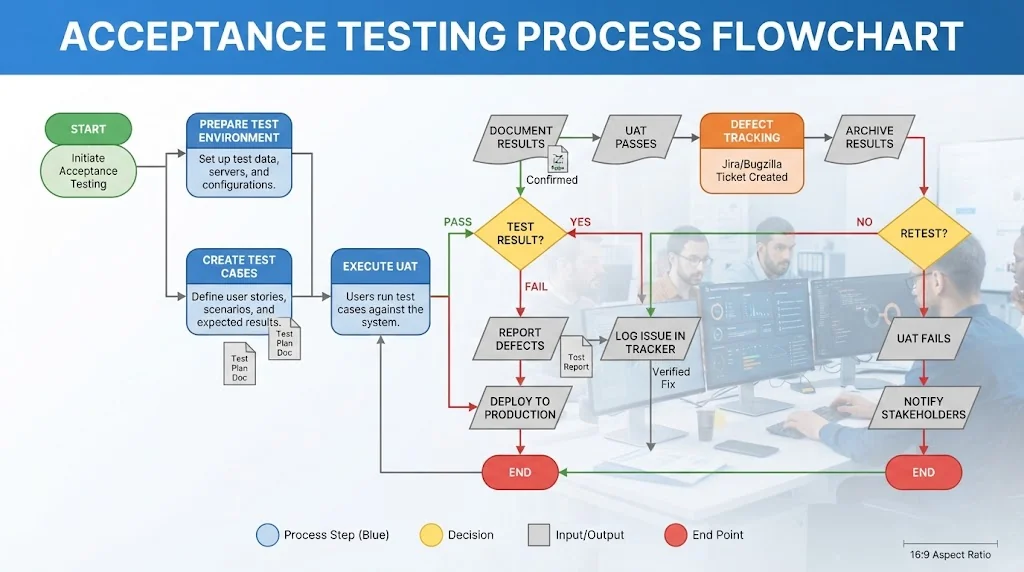
The Four Progressive Qualification Gates
- Stage 1: Environmental & Kinematic Characterization: Validates mobility profiles against site-specific physical constraints (risers, grated catwalks, pipe racks).
- Stage 2: Environmental Stress & Ingress Verification: Subjecting mechanical housings and thermal sub-assemblies to extreme temperature swings (-20°C to +55°C), IP67 pressurized water washdowns, and high-vibration exposure.
- Stage 3: Edge AI & Sensor Payload Certification: Calibrating optical, infrared, ultrasonic, and chemical payloads against physical ground-truth references.
- Stage 4: Operational Handover & Digital Twin Commissioning: Validating two-way telemetry exchange across SCADA, MES, and Enterprise Asset Management (EAM) platforms.
Phase 1: Proof of Concept (PoC) & Dynamic Locomotion Criteria
Proof of Concept testing determines whether a legged quadruped or wheeled-track robot can traverse the physical infrastructure of an industrial plant without manual intervention.
Wheeled and tracked platforms often struggle on open-grate landings, step risers exceeding 200 mm, and gravel pathways. Legged quadrupeds like the RZTL-1 industrial quadruped platform solve these mobility challenges through dynamic leg placement, active torque feedback, and bio-inspired stabilization algorithms.
Dynamic Locomotion Acceptance Criteria
- Stair Negotiation: Continuous bi-directional transit on standardized industrial stairs (35° to 45° incline, open risers, minimum 200 mm riser height) at ≥ 0.6 m/s without foot slippage.
- Expanded Metal & Bar Grating: Zero foot-entrapment across standard 19-W-4 galvanized steel grating with 1-3/16 inch center-to-center bearing bar spacing.
- Dynamic Lateral Impact Recovery: Immediate postural balance recovery without chassis ground strike when subjected to a 150 N impulse force applied perpendicular to the robot’s center of mass during motion.
- Standing Water & Silt Clearance: Stable wading through puddles, slurries, and cooling effluent up to 120 mm in depth without ground clearance loss or seal degradation.

Phase 2: Factory Acceptance Testing (FAT) Protocols
Factory Acceptance Testing confirms that the robotic platform meets design and manufacturing tolerances prior to site shipment. FAT takes place inside an OEM test facility under simulated operating conditions.
Critical FAT Validation Points
- IP67/IP68 Ingress Testing: 30-minute continuous submersion at a 1-meter depth followed by dust chamber exposure under 2 kPa vacuum without internal condensation or particle ingress.
- Continuous MTBF Endurance Run: A 120-hour non-stop autonomous patrol cycle inside a stress chamber combining thermal cycling (-20°C to +55°C) and continuous obstacle traversal.
- Autonomous Contact & Inductive Docking Precision: 150 consecutive docking runs into the autonomous charging station with a positional targeting tolerance of ± 5 mm and 100% recharge latching reliability.
- Dual E-Stop Hardware Latency: Validating that both physical chassis E-stops and wireless remote controller stops trigger a Category 0 torque shutdown within ≤ 45 milliseconds.
FAT sign-off requires all primary checklist items to pass. Any critical failure resets the 120-hour burn-in counter.
Phase 3: Site Acceptance Testing (SAT) & Field Handover Criteria
Site Acceptance Testing verifies the system in its permanent operating environment. The robot must navigate the real facility, connect to local network infrastructure, and communicate with supervisory systems.
Advanced autonomous SLAM navigation systems must operate reliably in dynamic environments where forklifts, personnel, parked vehicles, and overhead cranes regularly modify the physical layout.
Key SAT Evaluation Criteria
- Localization Repeatability: Maintaining global localization accuracy within ± 20 mm across a 50,000 m² production facility without drift over 30 days of autonomous runs.
- Mesh Network Handoff Latency: Private 5G or Wi-Fi 6 roaming handoffs between industrial access points must complete in ≤ 30 ms without telemetry drops at RSSI values down to -85 dBm.
- SCADA / DCS Integration: Seamless two-way data streaming via native OPC-UA and MQTT interfaces, delivering real-time telemetry, thermal alerts, and visual streams directly into the central control room.
- Mission Recovery & Failover: If the path becomes fully blocked, the robot must replan a secondary route within 2.5 seconds or enter a deterministic safe-park mode with supervisory alert dispatch.
| Test ID | Functional Test Description | Success Threshold | Critical Failure Criteria |
|---|---|---|---|
| SAT-01 | Full Facility Route Loop | 100% Waypoint visit over 20 runs | > 1 Manual intervention required |
| SAT-02 | Telemetry Ingestion via OPC-UA | 100 Hz publishing with ≤ 100 ms latency | Dropped packets > 0.05% |
| SAT-03 | Dynamic Obstacle Avoidance | Safe bypass with ≥ 0.5 m standoff | Collision or path deadlock > 10 s |
| SAT-04 | Auto-Docking & Battery Turnover | 50 Consecutive successful charges | ≥ 1 Missed contact or thermal fault |
Edge AI & Multi-Modal Sensor Payload Calibration Thresholds
Payload validation ensures the robot captures dependable asset health data. Sensor readings must stay precise under shifting industrial lighting, variable solar glare, high acoustic noise, and electromagnetic interference.
Heavy-payload units such as the Tongchui-M1 heavy-duty robot dog carry multi-sensor configurations—including dual optical-thermal pan-tilt-zoom (PTZ) heads, acoustic imagers, and multi-gas sniffers—without reducing battery endurance below 2.5 hours per mission.
Payload Qualification Standards
- Radiometric Thermal Analysis: Thermal point, area, and differential measurements must maintain accuracy within ± 2°C from -20°C to +550°C, calibrated against ISO 17025-certified blackbody sources.
- Acoustic Partial Discharge & Compressed Air Leak Detection: Acoustic array sensors must detect compressed air leaks ≥ 0.1 l/min at 3 bar from a distance of 5 meters amidst 85 dBA plant background noise.
- Edge Optical Gauge Digitization: Computer vision models must parse analog dial needles, liquid-level sight glasses, and 7-segment digital displays with ≥ 99.1% character recognition accuracy under 50 to 50,000 lux illumination.
- Hazardous Gas Sniffer Response Time: Integrated electrochemical and photoionization gas sensors (e.g., CH4, H2S, VOCs) must achieve T90 response times in ≤ 12 seconds with sub-ppm sensitivity.
Industrial Safety Compliance & Emergency Interlock Standards
Mobile robotics deployed alongside facility personnel must adhere to international robotic safety directives. Acceptance criteria require certified functional safety architectures that prevent human injury during autonomous operations.
Applicable Safety and Explosion-Proof Norms
- ISO 10218-1/-2 & RIA R15.08: Autonomous Mobile Robot (AMR) Type B/C validation, guaranteeing Category 3 / Performance Level d (PLd) architecture for safety-rated stop functions and dynamic speed monitoring.
- IECEx / ATEX Directive (Zone 1 / Zone 2 Compliance): Robots operating in potentially explosive hydrocarbon environments must carry ATEX II 2G Ex db ib IIB T4 Gb or Ex nA certified enclosures, purged chasses, and intrinsically safe battery management circuits.
- Audible & Visual Alert Protocols: Multidirectional high-intensity 360-degree LED beacons and synchronized acoustic indicators (75 to 85 dBA) warning personnel when entering blind intersections or automated transit corridors.
- Safety LiDAR Protective Fields: Dual-channel safety LiDAR arrays configured with dynamic safety zones that adjust deceleration curves in real time based on instantaneous payload weight and travel velocity.
Procurement Matrix: Fillable FAT/SAT Checklist & TCO Evaluation Model
A structured total cost of ownership (TCO) model balances upfront capital expenditure against long-term maintenance, scheduled calibration, and software lifecycle costs.
TCO and Payback Financial Model
Industrial facilities deploying quadruped inspection fleets typically project capital amortization over 36 to 48 months. Financial calculations should incorporate:
- CapEx Components: Base robot chassis, mission docking stations, multi-modal payload sensor packages, and SCADA gateway licenses.
- OpEx Parameters: Annual payload recalibration, joint actuator seal replacements, lithium-iron-phosphate battery module swaps at 2,000 cycles, and fleet management software updates.
- Risk Mitigation ROI: Labor savings from uncrewed hazardous inspections, reduced unplanned production downtime through early thermal anomaly detection, and lower insurance premiums across high-hazard facilities.
| Verification Milestone | Target Engineering Metric | Acceptance Status | Sign-Off Authority |
|---|---|---|---|
| Kinematic Incline & Stair Transit | 35° Industrial staircase pass (10/10 runs) | [ ] PASS / [ ] FAIL | Lead Commissioning Engineer |
| IP67 Pressurized Ingress Test | Zero fluid ingress after 30 min washdown | [ ] PASS / [ ] FAIL | Quality Assurance Lead |
| Thermal & Vision AI Accuracy | ≥ 98.5% precision on 100 test targets | [ ] PASS / [ ] FAIL | Integrity & Inspection Lead |
| SCADA Data Handshake (OPC-UA) | Sub-100ms bidirectional message exchange | [ ] PASS / [ ] FAIL | OT / Cybersecurity Architect |
| Safety Interlock & E-Stop Response | Cat 0 shutdown executed in ≤ 45 ms | [ ] PASS / [ ] FAIL | Plant Safety Director |
Frequently Asked Questions Regarding Robot Acceptance Criteria
How long does a complete industrial inspection robot FAT and SAT process typically take?
A standard Factory Acceptance Test (FAT) takes 3 to 5 business days at the manufacturer’s facility. Site Acceptance Testing (SAT) takes 2 to 3 weeks on-site, including SLAM point-cloud mapping, payload calibration against plant assets, mission scheduling, and OT network security validation.
What happens if the inspection robot fails an acceptance milestone during SAT?
Milestone failures are categorized by criticality. Category A issues (e.g., safety LiDAR failures or unhandled communication dropouts) halt testing until an engineering remedy is applied and verified. Category B issues (e.g., minor optical gauge recognition adjustments) allow site mapping to proceed while the OEM updates computer vision weights over the air.
Do modular payload upgrades require recertification under the original SAT?
Yes. Installing new sensor payloads modifies the robot’s center of gravity, power draw, and Edge computing workloads. Modular expansions require an addendum SAT covering sensor calibration accuracy, runtime duration under payload load, and structural clearance across existing inspection routes.