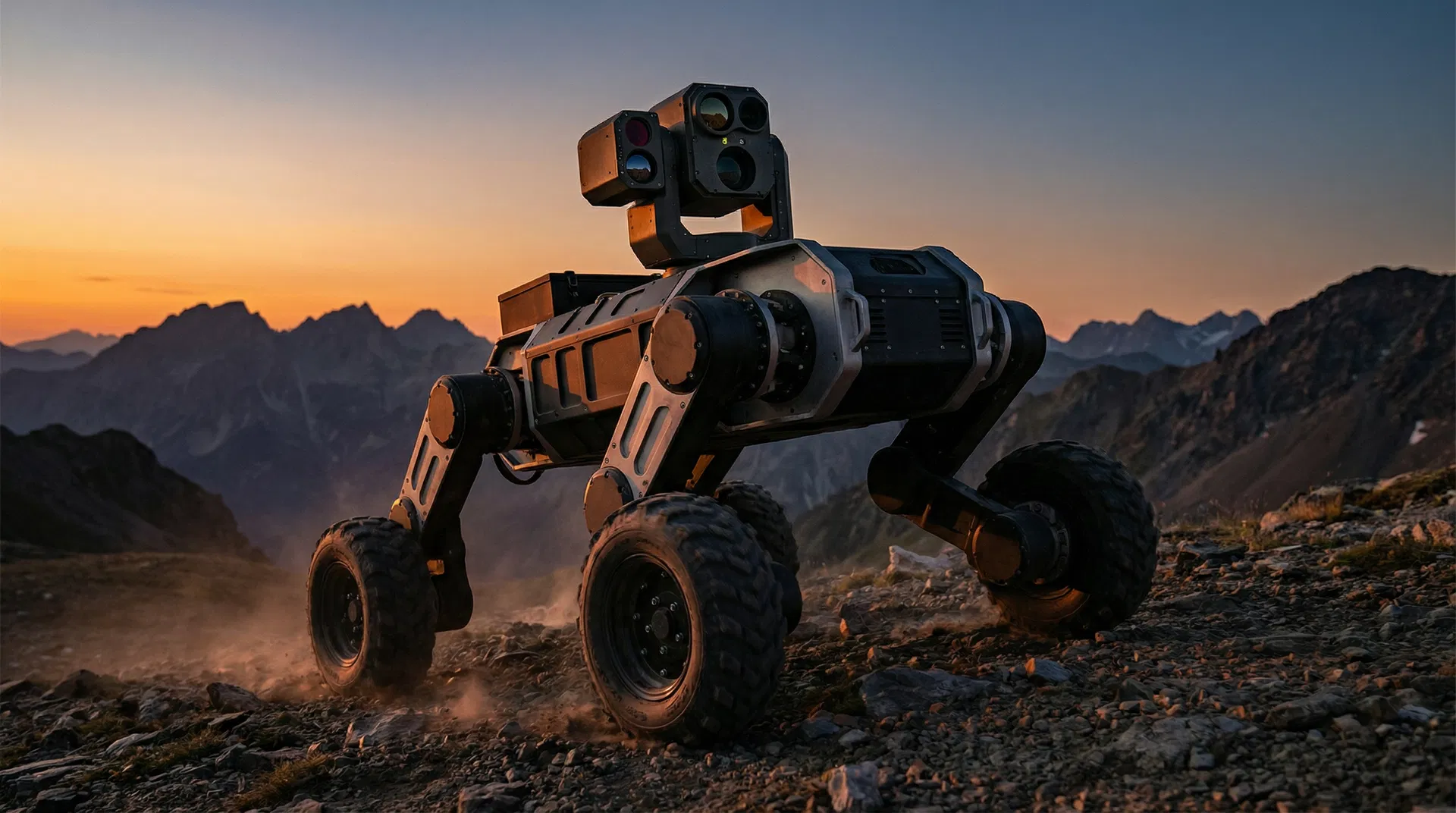
Introduction: Why Certification Matters in Explosive Atmospheres
When evaluating inspection robots for oil refineries, petrochemical plants, or pipeline corridors, the most critical specification is not payload capacity or battery life — it is whether the robot is certified for operation in explosive atmospheres.
ATEX (ATmosphères EXplosibles) and IECEx certifications define the safety standards that govern electrical and mechanical equipment operating in environments where flammable gases, vapors, or dusts may be present. For procurement engineers and HSE managers, understanding these standards is essential to selecting the right inspection robot platform.
What Is an Explosive Atmosphere?
An explosive atmosphere is a mixture of flammable substances — gases, vapors, mists, or dusts — with air, under atmospheric conditions, in which combustion spreads throughout the unburned mixture after ignition. In oil and gas facilities, explosive atmospheres are classified into zones:
- Zone 0: Explosive atmosphere present continuously or for long periods (inside storage tanks, process vessels)
- Zone 1: Explosive atmosphere likely to occur in normal operation occasionally (around flanges, pump seals, valve glands)
- Zone 2: Explosive atmosphere not likely in normal operation, but may persist briefly if it does occur
ATEX vs. IECEx: Understanding the Difference
ATEX is a European Union directive (2014/34/EU) requiring certification by a Notified Body and the ATEX marking (⑇ symbol with equipment group, category, and gas group).
IECEx is an international scheme administered by the IEC, accepted in 40+ countries including Australia, China, South Korea, and the Middle East. For global operators, IECEx is increasingly preferred as a single certification pathway for multi-country deployments.
Key Protection Concepts for Inspection Robots
| Protection Method | Code | Application |
|---|---|---|
| Intrinsic Safety | Ex i | Sensors, electronics — limits energy to below ignition threshold |
| Flameproof Enclosure | Ex d | Motors, junction boxes — withstands internal explosion |
| Increased Safety | Ex e | Terminal boxes, motors — prevents arcs and sparks |
| Encapsulation | Ex m | Sensors, switches — embeds components in compound |
What to Look for When Evaluating Inspection Robots
Zone Rating: Confirm the robot is rated for the specific zone. A Zone 2 rating is insufficient for Zone 1 areas.
Gas Group: Equipment is classified IIA, IIB, or IIC based on ignition energy of the target gas. Hydrogen (IIC) requires the most stringent protection. Verify the robot's gas group covers substances present at your facility.
Temperature Class: T1–T6 classification defines maximum surface temperature. For most hydrocarbon environments, T4 (135°C max) is the minimum requirement.
Certification Body: Verify certification by a recognized Notified Body (ATEX) or ExCB (IECEx). Self-declaration is not acceptable for Category 1 and 2 equipment.
IP Rating: IP67 or higher is essential for outdoor oil and gas environments.
Conclusion
ATEX and IECEx certifications are the engineering foundation that makes robotic inspection in explosive atmospheres safe and legally compliant. Certification status should be the first filter applied when evaluating inspection robot platforms for oil and gas applications — before comparing specifications, pricing, or vendor capabilities.
Contact Rongzhitong's engineering team for a site-specific certification assessment for your facility.
Related Solutions
Explore how SG Trading Asia's quadruped inspection robots are deployed in real-world applications:
- Oil & Gas Inspection Robot Solution
- Firefighting Robot Solution
- Industrial Park Security Robot Solution
Contact our engineering team to discuss your specific inspection requirements.
Tagged: