The Inspection Challenge in High-Voltage Substations
Power substations are the critical nodes of electrical transmission and distribution networks — and they are among the most hazardous environments for human inspection personnel. High-voltage equipment operating at 110 kV, 220 kV, or 500 kV creates arc flash hazards that can cause fatal injuries at distances of several metres. Electromagnetic interference from high-current equipment affects electronic devices and can disorient personnel. Outdoor substations operate in extreme weather conditions year-round, while indoor GIS (Gas-Insulated Switchgear) substations present confined space challenges.
Despite these hazards, substations require frequent, comprehensive inspection to maintain grid reliability. Equipment failures in substations can cause widespread power outages affecting millions of customers and result in enormous economic losses. The traditional response — sending inspection personnel into substations on regular rounds — creates an unacceptable tension between inspection frequency and personnel safety.
What Autonomous Inspection Robots Detect
Thermal Anomaly Detection
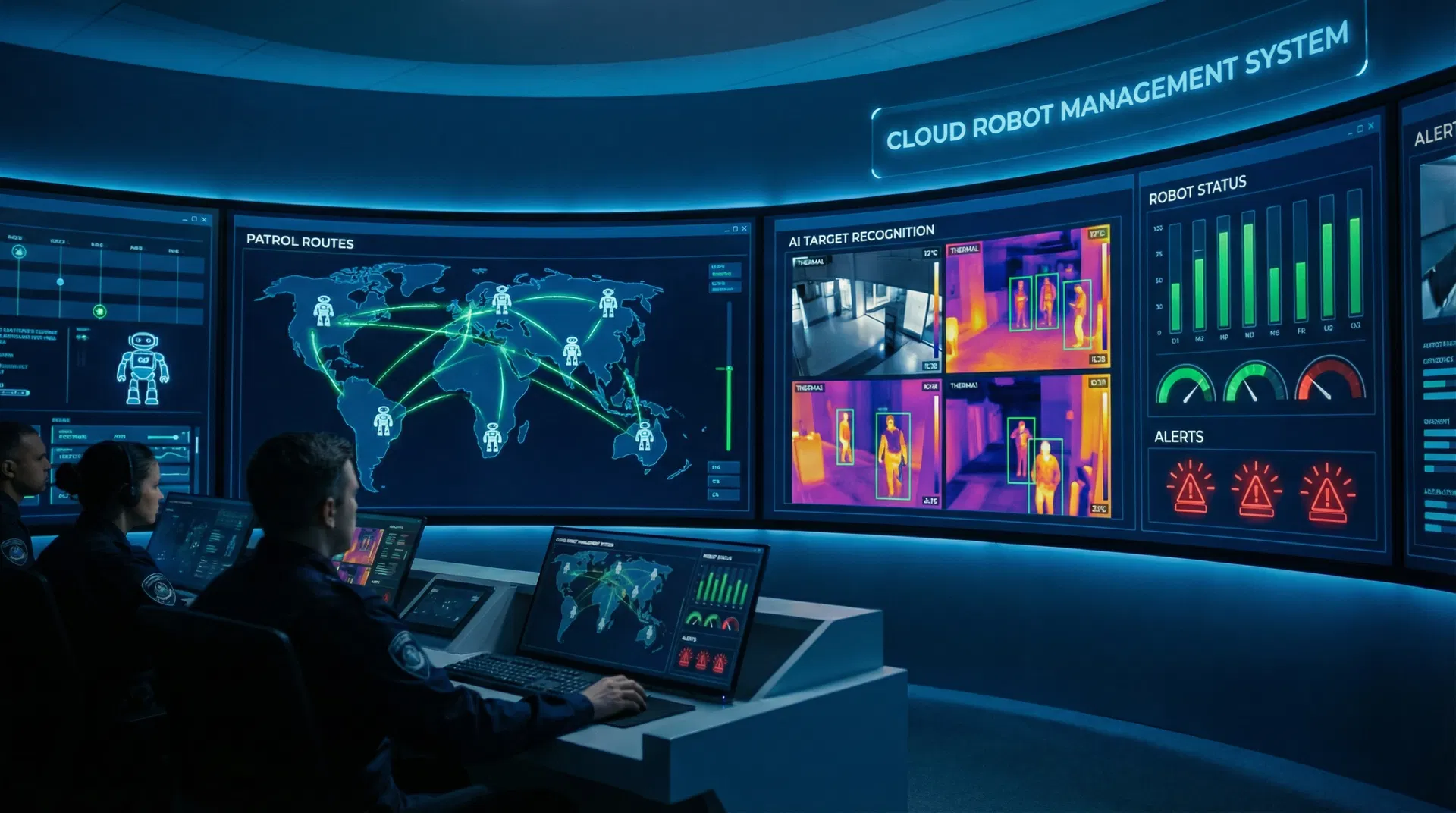
Overheating is the most common precursor to electrical equipment failure. Loose connections, failing insulation, overloaded conductors, and deteriorating contacts all generate heat before they fail catastrophically. Our inspection robots carry high-resolution thermal imaging cameras (640×512 uncooled LWIR, ±2°C accuracy) that scan all equipment during every patrol, automatically flagging temperature deviations against baseline measurements and IEC 61850-defined alarm thresholds.
The thermal inspection capability extends to transformer oil temperature monitoring, busbar connection inspection, cable termination assessment, and switchgear thermal profiling — providing a comprehensive thermal health picture of the substation that would require multiple specialist inspectors to replicate manually.
Partial Discharge Detection
Partial discharge (PD) is an electrical discharge that occurs within insulation systems under high-voltage stress, indicating insulation degradation before complete breakdown. PD is a critical early warning indicator for transformer failures, cable faults, and GIS equipment deterioration — but it is invisible to standard visual inspection and requires specialist ultrasonic or acoustic detection equipment.
Our substation inspection robots are equipped with ultrasonic sensors and acoustic emission detectors that continuously monitor for partial discharge signatures during patrol. The AI analysis system distinguishes genuine PD events from background noise, classifies discharge severity, and correlates PD location with equipment identity — providing maintenance teams with actionable early warning of insulation deterioration weeks or months before failure.
Equipment Status and Indicator Reading
Substations contain hundreds of gauges, indicator lights, breaker position indicators, and meter displays that must be checked during every inspection round. Manual reading of these indicators is time-consuming, error-prone, and requires personnel to approach high-voltage equipment closely. Our AI vision system automatically reads and records all instrument values during patrol, comparing readings against normal operating ranges and flagging deviations without requiring human interpretation.
SF₆ Gas Leak Detection
Gas-insulated switchgear (GIS) uses sulphur hexafluoride (SF₆) as an insulating medium. SF₆ leaks reduce equipment insulation performance and represent a significant environmental concern (SF₆ has a global warming potential 23,500 times that of CO₂). Our robots carry SF₆ gas sensors that detect leaks at concentrations well below hazardous levels, enabling early intervention before equipment performance is compromised.
Integration with IEC 61850 Substation Automation
Modern substations increasingly use IEC 61850 — the international standard for communication in electrical substations — as the backbone of their automation and monitoring systems. Our cloud inspection platform supports IEC 61850 data integration, enabling robotic inspection findings to be correlated with SCADA data, protection relay event logs, and energy management system records.
This integration transforms robotic inspection from a standalone data collection exercise into a component of the substation’s overall condition monitoring system. Thermal anomalies detected by the robot can be automatically correlated with load current data from the SCADA system, enabling more accurate assessment of whether an anomaly represents a genuine fault or normal load-dependent heating.
Operational Deployment Considerations
Charging and Continuous Coverage
Our substation inspection robots are designed for continuous deployment with automatic return-to-dock charging. The TongChui M1 platform achieves 29 km range on a single charge, sufficient for multiple complete inspection rounds of large 500 kV substations. Automatic charging enables 24/7 coverage without manual intervention, ensuring that thermal anomalies developing during peak load periods are detected regardless of time of day.
Electromagnetic Compatibility
High-voltage substations generate intense electromagnetic fields that can disrupt electronic equipment. Our inspection robots are designed and tested for operation in EMC environments consistent with IEC 61000-4 standards, ensuring reliable navigation and sensor operation in the presence of high-voltage equipment. The LiDAR-based SLAM navigation system is inherently immune to electromagnetic interference, unlike GPS-based systems.
All-Weather Operation
Outdoor substations require inspection in all weather conditions — including rain, snow, fog, and extreme temperatures. Our robots’ IP67 enclosure rating and -20°C to +55°C operating range ensure continuous inspection capability regardless of weather, eliminating the inspection gaps that occur when manual inspection is curtailed by adverse conditions.
Measurable Outcomes from Substation Deployments
Power utilities that have deployed our substation inspection robots report consistent improvements across key performance indicators. Inspection frequency typically increases from weekly or bi-weekly manual rounds to daily or continuous robotic patrol, dramatically improving the probability of detecting developing faults before they cause outages. Thermal anomaly detection rates improve by 35–55% compared to manual inspection, driven primarily by the robot’s ability to inspect all equipment systematically rather than focusing on known problem areas.
Personnel safety improvements are equally significant. Eliminating routine manual inspection rounds removes the most frequent source of personnel exposure to arc flash risk in substations, while maintaining or improving inspection quality. The structured digital inspection records also provide utilities with comprehensive evidence of inspection compliance for regulatory reporting purposes.
Conclusion
Autonomous robotic inspection represents a genuine step-change improvement for power substation maintenance. The combination of thermal anomaly detection, partial discharge monitoring, equipment status reading, and gas leak detection — delivered continuously by a robot that never misses a round, never makes transcription errors, and never puts personnel at risk — addresses the fundamental limitations of manual inspection in high-voltage environments.
For power utilities facing increasing grid reliability requirements, ageing infrastructure, and pressure to reduce operational costs, autonomous substation inspection is a proven technology delivering measurable returns on investment from the first year of deployment.
—
## Related Solutions
Explore how SG Trading Asia’s quadruped inspection robots are deployed in real-world applications:
– [Power Substation Inspection Solution](/solutions/power-substation-inspection)
– [Predictive Maintenance Robot Solution](/solutions/predictive-maintenance)
– [Intelligent Inspection Robot System](/solutions/inspection)
*[Contact our engineering team](/contact) to discuss your specific inspection requirements.*
Tagged: