Municipal Water Plant Achieves Zero Confined Space Incidents in 24 Months
Confined Space Entry: The Highest-Risk Activity in Water Utility Operations
A Southeast Asian municipal water authority responsible for supplying drinking water to 2.4 million residents identified confined space entry as the highest-risk activity in its operations. The authority’s water treatment facility and distribution network contained over 340 confined spaces — pump chambers, underground pipe galleries, valve vaults, and chemical dosing rooms — each requiring regular inspection to maintain operational integrity and regulatory compliance.
Each confined space entry required a minimum 3-person team (entrant, standby, and supervisor), pre-entry atmospheric testing, and a permit-to-work process that took 45–90 minutes per entry. The administrative and safety overhead made high-frequency inspection economically impractical, limiting most confined spaces to monthly or quarterly inspection cycles. The authority had experienced one confined space fatality and two serious injuries in the preceding five years, creating significant regulatory scrutiny and insurance liability.
“Every confined space entry is a risk event. The robot doesn’t need a permit-to-work, doesn’t need a standby team, and can go in as often as we need. We’ve eliminated the routine entry risk entirely.”
— Health & Safety Manager, Municipal Water Authority
IP67 Quadruped Robots for Autonomous Confined Space Inspection
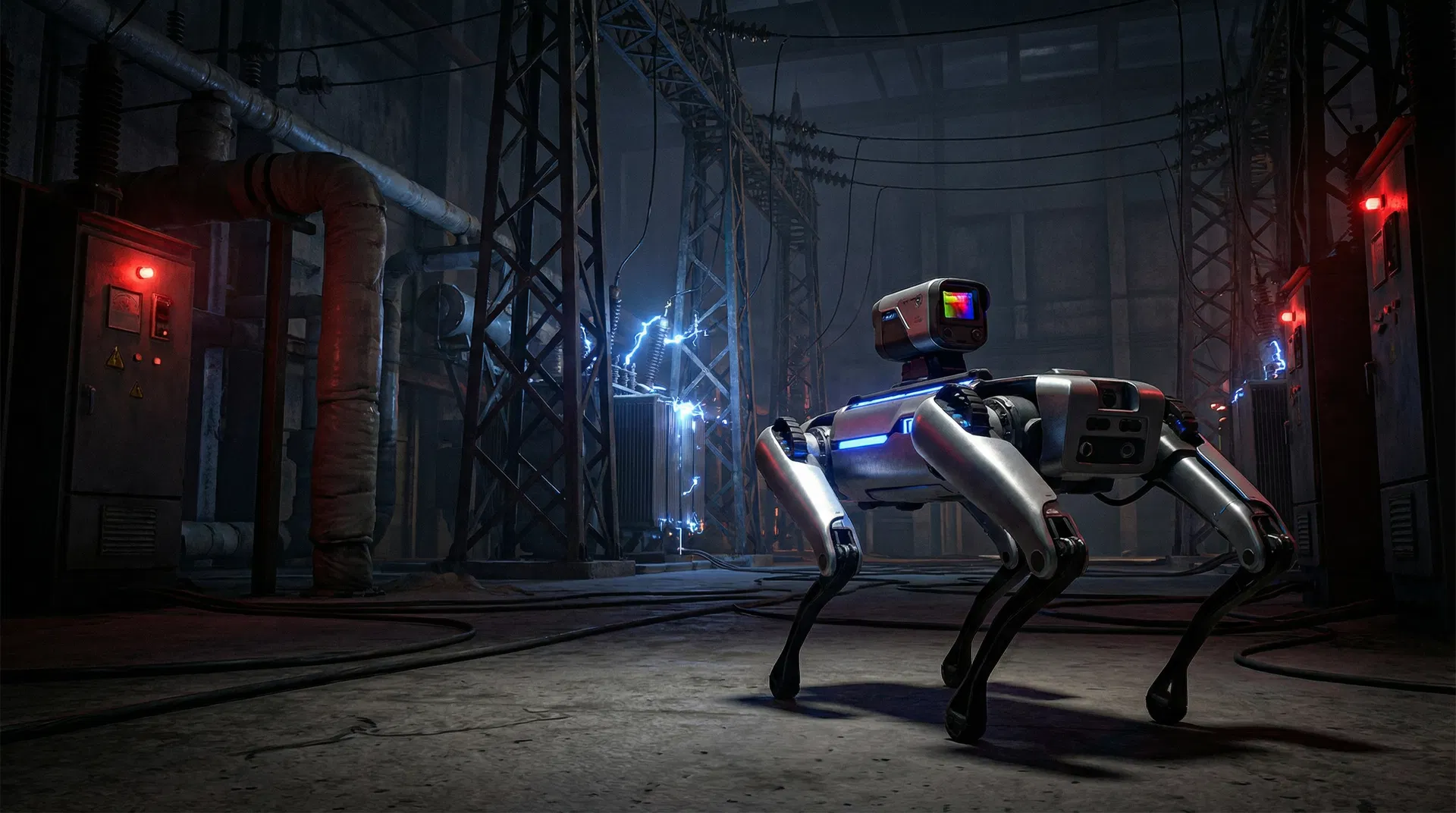
Shaanxi Smart Innovation Future Technology deployed the RZTL-1W quadruped robot — rated IP67 for complete dust and water immersion protection — equipped with a confined space inspection payload including a multi-gas sensor array (O2, CO, H2S, CH4), high-resolution visible camera, and LED lighting system for operation in unlit underground spaces.
The robot was deployed to conduct routine inspection of 280 of the authority’s 340 confined spaces (those with access openings large enough for the robot’s form factor), covering pump chambers, pipe galleries, and valve vaults. Inspection frequency was set to 4 times per week for high-priority spaces and weekly for standard spaces — a dramatic increase from the previous monthly or quarterly manual cycles.
Zero Confined Space Incidents in 24 Months and SGD 280k Annual Savings
In the 24 months following deployment, the authority recorded zero confined space incidents — the first two-year period without a confined space safety event in the organization’s history. The elimination of routine confined space entries for inspection purposes removed the primary source of confined space risk from the authority’s operations.
The authority estimated annual savings of SGD 280k from reduced permit-to-work administration, standby team costs, and insurance premium reductions. The increased inspection frequency also enabled earlier detection of infrastructure deterioration, with 12 pump bearing failures and 3 pipe corrosion issues identified and addressed before causing service disruptions.
Deployment Summary
Related Solutions
Related Case Studies
 Water Utility
East Asia Reservoir Dam Inspection Automates 18 km Patrol Route, Saves SGD 480k/Year
A regional water authority automated structural inspection of a major dam and reservoir perimeter, replacing a 12-person inspection team with a 3-robot autonomous fleet.
Power & EnergyAutonomous Substation Inspection Reduces Manual Rounds by 85%
A regional grid operator deployed the RZTL-1W across 12 substations, cutting inspection cycles from 4 hours to 45 minutes with real-time thermal anomaly detection.
Oil & GasIP67 Quadruped Robots Cut Inspection Labor Costs 58% at Petrochemical Facility
A major petrochemical refinery replaced 6 manual inspection teams with 2 RZTL-1W units, achieving continuous 24/7 gas leak detection and thermal imaging across 3 km of process piping.