Copper Mine Conveyor Belt Inspection Reduces Unplanned Downtime by 41%
Conveyor Belt Failures: The Largest Source of Unplanned Downtime at the Facility
A copper mining facility operating 8 km of conveyor belt systems identified conveyor failures as the single largest contributor to unplanned production downtime, accounting for 34% of all production stoppages in the preceding 12 months. The facility’s maintenance team relied on daily manual inspections of idler rollers, belt tracking, and drive components — but the sheer length of the conveyor network meant that each inspection cycle took 4–6 hours per inspector, and high-frequency inspection was economically impractical.
The most common failure modes — overheating idler rollers and misaligned belt tracking — typically developed over hours or days before causing a catastrophic failure. Manual inspection could not provide the frequency needed to catch these developing faults before they escalated. The facility needed a solution that could monitor the entire conveyor network continuously, detect thermal and mechanical anomalies in real time, and alert maintenance teams before failures occurred.
“Every unplanned conveyor stoppage costs us 2–4 hours of production. The robot pays for itself every time it catches an overheating roller before it causes a belt fire or a seized drive unit.”
— Maintenance Manager, Copper Mining Facility
Continuous Thermal and Acoustic Monitoring with Autonomous Patrol
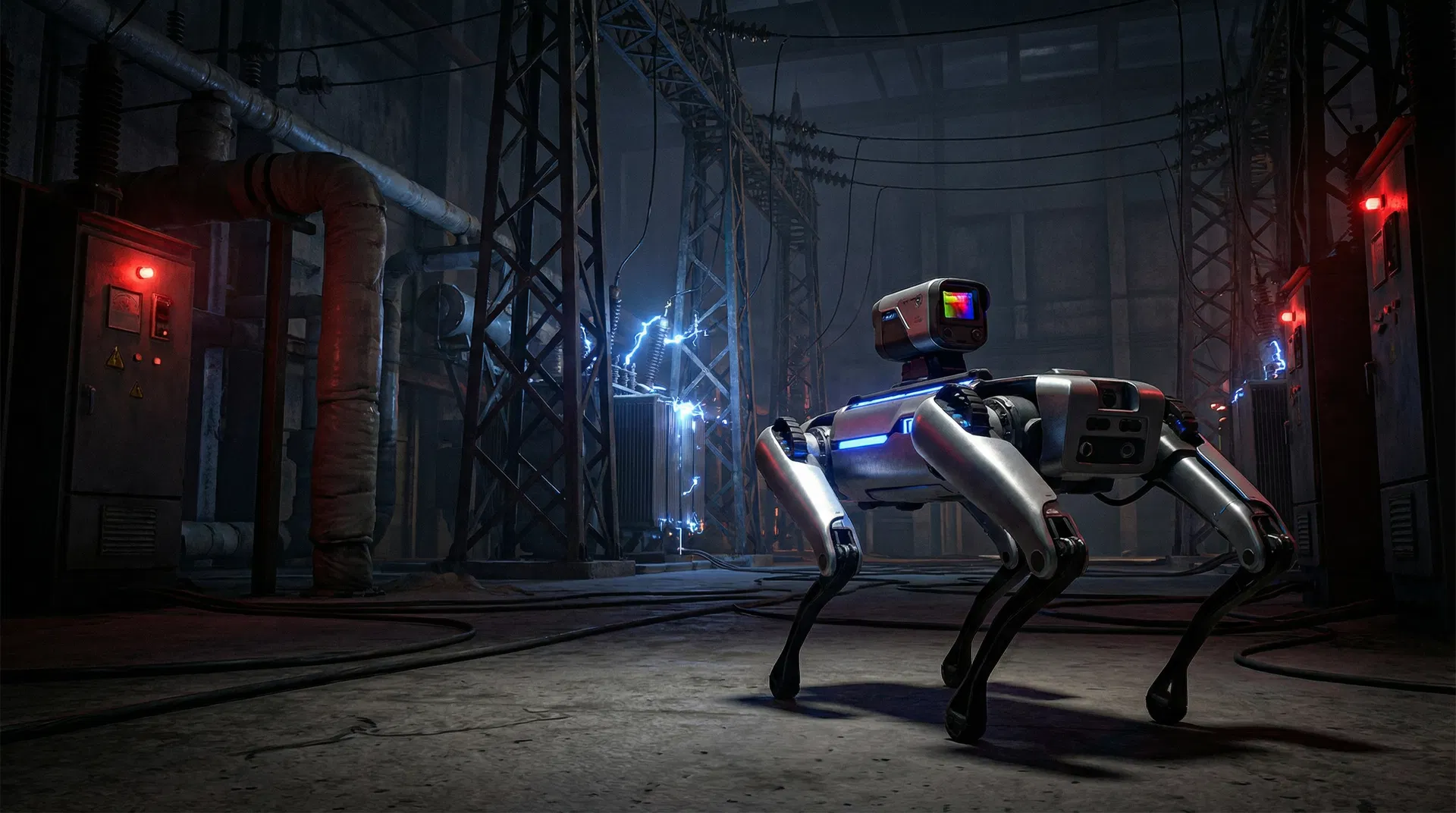
Shaanxi Smart Innovation Future Technology deployed the RZTL-1W quadruped robot equipped with a combined thermal imaging and acoustic emission sensor payload. The thermal camera monitored idler roller temperatures and belt surface conditions, while the acoustic sensor detected abnormal vibration signatures from bearings and drive components — providing early warning of both thermal and mechanical failure modes.
The robot was programmed to patrol the full 8 km conveyor network six times per day, with each patrol completing a systematic inspection of all idler roller stations, belt tracking sensors, and drive unit enclosures. The patrol schedule was designed to maintain continuous coverage during all three production shifts, with the robot automatically returning to its charging station between patrols.
41% Downtime Reduction and SGD 1.2M Annual Production Loss Avoided
In the 12 months following deployment, the facility recorded a 41% reduction in unplanned conveyor downtime compared to the preceding year. The robot detected 23 developing idler roller overheating events and 7 bearing anomalies before they caused failures, enabling the maintenance team to schedule corrective maintenance during planned downtime windows rather than responding to emergency stoppages.
The financial impact was significant: avoided production losses from the 30 pre-empted failures were estimated at SGD 1.2M annually, representing a payback period of approximately 14 months on the total deployment cost including hardware, installation, and the first year of support.
Deployment Summary
Related Solution
Explore our Mining Inspection solutions for surface and underground mining environments.
Mining Inspection SolutionsDiscuss Your Project
Our mining specialists can design a conveyor monitoring solution tailored to your facility’s layout and maintenance requirements.
Contact a SpecialistRelated Case Studies
 Mining
Underground Coal Mine Gas Monitoring: 68% Reduction in Personnel Exposure
A coal mining operation deployed quadruped robots for continuous gas monitoring in underground tunnels, eliminating the need for manual gas checks in confined hazardous spaces.
Power & EnergyAutonomous Substation Inspection Reduces Manual Rounds by 85%
A regional grid operator deployed the RZTL-1W across 12 substations, cutting inspection cycles from 4 hours to 45 minutes with real-time thermal anomaly detection.
Oil & GasIP67 Quadruped Robots Cut Inspection Labor Costs 58% at Petrochemical Facility
A major petrochemical refinery replaced 6 manual inspection teams with 2 RZTL-1W units, achieving continuous 24/7 gas leak detection and thermal imaging across 3 km of process piping.