Petrochemical Plant Fire Response: Under 4-Minute Suppression, Zero Responder Casualties
First-Responder Safety in High-Consequence Fire Environments
A major petrochemical processing facility in eastern China operates continuous-process units handling flammable hydrocarbons, pressurized vessels, and toxic chemical streams across a 320,000 m² site. The facility’s fire safety team faced a fundamental dilemma: the most dangerous phase of any fire incident — initial entry for reconnaissance and first suppression — required human responders to enter environments with lethal atmospheric conditions, extreme radiant heat, and secondary explosion risk.
In a 2023 incident drill, the facility’s fire brigade required an average of 11 minutes from alarm to first water application — a delay driven entirely by the time required to don protective equipment, assess conditions, and advance hose lines to the fire source. Industry data indicates that fire doubles in size every 60–90 seconds in uncontrolled conditions; an 11-minute response time was assessed as unacceptable for the facility’s high-consequence fire scenarios.
The facility’s safety director initiated a procurement process for robotic firefighting capability with three non-negotiable requirements: the system must be deployable within 2 minutes of alarm, must operate without human presence in the hazard zone, and must provide real-time atmospheric data to support safe human entry decisions.
“Every major incident we reviewed had the same pattern: the most dangerous moment was the first entry. We needed a system that could take that risk away from our people entirely.”
— Fire Safety Director, Petrochemical Processing Facility
RZTM-1 Autonomous Firefighting System — Integrated Deployment
Shaanxi Smart Innovation Future Technology deployed a two-unit RZTM-1 firefighting robot system integrated with the facility’s existing fire alarm infrastructure. Each RZTM-1 is stationed in a dedicated charging bay adjacent to the highest-risk process units, with autonomous deployment triggered directly by the facility’s fire detection system.
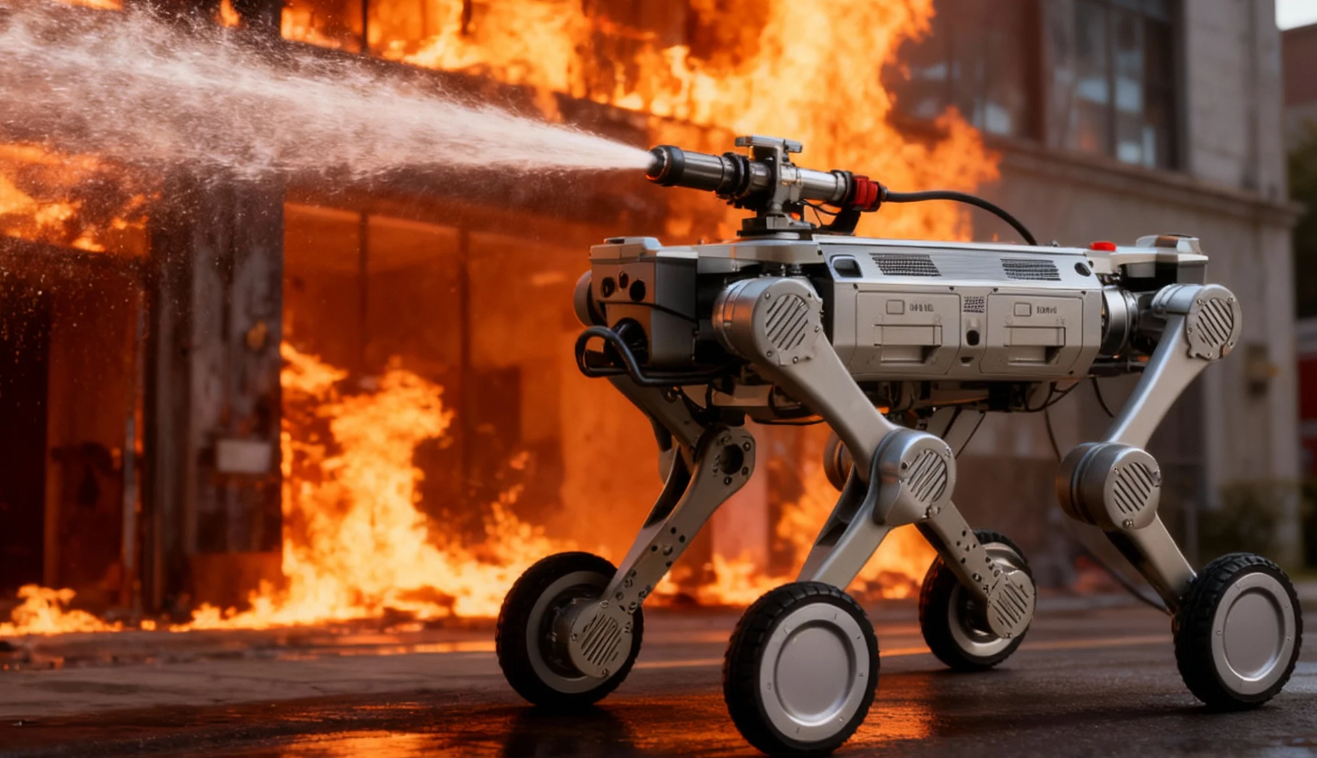
RZTM-1 configured with 40 L/s water cannon, thermal imaging, and compound gas sensor array for petrochemical fire response.
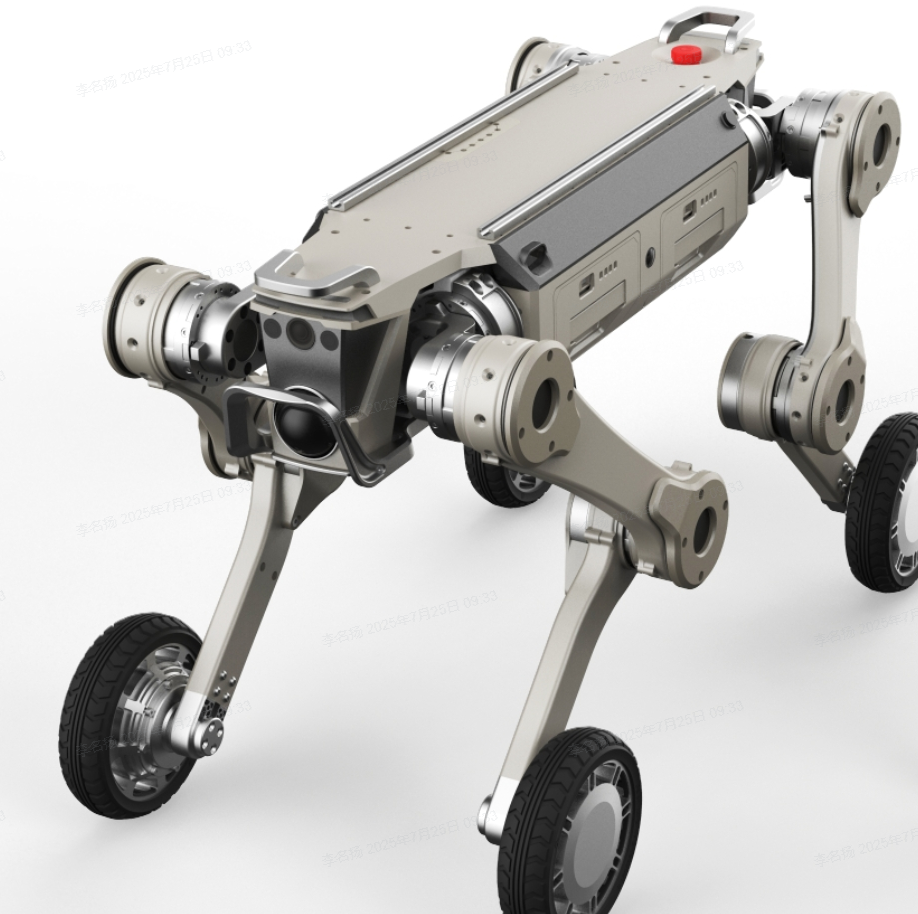
Upon alarm activation, the RZTM-1 self-deploys along a pre-mapped route to the incident location. The wheel-legged drivetrain enables rapid approach at speeds exceeding 8 m/s on paved surfaces, transitioning to legged locomotion for obstacle traversal in process areas. En route, the compound gas sensor array begins characterizing the atmospheric hazard, streaming CO, H₂S, combustible gas, and O₂ readings to the incident command center in real time.
On arrival at the fire source, the dual-spectrum thermal camera identifies the primary hotspot and the AI targeting system calculates the optimal suppression angle and flow rate. The 60-meter water cannon range allows suppression from a safe standoff distance — outside the thermal radiation zone for most process unit fire scenarios. The incident commander can override autonomous targeting and take manual control via the command interface if required.
“The RZTM-1 reached the fire source and began suppression before our brigade had finished donning their breathing apparatus. That 7-minute difference is the difference between a contained incident and a facility-wide emergency.”
— Fire Safety Director, Petrochemical Processing Facility
Faster Response, Zero Casualties, Reduced Insurance Cost
Over 18 months of operational deployment, the two-unit RZTM-1 system responded to 7 actual fire incidents and 23 gas leak events. The system consistently outperformed the manual baseline on every measured dimension.
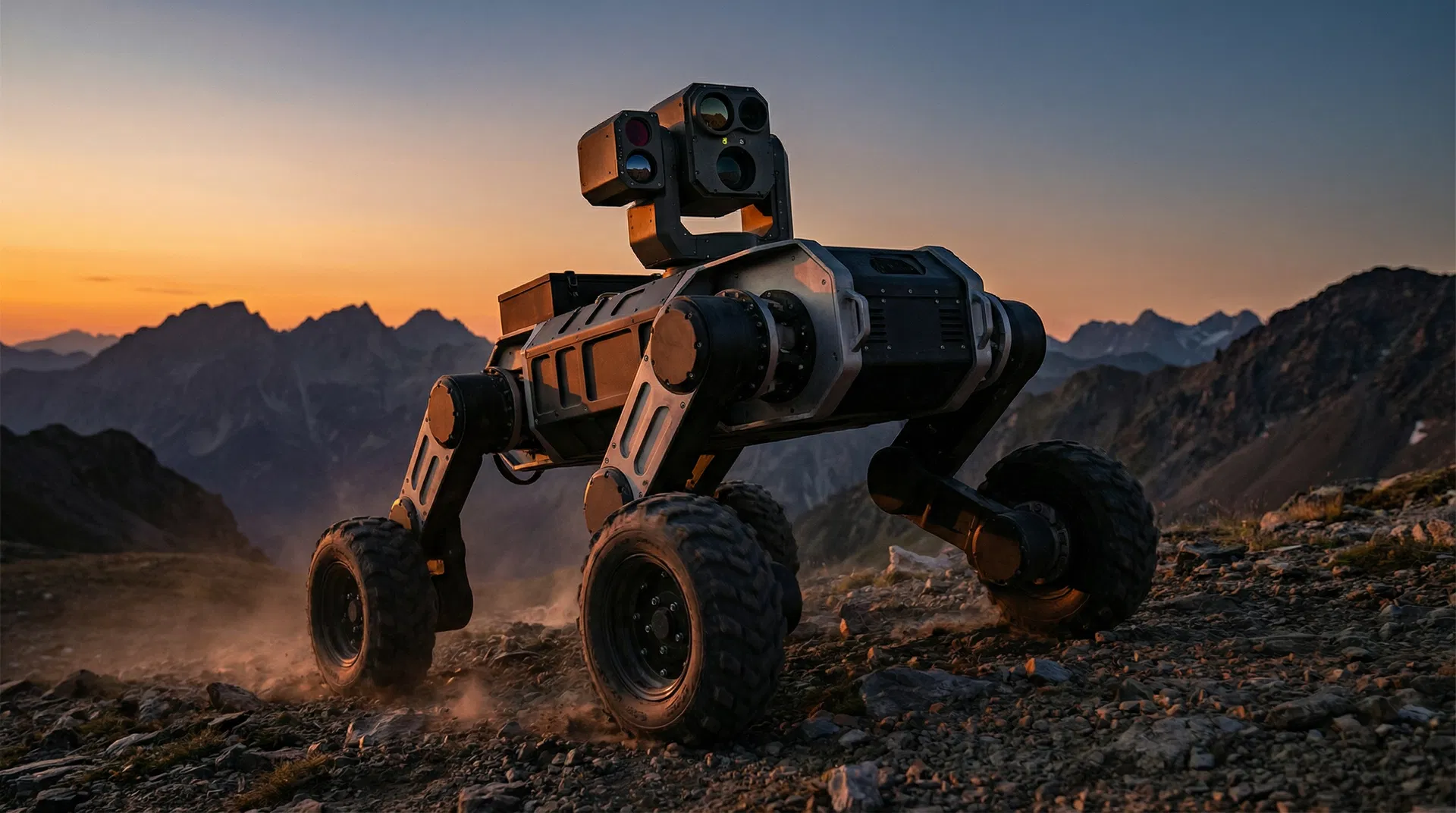
RZTM-1 units operating in complex terrain during a multi-unit incident simulation, demonstrating wheel-legged mobility in debris-strewn environments.
The facility’s insurance provider recognized the robotic firefighting deployment as a significant risk reduction measure, resulting in a 12% reduction in annual property insurance premiums — partially offsetting the system’s total cost of ownership.
The facility is now expanding the deployment to cover all high-risk process units, with a target of four RZTM-1 units providing full-facility coverage by Q4 2026.
Firefighting & Emergency Response Solution
Learn how the complete RZTM-1 firefighting system — including suppression hardware, sensing systems, and command platform — can be configured for your facility’s specific fire risk profile.
View Firefighting SolutionGet a Free Consultation
Discuss how our robots can replicate these results in your facility. No commitment required.
Related Case Studies
 Oil & Gas
IP67 Quadruped Robots Cut Inspection Labor Costs 58% at Petrochemical Facility
A major petrochemical refinery replaced 6 manual inspection teams with 2 RZTL-1W units, achieving continuous 24/7 gas leak detection and thermal imaging across 3 km of process piping.
 Chemical Plant
Middle East Petrochemical Refinery LDAR Program Cuts Emission Events by 54%
A major Middle East petrochemical refinery deployed robots for continuous Leak Detection and Repair (LDAR) monitoring, achieving regulatory compliance and significant emission reductions.
 Chemical Plant
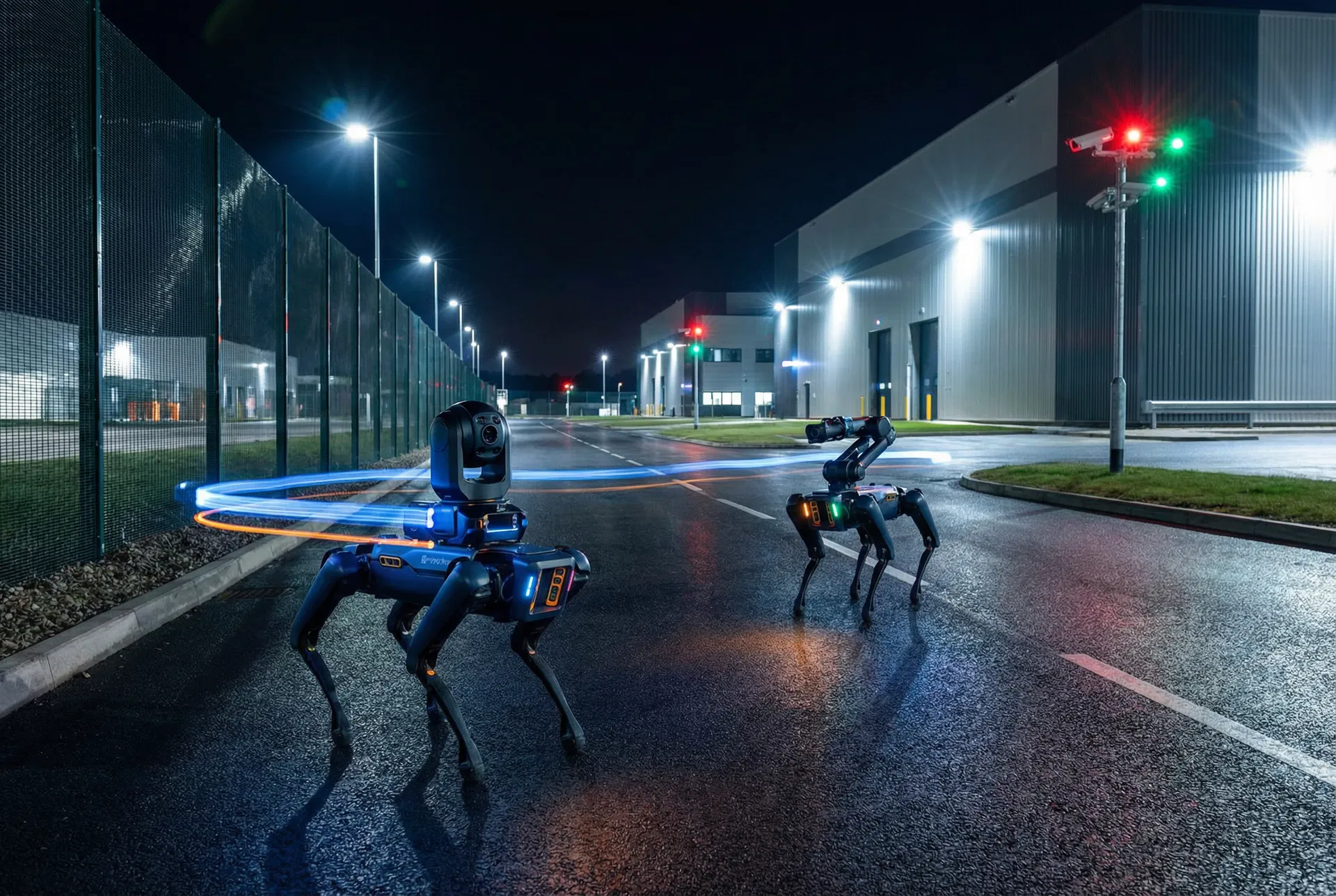
East Asia Chemical Plant Night Patrol Automation Reduces Labour Costs by 40%
A fine chemicals manufacturer automated overnight patrol and safety monitoring across a 0.8 km² production campus, replacing 6 night-shift security and inspection personnel.