Hyperscale Data Center Achieves 91% Reduction in Mean Time to Detect Thermal Anomalies with Autonomous Robot Patrol
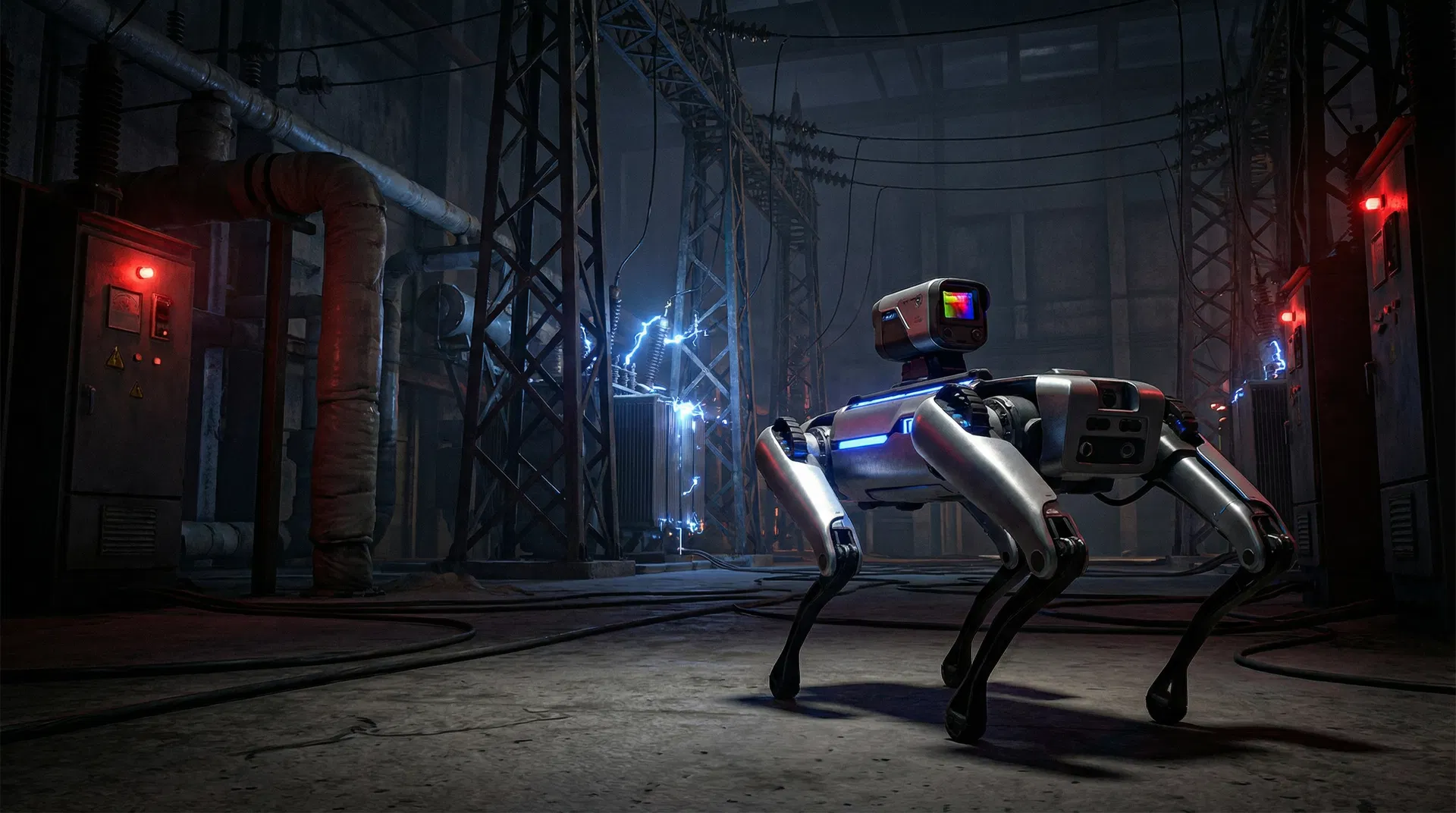
48,000 m² of AI Compute Infrastructure, a 0.5°C Thermal Margin, and a Fixed-Sensor Blind Spot Problem
A Tier IV hyperscale data center operator in eastern China manages a campus of six server halls totalling 48,000 m² of raised-floor space, housing approximately 120,000 active servers across high-density GPU compute clusters, storage arrays, and networking infrastructure. The facility operates at an average rack power density of 18 kW per rack in standard zones and up to 65 kW per rack in dedicated AI training clusters — a density profile that compresses the thermal margin between normal operating temperature and the threshold at which automatic thermal throttling or emergency shutdown is triggered to as little as 0.5°C in the most critical zones.
The operator’s existing thermal monitoring infrastructure consisted of approximately 4,200 fixed temperature and humidity sensors distributed across the facility, supplemented by hot-aisle containment systems and a DCIM (Data Center Infrastructure Management) platform aggregating sensor data in real time. While this fixed-sensor network provided broad coverage of ambient conditions, it presented two fundamental limitations that became increasingly critical as rack density increased.
The first limitation was spatial resolution. Fixed sensors, regardless of their density, measure ambient air temperature at discrete points — they cannot detect localized thermal anomalies developing within individual server chassis, at specific cable bundle hotspots, or along the face of a particular rack row. In high-density AI compute zones, a developing hotspot in a GPU server’s cooling system can reach critical temperature before the nearest ambient sensor registers a statistically significant deviation from baseline, because the surrounding airflow partially masks the local thermal signature. The operator’s engineering team estimated that the average fixed-sensor detection lag for a developing rack-level thermal event was 22–35 minutes from the point of anomaly onset — a window that, in a 65 kW/rack AI cluster, is sufficient for thermal damage to propagate to adjacent equipment.
The second limitation was physical access frequency. The facility’s security and contamination control protocols restricted routine human entry into active server halls to scheduled maintenance windows and emergency response situations. This meant that visual inspection of cable management, airflow obstruction, indicator light status, and physical equipment condition — all important early indicators of developing issues that are not captured by ambient sensors — was occurring at intervals of days to weeks rather than continuously. The operations team had identified several instances where equipment failures were preceded by visible warning signs (abnormal indicator patterns, unusual cable configurations introduced during maintenance, airflow obstruction from improperly seated blanking panels) that were not detected until the scheduled inspection visit.
The operator required a solution that could provide continuous, high-resolution thermal surveillance of the entire facility at the rack and chassis level, combined with visual inspection of physical equipment status — without introducing additional human traffic into the server halls, and without disrupting the precision airflow management systems on which the facility’s cooling efficiency depended.
“Our fixed sensor network tells us what the air is doing. The robot tells us what the equipment is doing. Those are two fundamentally different things, and in a high-density AI compute environment, you need both. The 22-minute detection lag we had before wasn’t acceptable — at 65 kW per rack, 22 minutes is a very long time.”
— Head of Data Center Operations, Tier IV Hyperscale Operator
ZSL-1 Configured for Precision Data Center Patrol: Sub-Floor Navigation, Rack-Level Thermal Scanning, and DCIM Integration
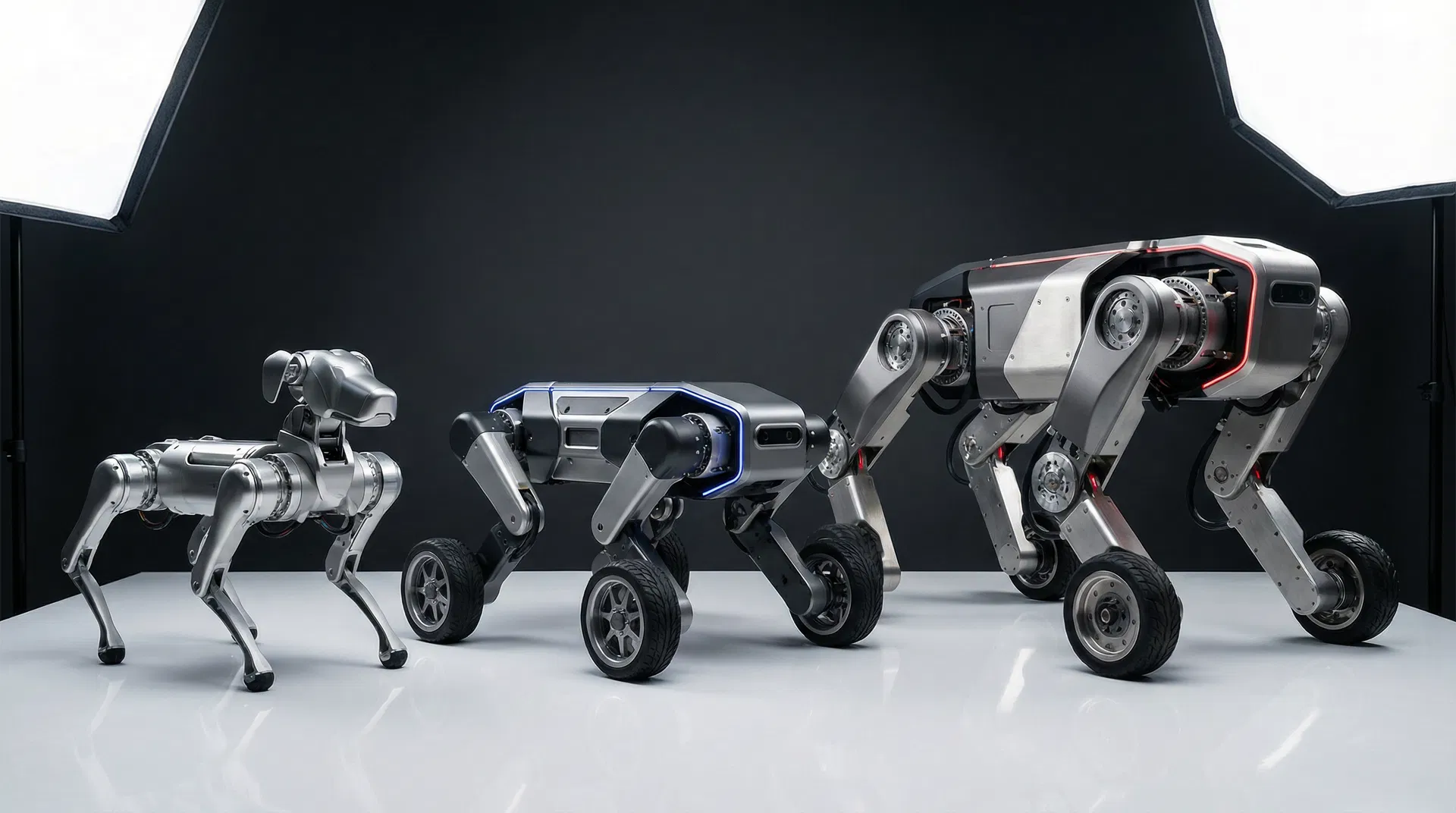
The ZSL-1 compact quadruped robot was selected as the inspection platform based on three specific capabilities relevant to the data center environment. Its low profile (body height 42 cm) and precise foot-placement control allowed navigation in the narrow inter-rack aisles characteristic of high-density deployments — aisles as narrow as 900 mm — without requiring modification to the facility’s raised-floor infrastructure or disrupting the hot/cold aisle containment architecture. Its electrically quiet drive system, using brushless motors with low electromagnetic emission profiles, was validated to produce no measurable interference with server hardware or networking equipment during proximity operation. And its 10 kg payload capacity accommodated the multi-sensor inspection suite required for comprehensive data center monitoring.
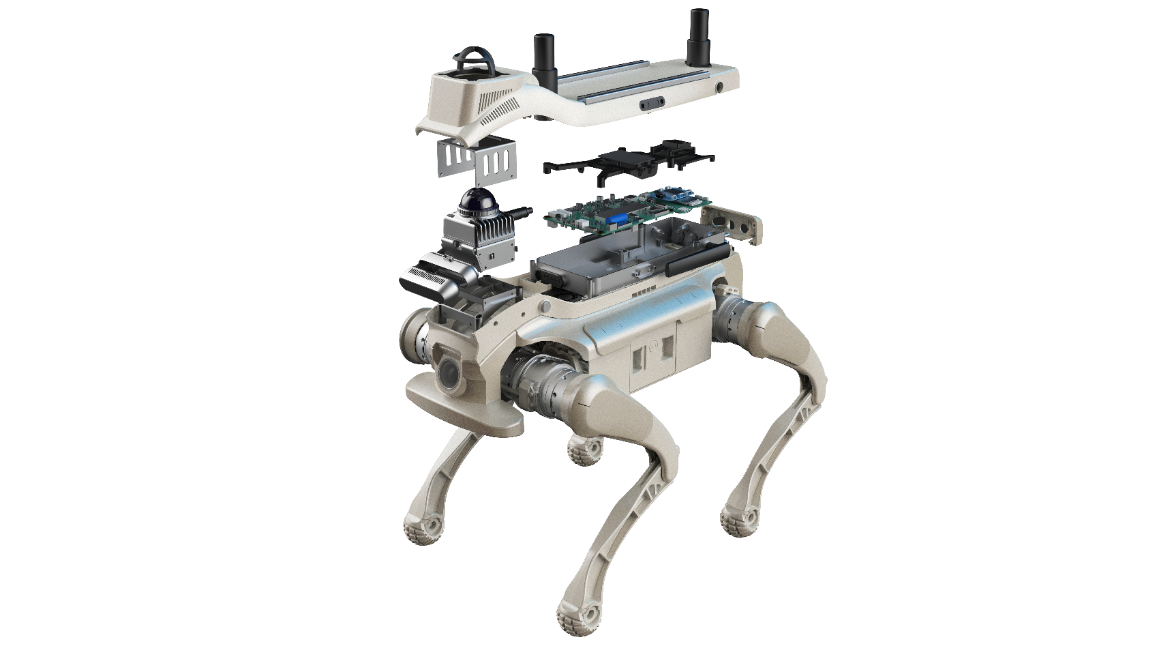
Shaanxi Smart Innovation Future Technology’s engineering team developed a dedicated data center inspection payload integrating four sensor systems. The primary sensor was a high-resolution uncooled thermal imaging module (640×512 resolution, ±0.5°C accuracy, 25 Hz frame rate) mounted on a pan-tilt unit, enabling the robot to scan the full face of each rack from floor to ceiling in a single pass — capturing the thermal signature of every server chassis, cable bundle, and airflow component at a spatial resolution unachievable by any fixed-sensor configuration. A 4K visual inspection camera with AI-powered anomaly detection provided simultaneous visual survey, automatically flagging abnormal indicator light patterns, unseated blanking panels, cable management deviations, and physical equipment condition issues. An acoustic emission sensor detected abnormal fan noise signatures — a leading indicator of bearing wear and imminent fan failure that precedes measurable thermal deviation by hours to days. An environmental sensor array monitored temperature, humidity, and particulate levels at robot height, providing a complementary data layer to the facility’s existing fixed-sensor network.
Autonomous waypoint navigation was configured using a pre-mapped facility model incorporating the precise geometry of all rack rows, aisle configurations, and raised-floor access points across the six server halls. The robot’s LiDAR-visual odometry localization system maintained positioning accuracy of ±2 cm within the structured data center environment — sufficient for consistent rack-face thermal scan alignment across repeat patrol cycles. Patrol routes were programmed to cover all six server halls in a continuous 4-hour cycle, with AI compute zones receiving additional high-frequency passes every 45 minutes during peak load periods.
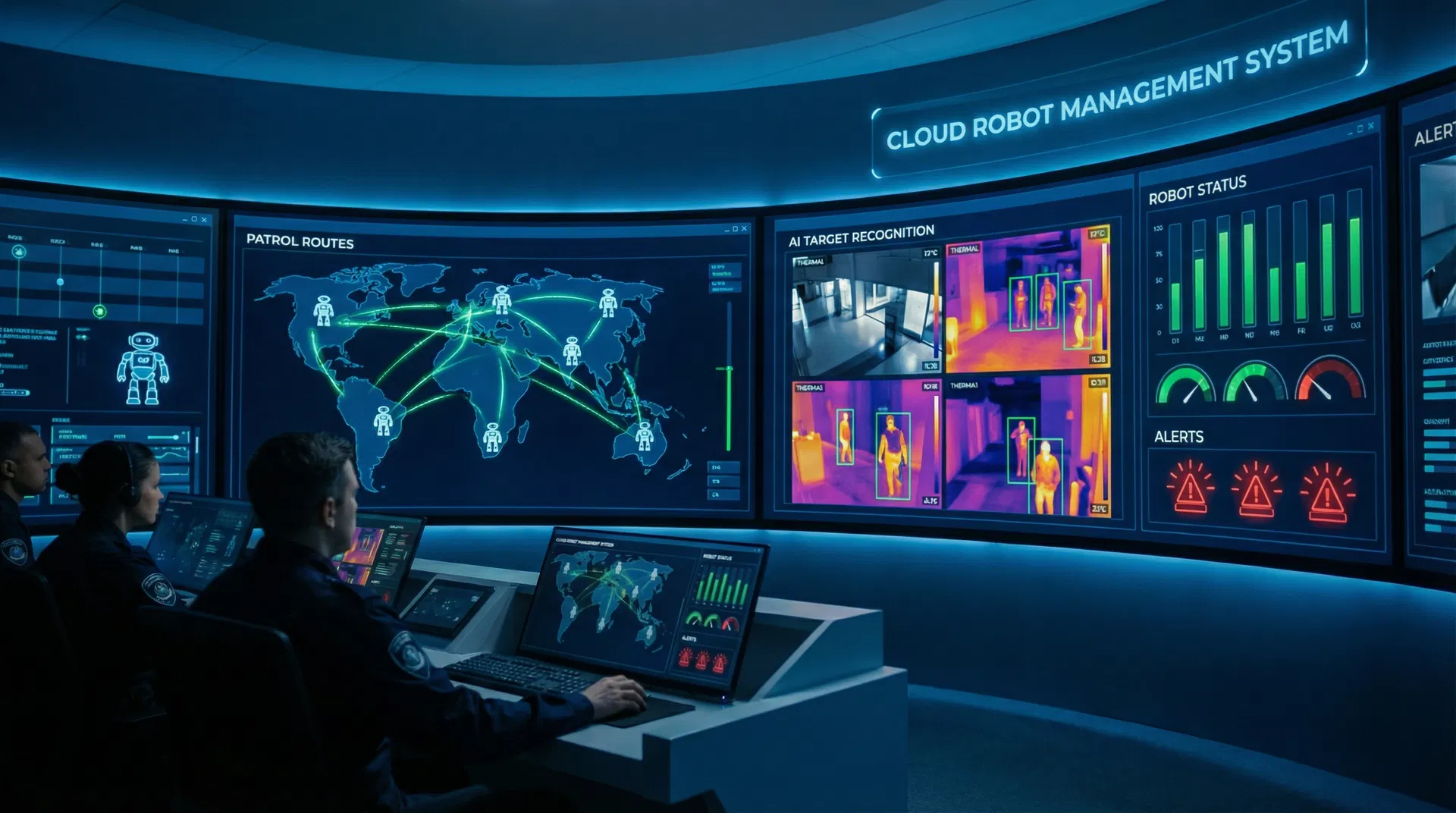
The Shaanxi Smart Innovation Future Technology Cloud Management Platform was integrated with the operator’s existing DCIM system via API, enabling thermal anomaly alerts generated by the robot’s AI analysis engine to be automatically correlated with DCIM asset records and routed to the relevant equipment owner within the operations team. This integration eliminated the manual correlation step that had previously added 8–12 minutes to the alert-to-response workflow, and enabled the robot’s thermal data to be displayed as an overlay on the DCIM facility map in real time.
Facility Mapping, EMI Validation, and Zero-Downtime Phased Hall-by-Hall Deployment
The implementation began with a two-week facility mapping and validation phase conducted during scheduled low-load maintenance windows. Shaanxi Smart Innovation Future Technology engineers mapped all six server halls using the ZSL-1’s onboard LiDAR, generating a centimeter-accurate 3D facility model that captured rack positions, aisle geometries, raised-floor access points, and containment infrastructure. Simultaneously, electromagnetic compatibility (EMC) testing was conducted at representative locations throughout the facility to confirm that the ZSL-1’s drive system and sensor suite produced no measurable interference with server hardware, networking switches, or storage systems at operational proximity distances.
EMC validation results confirmed full compatibility across all tested equipment categories, including the facility’s high-sensitivity InfiniBand networking infrastructure serving the AI compute clusters. This validation was a critical prerequisite for the operator’s approval to proceed with live-environment deployment, and the documentation produced during this phase was incorporated into the facility’s change management records.
Deployment was structured as a hall-by-hall rollout, beginning with the two standard-density server halls before progressing to the four high-density AI compute halls. This sequencing allowed the operations team to validate the robot’s patrol behavior, DCIM integration, and alert workflow in lower-risk environments before exposing the most critical infrastructure to the new system. Each hall was brought online with a two-week parallel monitoring period during which robot-generated thermal data was compared against the existing fixed-sensor baseline to calibrate anomaly detection thresholds and eliminate false-positive alert sources.
The DCIM integration was completed during the deployment of the third hall, enabling the operations team to experience the full alert-to-response workflow — from robot thermal anomaly detection through DCIM asset correlation to engineer notification — before the system was extended to the AI compute zones. The integration required development of a custom API connector between the Shaanxi Smart Innovation Future Technology Cloud Platform and the operator’s DCIM system, which Shaanxi Smart Innovation Future Technology’s software team delivered within the project timeline.
From 22-Minute Detection Lag to Under 2 Minutes — and a Cooling Efficiency Dividend
The most operationally significant outcome was the reduction in mean time to detect (MTTD) thermal anomalies from the pre-deployment baseline of 22–35 minutes (fixed-sensor detection lag) to an average of 1.8 minutes under the autonomous robot patrol regime — a 91% reduction. This improvement was achieved through the combination of the robot’s rack-face thermal scanning capability, which detects chassis-level hotspots before they propagate to the ambient air measured by fixed sensors, and the DCIM-integrated alert routing, which eliminated the manual correlation step from the response workflow.
During the first six months of full deployment, the robot’s thermal scanning identified 34 rack-level thermal anomalies that were not detected by the fixed-sensor network within the same time window. Of these, 11 were classified as requiring immediate intervention — including 4 cases in the AI compute halls where GPU cooling system degradation was detected at the chassis level an average of 47 minutes before the nearest fixed sensor registered a statistically significant ambient temperature deviation. In all 11 cases, the operations team was able to respond and resolve the issue before any thermal throttling or emergency shutdown event occurred.
The acoustic emission monitoring capability contributed an additional detection layer that the operator had not anticipated as a primary value driver at the outset of the project. Over the six-month period, the robot’s acoustic sensor identified 8 server fans exhibiting early-stage bearing wear signatures — an average of 6.3 days before the fans failed and triggered thermal alerts. In each case, the affected servers were scheduled for planned maintenance during the next available window, eliminating 8 unplanned outage events that would otherwise have required emergency response.
An unexpected secondary benefit emerged from the systematic thermal mapping data accumulated over the first 90 days of operation. Analysis of the robot’s thermal scan dataset revealed three persistent airflow inefficiency patterns in the standard-density halls — areas where hot-aisle containment gaps and blanking panel omissions were creating recirculation zones that elevated local ambient temperatures by 1.8–3.2°C above the facility design baseline. Corrective actions addressing these patterns, guided by the robot’s thermal map data, contributed to a measured 0.8% improvement in the facility’s Power Usage Effectiveness (PUE) — a financially significant outcome given the facility’s annual power consumption.
Throughout the 20-week deployment and subsequent six months of operation, the facility maintained 100% uptime with zero inspection-related disruptions. The ZSL-1’s navigation system successfully avoided all raised-floor access points, cable trays, and temporary equipment staging areas encountered during normal operations, and no equipment contact incidents were recorded across approximately 4,200 patrol hours.
Engineering the ZSL-1 for High-Density Data Center Environments
Data center environments present a distinct set of engineering constraints for robotic inspection platforms that differ fundamentally from outdoor industrial deployments. Four challenges required specific engineering solutions during this deployment.
Electromagnetic Compatibility (EMC): Server halls housing high-density compute infrastructure are among the most EMC-sensitive environments in which robotic systems operate. The ZSL-1’s brushless motor drive system was validated to produce electromagnetic emissions below the IEC 61000-4-3 Class A immunity threshold at all tested proximity distances, including operation within 300 mm of active server chassis and 150 mm of InfiniBand cabling. This validation was conducted using the operator’s own test equipment and witnessed by the facility’s EMC compliance team, producing documentation suitable for inclusion in the facility’s change management records.
Precision Airflow Preservation: Hot/cold aisle containment systems in high-density data centers depend on precise airflow management to maintain the temperature differential between supply and return air. The ZSL-1’s low-profile form factor and the absence of active cooling systems on the robot itself minimized airflow disruption during patrol. Computational fluid dynamics (CFD) modeling conducted during the facility mapping phase confirmed that the robot’s presence in a cold aisle produced a maximum 0.3°C localized temperature perturbation — well within the ±1°C tolerance specified by the operator’s cooling design standards.
Raised-Floor Navigation: Data center raised floors incorporate access tiles that, when removed for maintenance, create open floor voids of 300–600 mm depth. The ZSL-1’s terrain perception system was configured to detect and avoid open floor voids as navigational obstacles, with a safety margin of 200 mm from any detected void edge. During the deployment period, the system successfully identified and navigated around 47 instances of temporarily removed floor tiles during maintenance activities without requiring human intervention or patrol interruption.
Thermal Scan Calibration: Rack-face thermal scanning in a data center environment requires careful calibration to distinguish genuine equipment anomalies from the normal thermal variation patterns produced by different server generations, workload profiles, and rack positions. The two-week parallel monitoring phase for each server hall was used to build a thermal baseline model incorporating these normal variation patterns, enabling the AI anomaly detection algorithm to achieve a false-positive rate of less than 2% in production operation — a critical threshold for maintaining operations team confidence in the alert system.
| Monitoring Parameter | Fixed Sensors Only (Before) | ZSL-1 Autonomous Patrol (After) |
|---|---|---|
| Thermal Detection Resolution | Ambient air (point sensors) | Rack-face chassis level (640×512) |
| Mean Time to Detect Anomaly | 22–35 minutes | ~1.8 minutes average |
| Fan Failure Early Warning | None (detected at failure) | Acoustic detection avg. 6.3 days prior |
| Visual Equipment Inspection | Scheduled (days–weeks interval) | Every 4-hour patrol cycle |
| Airflow Efficiency Insight | Manual audit (infrequent) | Continuous thermal map → CFD input |
| Alert-to-Engineer Time | Detection + 8–12 min manual correlation | Detection + auto DCIM routing (<30 sec) |
| Human Hall Entry Frequency | Routine inspection + emergency | Maintenance & targeted response only |
Deployment Summary
Platform Used
Get a Free Consultation
Discuss how our robots can replicate these results in your facility. No commitment required.
Data Center Inspection Solution
See how our autonomous inspection system eliminates human entry requirements in live data center environments — delivering thermal monitoring, equipment status verification, and 24/7 uptime assurance.
Related Case Studies
Power & EnergyAutonomous Substation Inspection Reduces Manual Rounds by 85%
A regional grid operator deployed the RZTL-1W across 12 substations, cutting inspection cycles from 4 hours to 45 minutes with real-time thermal anomaly detection.
Rail TransitUrban Rail Transit Authority Cuts Tunnel Inspection Labor by 62%
A metropolitan rail authority deployed autonomous robots for tunnel inspection across 87 km of underground track, eliminating track possession windows and reducing inspection costs.
 Electrical
Electrical Room Autonomous Inspection Prevents 3 Critical Failures
A manufacturing plant’s high-voltage electrical rooms were equipped with autonomous inspection robots, detecting thermal anomalies 72 hours before potential transformer failures.