
From Reactive to
Predictive Maintenance
with Autonomous Robots
Continuous thermal, vibration, acoustic, and visual inspection — every patrol cycle, every day. AI-powered fault detection identifies developing equipment failures weeks before breakdown, enabling planned maintenance that eliminates unplanned downtime and delivers 3–5× ROI in Year 1.
Why Traditional Maintenance Strategies Fall Short
Reactive and time-based preventive maintenance strategies leave industrial operators exposed to unplanned downtime, excessive maintenance costs, and the inability to detect developing faults before they escalate.
Reactive Maintenance Costs
Unplanned equipment failures cost 3–10× more to repair than planned maintenance interventions. Emergency shutdowns, expedited parts procurement, and production losses compound the direct repair cost.
Inspection Frequency Limitations
Manual inspection rounds are typically weekly or monthly — far too infrequent to catch rapidly developing faults. Equipment can fail between inspection cycles, with no warning data to support root cause analysis.
Data Fragmentation
Paper-based or manual-entry inspection records cannot be analyzed for trends, correlated across equipment types, or integrated with maintenance management systems. Predictive models require structured, timestamped digital data.
Preventive Maintenance Over-Servicing
Time-based preventive maintenance replaces components on schedule regardless of actual condition — wasting parts, labor, and production time on equipment that still has significant remaining useful life.
Measurable ROI Across Industries
Deployment data from power grid, petrochemical, and transit operators demonstrates consistent, quantifiable returns from autonomous predictive maintenance inspection.
Early fault detection enables planned maintenance windows, eliminating the production losses and emergency repair costs of unplanned breakdowns.
Autonomous patrol replaces manual inspection rounds, freeing maintenance personnel for higher-value diagnostic and repair work.
Combined savings from avoided downtime, reduced inspection labor, and extended equipment life typically deliver full payback within 8–14 months.
Continuous robotic inspection identifies developing faults 80% faster than weekly manual inspection rounds, dramatically reducing the window for fault escalation.
Multi-Modal Predictive Maintenance Intelligence
A single robotic platform delivers the multi-modal sensing required for comprehensive equipment condition monitoring — replacing multiple specialist inspection disciplines with one continuous autonomous operation.
Continuous Thermal Monitoring
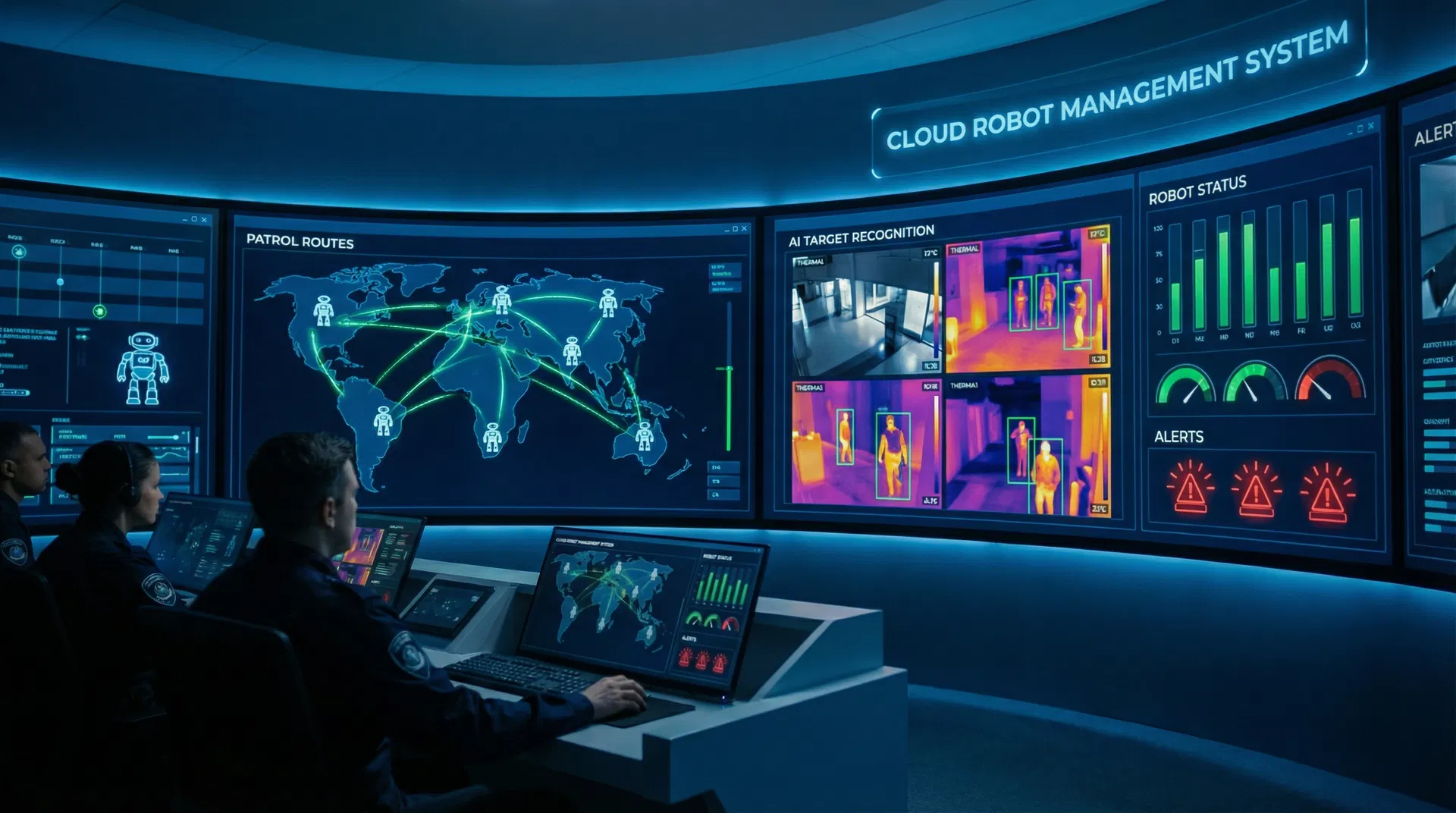
High-resolution infrared imaging captures equipment temperature profiles on every patrol cycle. AI algorithms identify thermal anomalies — overheating bearings, insulation degradation, loose electrical connections — weeks before they cause failures. Temperature trends are tracked over time for predictive failure modeling.
Vibration & Acoustic Analysis
Contact and non-contact sensors detect abnormal vibration signatures and acoustic emissions from rotating machinery, pumps, compressors, and motors. Early-stage bearing wear, misalignment, and imbalance are identified at the sub-millimeter level, enabling planned replacement before catastrophic failure.
Visual Defect Detection
AI vision models trained on industrial defect datasets identify corrosion, cracks, oil leaks, loose fasteners, and physical damage across equipment surfaces. High-resolution imagery is geo-referenced to equipment location and compared against baseline photographs to detect progressive deterioration.
Multi-Parameter Data Fusion
Thermal, visual, acoustic, and environmental data streams are fused at the edge compute layer. The AI correlates multi-modal signals to generate equipment health scores and remaining useful life (RUL) estimates — providing maintenance planners with actionable prioritization data.
Trend Analysis & Failure Prediction
The cloud inspection platform aggregates inspection data across all patrol cycles to build equipment health trend models. Statistical process control algorithms detect drift from normal operating envelopes and generate maintenance work orders automatically when degradation thresholds are crossed.
CMMS/EAM Integration
Structured inspection data, anomaly alerts, and maintenance recommendations are automatically exported to existing CMMS/EAM systems (SAP PM, IBM Maximo, Oracle EAM). Maintenance planners receive pre-populated work orders with equipment location, fault description, and recommended action — eliminating manual data entry.
Where Predictive Maintenance Robots Deliver Value
Rotating Machinery Health Monitoring
Continuous patrol of pumps, compressors, fans, and motors with thermal imaging and acoustic sensing. Bearing temperature trends, vibration signatures, and oil leak detection provide early warning of developing faults — enabling planned replacement during scheduled maintenance windows rather than emergency shutdowns.
Electrical Equipment Condition Monitoring
Regular thermal inspection of switchgear, transformers, motor control centers, and cable trays. AI analysis identifies hot spots, loose connections, and insulation degradation. Partial discharge detection provides early warning of insulation failure in high-voltage equipment before catastrophic breakdown.
Pipeline & Vessel Integrity Inspection
Visual and thermal inspection of piping systems, pressure vessels, and storage tanks for corrosion, erosion, and structural defects. AI defect classification and measurement provide quantitative condition data for integrity management programs and regulatory compliance.
Multi-Site Fleet Coordination
The cloud inspection platform aggregates data from multiple robot deployments across different facilities. Maintenance managers gain a unified view of equipment health across the entire asset base, enabling portfolio-level maintenance planning and benchmarking of inspection performance.
System Architecture
| Component | Role | Key Specifications |
|---|---|---|
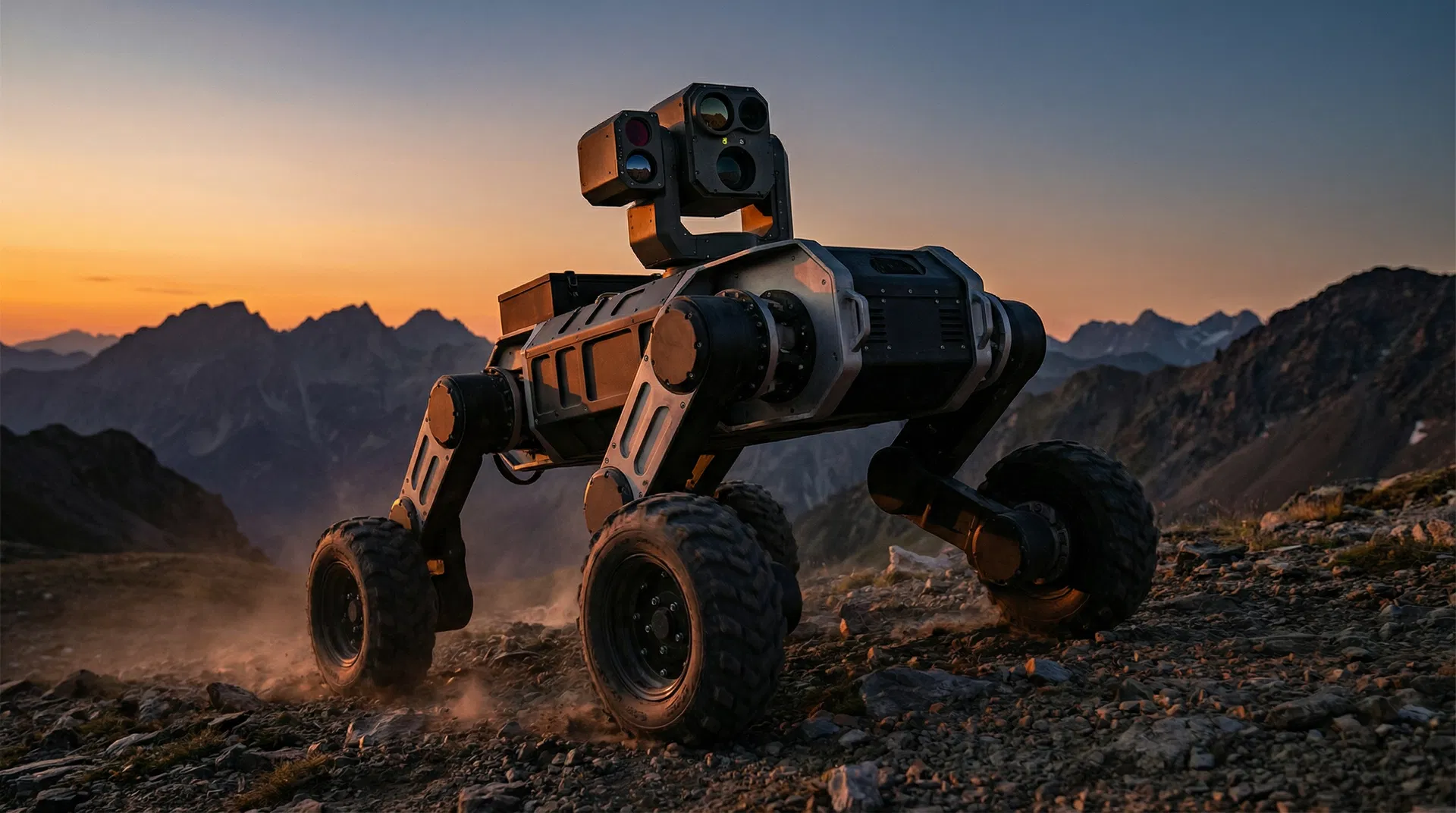
| TongChui M1 / RZTL-1 | Inspection Platform | IP67, -20°C to 55°C, 30 kg payload, 45° slope, 29 km range, modular sensor mounting |
| Thermal Imaging System | Temperature Anomaly Detection | High-res IR + visible fusion, AI hotspot detection, trend analysis, equipment-level geo-referencing |
| Acoustic & Vibration Sensor | Mechanical Fault Detection | Contact/non-contact vibration, ultrasonic acoustic emission, bearing wear signature analysis |
| AI Vision Inspection Module | Visual Defect Detection | Corrosion, crack, leak, fastener, label recognition; baseline comparison; defect measurement |
| Edge AI Compute | On-Robot Data Processing | Multi-modal sensor fusion, real-time anomaly detection, equipment health scoring at the edge |
| Cloud Inspection Platform | Trend Analysis & CMMS Integration | Equipment health dashboard, RUL modeling, automated work order generation, SAP/Maximo/Oracle EAM export |
Predictive Maintenance by Industry
Explore how autonomous predictive maintenance inspection is deployed across specific industries — each with unique equipment types, regulatory requirements, and ROI drivers.
Calculate Your Predictive Maintenance ROI
Our engineering team will analyze your facility’s equipment inventory, current inspection costs, and historical downtime data to produce a site-specific ROI projection for autonomous predictive maintenance inspection.
Common Questions About Predictive Maintenance Robot Solutions
Answers to the most common questions from procurement managers, system integrators, and engineering teams evaluating our robotic platforms.
Inspection robots collect continuous thermal, acoustic, vibration, and visual data from equipment during regular patrols. AI algorithms analyze this data to identify developing faults — bearing wear, thermal anomalies, insulation degradation — weeks or months before failure, enabling planned maintenance that prevents costly unplanned downtime.
Robots detect thermal anomalies in electrical connections and transformers (indicating resistance increases), bearing wear through acoustic analysis, motor winding insulation degradation via partial discharge detection, pump and compressor performance degradation, and structural fatigue in mechanical components.
Robot-based inspection provides mobile coverage of all equipment with a single platform, eliminating the need to install thousands of fixed sensors. Robots can also perform visual inspections and access areas that fixed sensors cannot monitor. The combination of robots and strategic fixed sensors provides the most comprehensive predictive maintenance coverage.
Based on customer deployments, robot-based predictive maintenance typically detects developing faults 2–8 weeks before failure, compared to 0–2 weeks for reactive maintenance programs. This lead time allows planned maintenance scheduling that minimizes production disruption and reduces repair costs.
The cloud management platform automatically generates predictive maintenance reports after each patrol, highlighting equipment showing anomalous readings compared to baseline values. Trend analysis identifies equipment with deteriorating performance, and AI-powered fault classification provides maintenance recommendations with urgency ratings.
Still have questions?
Our application engineers are available to answer technical questions, discuss deployment requirements, and provide custom quotations.
Talk to an EngineerRelated Resources
Average response time: within 24 hours on business days