Autonomous Inspection for
Oil, Gas & Petrochemical
Facilities
Replace hazardous manual inspection rounds with a 24/7 robotic patrol system. Continuous gas leak detection, thermal anomaly identification, and automated instrument reading — without putting personnel in harm’s way.
Why Manual Inspection Is No Longer Sufficient
Oil and gas facilities demand continuous, comprehensive inspection — but manual rounds are costly, inconsistent, and expose personnel to unacceptable risk in hazardous classified areas.
Manual Inspection Risk
Human inspectors in hazardous areas are exposed to toxic gases, explosion risk, and extreme temperatures during every patrol round. Incident statistics show that inspection-related injuries are a leading cause of refinery casualties.
Coverage Gaps & Inconsistency
Large refinery sites with hundreds of inspection points cannot be covered comprehensively by manual rounds. Coverage frequency is limited by staffing, and inspection quality varies by shift and weather conditions.
Slow Anomaly Detection
Manual inspection identifies anomalies only when an inspector is physically present. Gas leaks, thermal anomalies, and equipment deviations can develop and escalate between inspection rounds — sometimes with catastrophic consequences.
Data Fragmentation
Paper-based or manual-entry inspection records are difficult to analyze for trends, impossible to correlate across inspection rounds, and prone to transcription errors. Predictive maintenance requires structured, timestamped digital data.
Multi-Modal Inspection Intelligence
A single robotic platform replaces multiple manual inspection disciplines — gas detection, thermal imaging, instrument reading, and security patrol — in one continuous autonomous operation.
Continuous Gas Leak Detection
On-board sensors continuously monitor for methane, H₂S, CO, SO₂, and combustible gas concentrations across patrol routes. Leak events trigger immediate geo-tagged alerts with concentration readings, enabling rapid isolation before escalation.
Thermal Anomaly Inspection
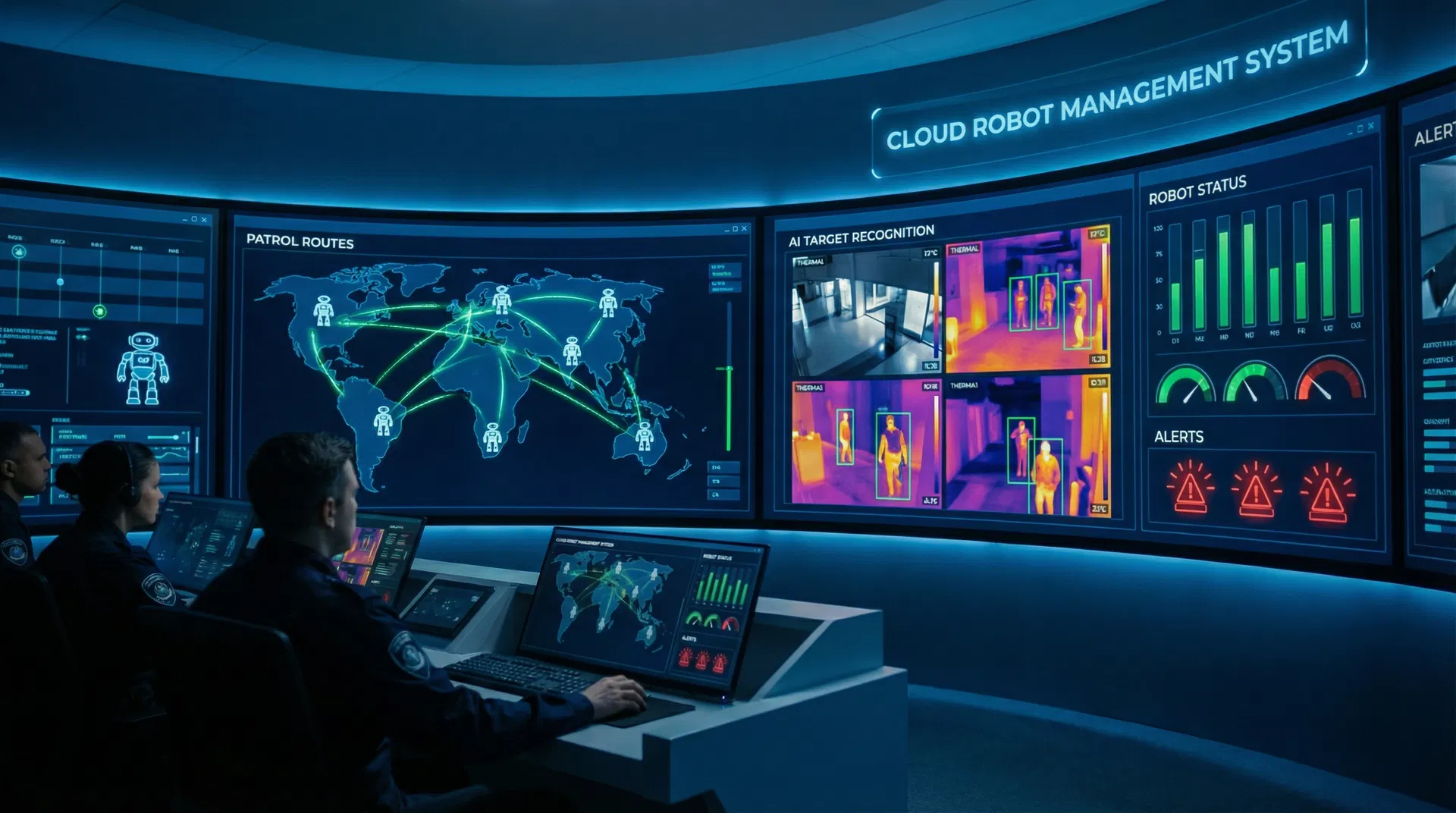
High-resolution infrared imaging identifies overheating equipment, insulation failures, and pipe joint leaks invisible to visible-light cameras. Thermal data is logged with GPS coordinates and timestamps for trend analysis and predictive maintenance.
Instrument & Gauge Reading
AI vision algorithms automatically read pressure gauges, flow meters, level indicators, and valve positions. Readings are compared against normal operating ranges and deviations are flagged without manual data entry.
ATEX-Zone Compatible Operation
Designed for deployment in hazardous classified areas (Zone 1/Zone 2 equivalent). IP67 sealed enclosure, intrinsically safe electronics, and non-sparking materials ensure safe operation in explosive atmospheres.
GPS-Denied Navigation
LiDAR-based SLAM navigation operates without GPS signal — essential for indoor process units, underground pipe galleries, and enclosed storage facilities. Autonomous path planning adapts to temporary obstacles and route changes.
Structured Inspection Reporting
Every patrol generates a structured digital inspection report with instrument readings, thermal images, gas concentration logs, and anomaly events. Reports are automatically uploaded to the cloud platform and can be integrated with existing CMMS/ERP systems.
Where Our Robots Operate
Refinery Process Unit Patrol
Continuous patrol of distillation columns, heat exchangers, reactors, and piping networks. The robot’s multi-modal sensing simultaneously checks for gas leaks, thermal anomalies, and instrument deviations — replacing multiple manual inspection rounds with a single autonomous patrol.

Tank Farm & Storage Area Inspection
Regular perimeter inspection of storage tanks, bund walls, and loading/unloading areas. Thermal imaging detects roof seal failures and product leaks. Gas sensors identify vapor cloud formation before explosive concentrations are reached.
Pipeline Corridor Monitoring
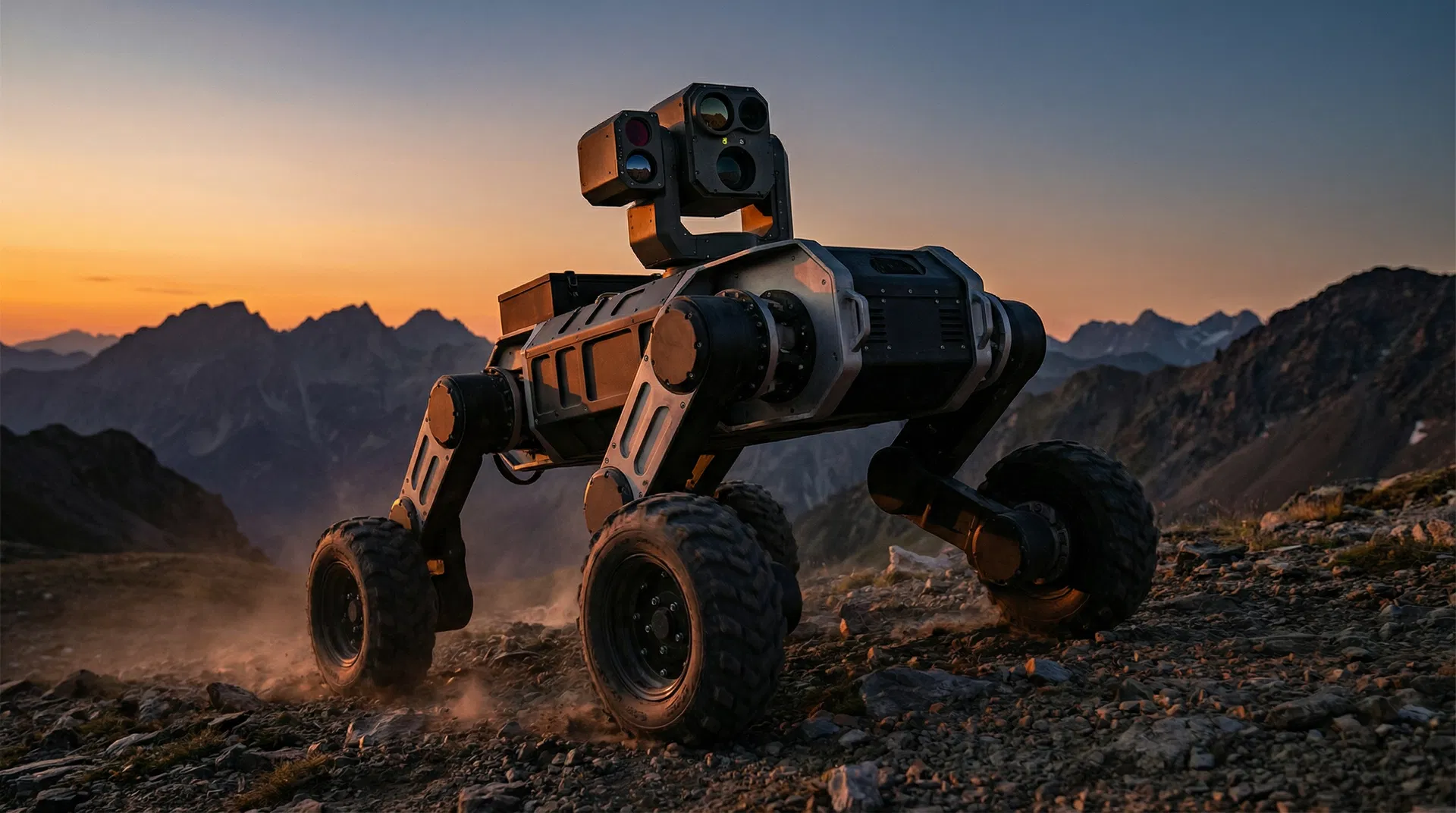
Long-distance pipeline corridor patrol with continuous gas leak detection and thermal imaging. The robot’s 29 km range (TongChui M1) enables coverage of extended pipeline routes in a single deployment, with real-time data transmission to the control room.
Night & Adverse Weather Operations
IP67 protection and -20°C to 55°C operating range ensure continuous inspection coverage during night shifts, rain, fog, and extreme temperatures — conditions where manual inspection quality degrades most significantly.
Complete Oil & Gas Inspection System
| Component | Role | Key Specifications |
|---|---|---|
| TongChui M1 / RZTL-1 | Primary Inspection Platform | IP67, -20°C to 55°C, 30 kg payload, 45° slope, 80 cm obstacle clearance, 29 km range |
| Multi-Gas Sensor Module | Atmospheric Hazard Detection | CH₄, H₂S, CO, SO₂, O₂, combustible gas; real-time concentration streaming |
| Thermal Imaging Camera | Equipment Anomaly Detection | High-resolution IR + visible-light fusion, AI hotspot detection, temperature trending |
| AI Vision Inspection Module | Instrument Reading & Recognition | Gauge reading, valve position, indicator light status, label recognition |
| LiDAR SLAM Navigation | GPS-Denied Autonomous Navigation | 3D mapping, obstacle avoidance, multi-floor navigation, dynamic path replanning |
| Cloud Inspection Platform | Data Management & Reporting | Structured reports, anomaly dashboard, trend analysis, CMMS/ERP integration |
Hazardous Area Compliance
Oil and gas facilities present some of the most demanding safety environments for autonomous equipment. Refineries, petrochemical plants, and offshore platforms routinely classify operational zones as ATEX Zone 1 or Zone 2 — areas where explosive atmospheres may be present continuously, intermittently, or occasionally. Any electrical equipment deployed in these environments must be intrinsically safe or explosion-proof to prevent ignition of flammable gases or vapors.
Our oil and gas inspection robot platforms are engineered with hazardous area compliance as a core design requirement. The RZTL-1W wheel-legged variant supports deployment in IECEx-certified configurations, with sealed enclosures rated to IP67 and electrical systems designed to meet the requirements of ATEX Directive 2014/34/EU for Zone 2 environments. For Zone 1 applications requiring the highest level of explosion protection, our engineering team works with customers to specify and integrate third-party certified intrinsically safe sensor modules.
Beyond hardware compliance, our cloud management platform supports hazardous area access control workflows — ensuring robots only enter classified zones when atmospheric gas concentrations are within safe operating thresholds, as confirmed by the onboard multi-gas sensor module monitoring CH₄, H₂S, CO, SO₂, and combustible gas concentrations in real time.
Compliance Reference Framework
Specific certification requirements vary by facility classification and jurisdiction. Contact our engineering team for a hazardous area assessment tailored to your site.
Ready to Eliminate Manual Inspection Risk?
Our inspection robotics specialists will assess your facility layout, hazard classification, and inspection requirements to design a deployment plan that meets your operational and safety objectives.
Common Questions About Oil & Gas Inspection Robot Solutions
Answers to the most common questions from procurement managers, system integrators, and engineering teams evaluating our robotic platforms.
Oil and gas facilities present extreme inspection challenges: hazardous atmospheres (flammable gases), high-temperature equipment, remote locations, and 24/7 operational requirements. Inspection robots with IP67 protection, gas detection payloads, and SLAM navigation address all these challenges while eliminating human exposure to hazardous environments.
Shaanxi Smart Innovation Future Technology offers inspection robot configurations designed for deployment in hazardous areas. Contact our engineering team to discuss ATEX/IECEx certification requirements for your specific Zone 1 or Zone 2 application.
Oil and gas inspection robots can be equipped with multi-gas detection payloads monitoring for hydrocarbons (CH₄, C₃H₈), H₂S, CO, CO₂, and O₂ depletion. Continuous gas monitoring during patrol enables early leak detection before concentrations reach dangerous levels.
The Tongchui M1 operates in temperatures from -20°C to 50°C and is designed for the thermal conditions typical of oil refinery environments. High-temperature payload options are available for inspection of equipment operating at elevated surface temperatures.
Yes. This is one of the primary safety benefits of inspection robots in oil and gas facilities. Robots can perform visual and sensor inspections of confined spaces (tanks, vessels, ducts) via access points, reducing or eliminating the need for human confined space entry — one of the highest-risk activities in the industry.
Still have questions?
Our application engineers are available to answer technical questions, discuss deployment requirements, and provide custom quotations.
Talk to an EngineerRelated Resources
Average response time: within 24 hours on business days