Autonomous Patrol for
Campus & Fixed Sites
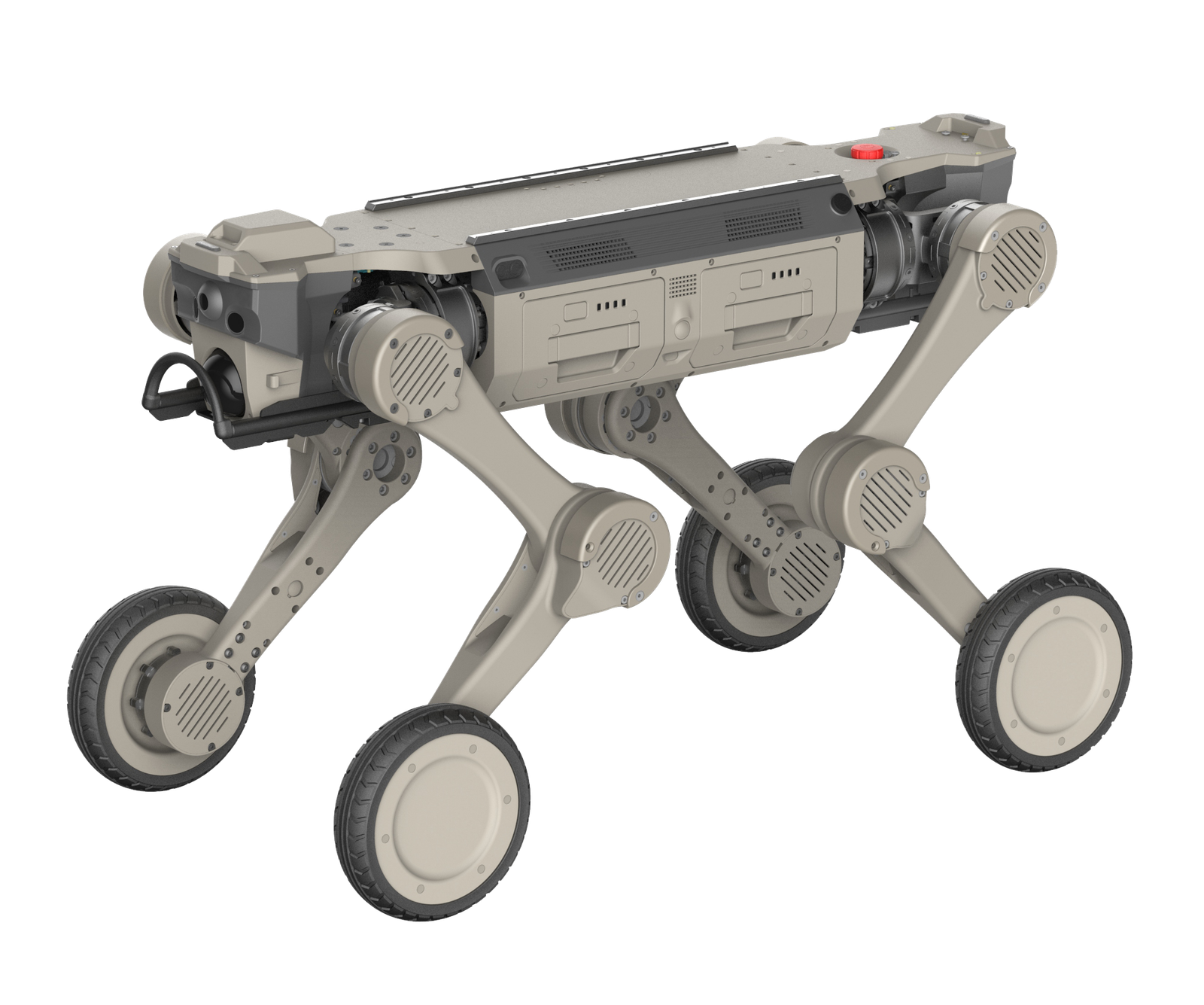
Replace manual security rounds with a 24/7 intelligent patrol system. The TongChui M1 quadruped robot, equipped with dual-spectrum sensing, AI behavioral recognition, and resilient mesh communications, delivers continuous, consistent protection across campuses, schools, industrial parks, and other fixed-site facilities.
Why Traditional Security Falls Short
Fixed cameras and manual patrols were designed for a simpler threat landscape. Today’s campuses and facilities demand mobile, intelligent, always-on security.
Staffing Shortfalls
Security headcount rarely scales with campus size. Night shifts, weekends, and large events leave coverage gaps that fixed cameras cannot fill.
Limited Sensor Coverage
Static cameras have fixed fields of view and cannot detect gas leaks, temperature anomalies, or ground flooding — hazards that require mobile, multi-modal sensing.
Fatigue & Inconsistency
Human guards are susceptible to fatigue and distraction. Patrol quality degrades over long shifts, creating windows of vulnerability.
Slow Incident Response
Without real-time AI analysis, security staff must review footage after the fact. Early-warning events — smoldering fires, unauthorized access — go undetected until they escalate.
An Integrated Patrol Ecosystem
The solution combines a mobile robotic platform, multi-modal sensing, AI analytics, resilient communications, and a centralized management interface into a single deployable system.
30 kg payload, IP67, -20°C to 50°C, 2-hour runtime, hot-swappable dual battery
HD video, IR thermometry, face capture, two-way audio, 16× optical zoom
CO, H₂S, NO₂, SO₂ monitoring; smoke, flooding, and temperature anomaly detection
On-board + cloud AI: behavior recognition, fire detection, report generation, trend analysis
Decentralized mesh network, AES-256 encryption, 4G/Wi-Fi/satellite uplink options
Real-time map, task scheduling, multi-feed monitoring, alert management, report export
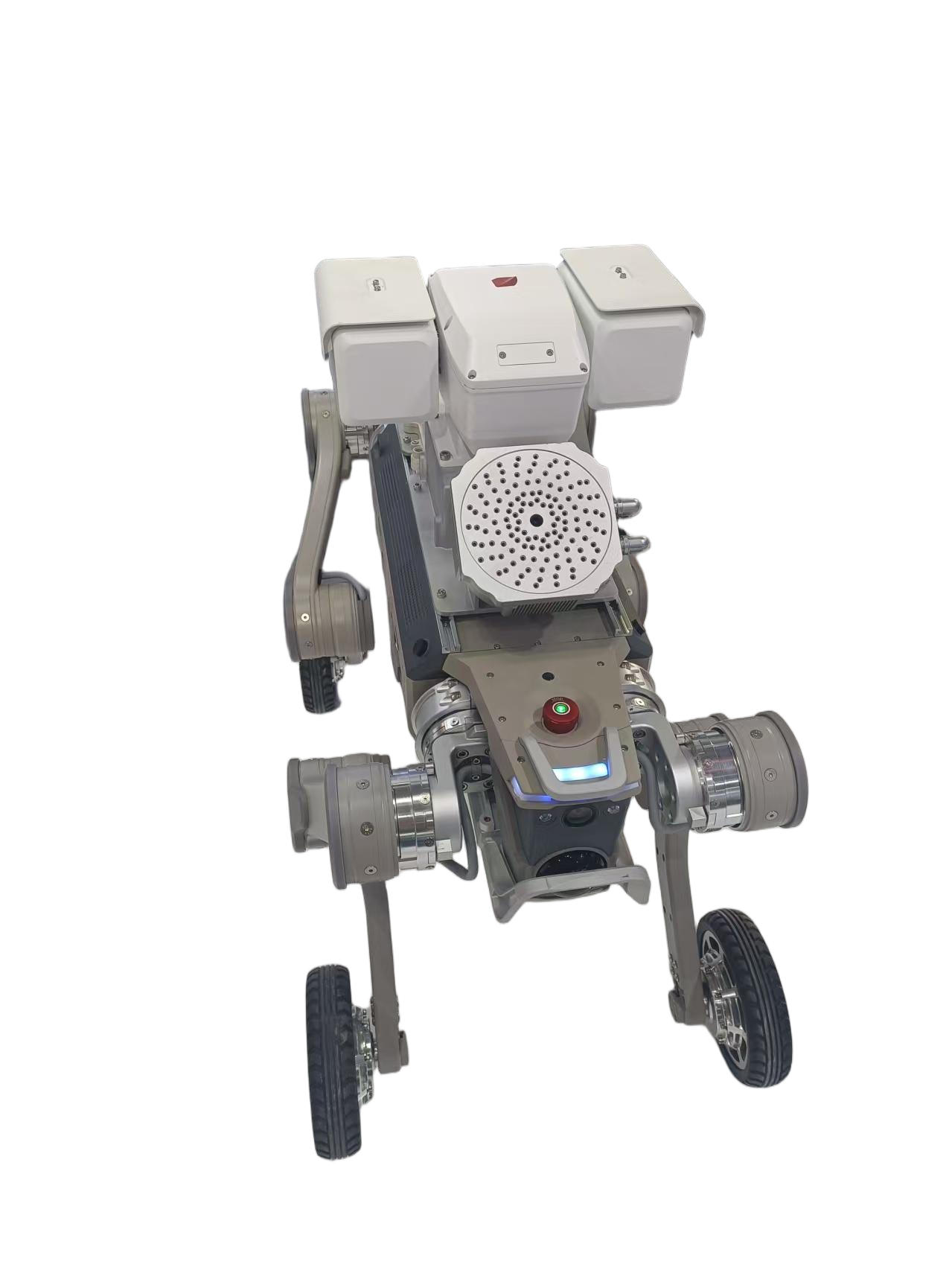
M1 configured with dual-spectrum PTZ camera, environmental sensor modules, and MANET radio kit
Six Layers of Intelligent Protection
Dual-Spectrum PTZ Camera
Captures real-time HD video and high-resolution photos. Supports visible-light fill illumination, remote face capture, two-way voice intercom, and infrared thermometry — all from a single payload module.
Multi-Hazard Environmental Detection
Continuously monitors smoke concentration, open-flame signatures, and dangerous gas levels (CO, H₂S, NO₂, SO₂). Detects ground flooding and pipe leakage. Alerts are pushed instantly to the control center.
AI Behavioral Recognition
On-board lightweight AI models detect intrusion, crowd gathering, fighting, and on-duty absence in real time. Anomalies trigger immediate alerts with timestamped evidence clips, even during network interruptions.
Autonomous Mission Planning
Build a high-precision site map with configurable electronic fences (low-speed zones, charging areas, restricted zones). The platform computes global optimal paths and dynamically avoids obstacles via real-time LiDAR sensing.
MANET Mesh Communication
Operates over a decentralized Mobile Ad-hoc Network (MANET) — no single point of failure. Nodes self-heal and reroute automatically. Supports 4G LTE, Wi-Fi, and satellite uplinks with AES-256 end-to-end encryption.
Structured Inspection Reports
Automatically generates structured patrol reports with anomaly events, environmental readings, patrol paths, and timestamps. Supports historical data review and trend analysis for continuous security optimization.
Where the System Operates
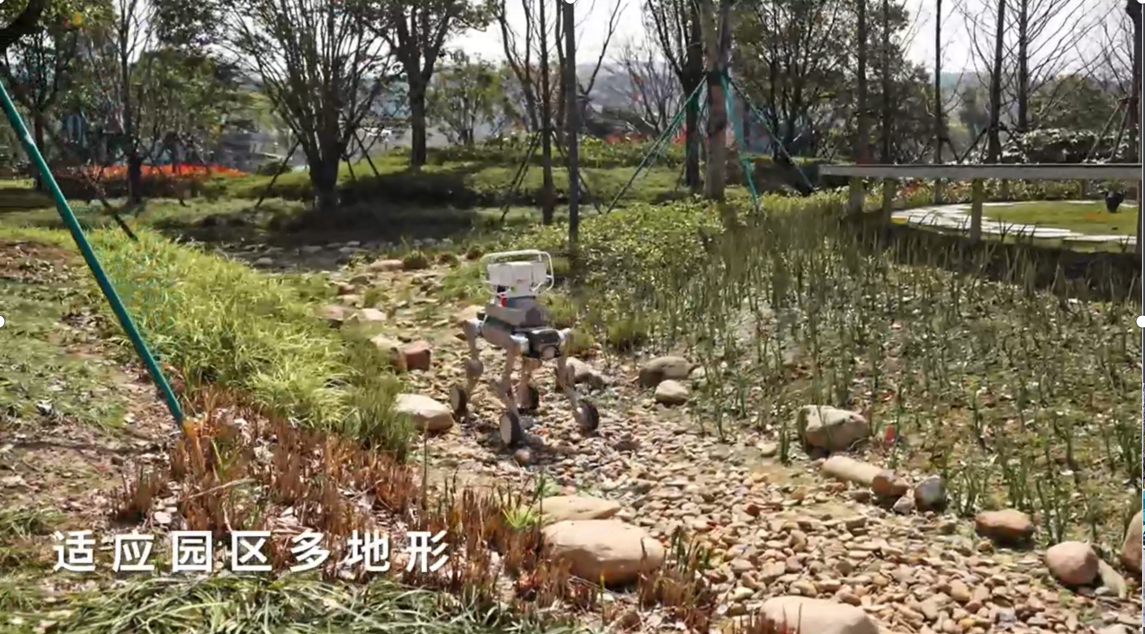
Campus Grounds & Multi-Terrain Patrol
The M1’s wheel-legged hybrid locomotion navigates stone paths, grass, stairs, and ramps without manual intervention. Scheduled patrol routes cover outdoor grounds, building perimeters, and landscape areas that are impractical for fixed cameras.
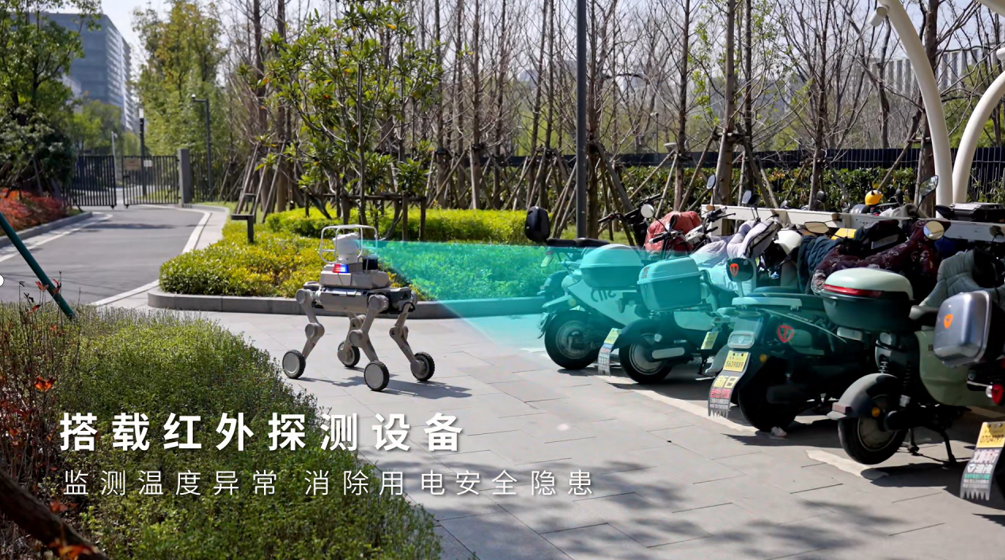
Parking Area Thermal Monitoring
The infrared payload continuously scans parked vehicles and e-bike charging areas for abnormal heat signatures — a leading indicator of electrical fires. Alerts are generated before flames appear, enabling early intervention.
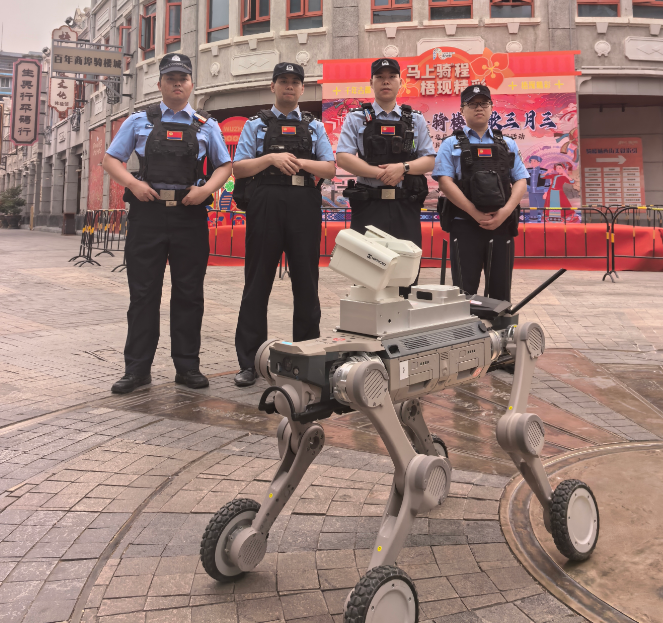
Entry Point Identity Verification
Deployed alongside security staff at campus gates, the robot’s face-capture camera and AI recognition platform verify staff, students, and visitors against a whitelist database. Access anomalies are flagged and logged automatically.
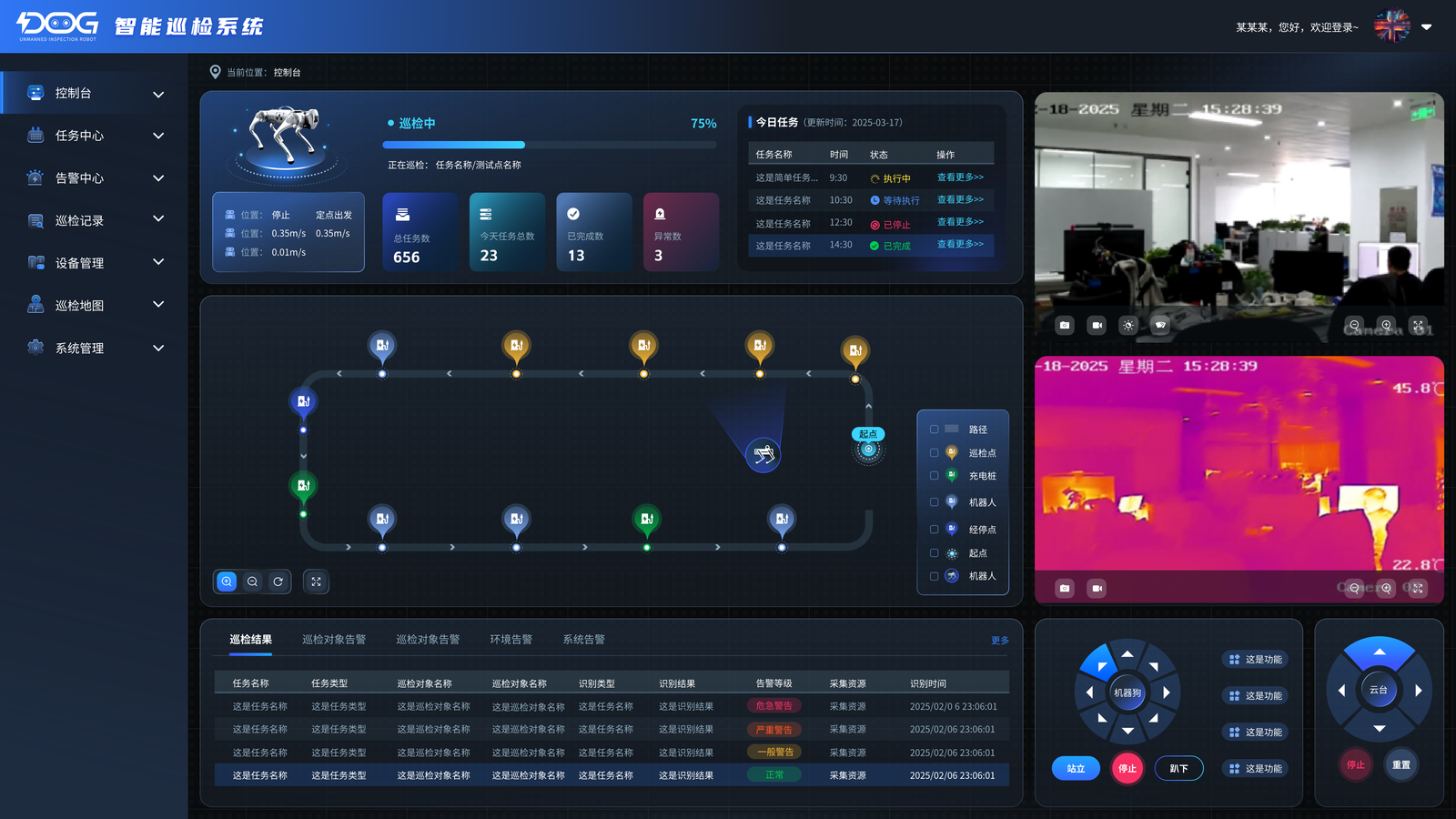
Command & Control Dashboard
The centralized management platform provides a unified view of all active robots, live video streams, thermal imaging feeds, task queues, and alert histories. Operators can dispatch missions, adjust routes, and review inspection logs from a single interface.
Three-Layer Security Architecture
AES-256 military-grade encryption protects all data in transit. Supports on-chip or external encryption hardware for the highest security classifications.
Real-time spectrum sensing and management automatically avoids interference. Full-band adaptive frequency hopping makes the communication link resistant to targeted jamming.
Unique network ID isolation prevents unauthorized device access. Supports remote silent mode and wake-up. Full Web/API management enables real-time monitoring and rapid security response.
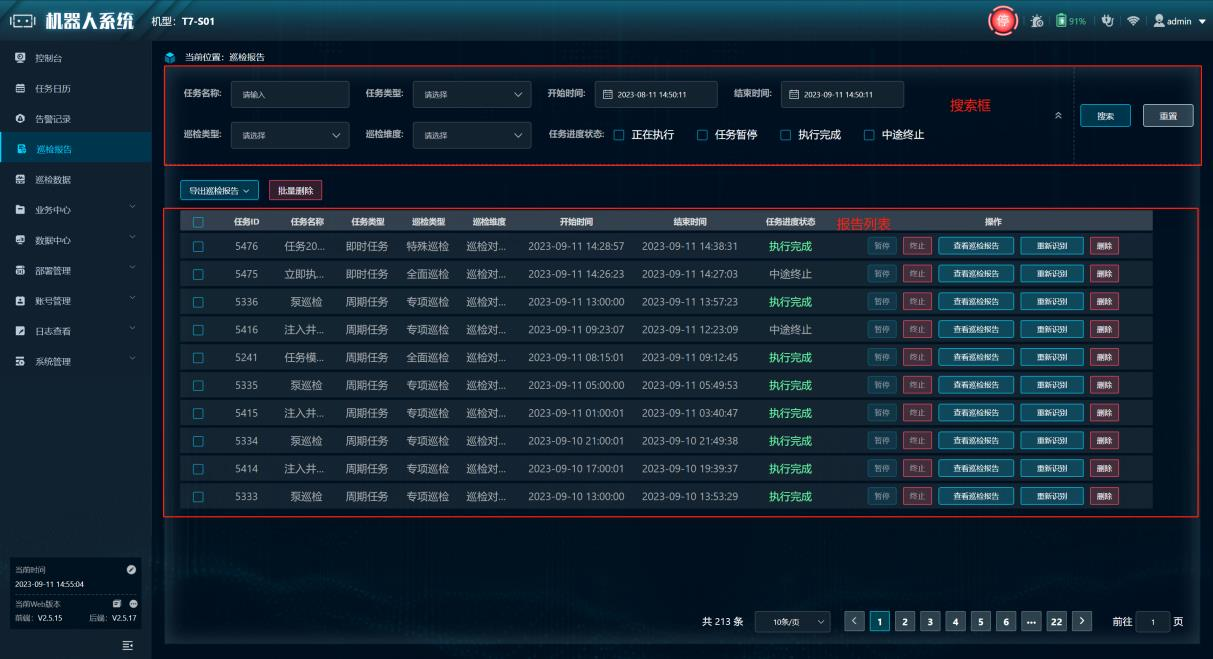
Inspection report management — searchable task history, status tracking, and one-click report export
Applicable Facility Types
The solution is designed for any fixed-boundary site where consistent, multi-modal patrol coverage is operationally critical.
Ready to Upgrade Your Site Security?
Our solutions team will assess your site layout, patrol requirements, and communication constraints to design a deployment plan tailored to your facility.
Related Products & Solutions
Common Questions About Campus Security Patrol Robot Solutions
Answers to the most common questions from procurement managers, system integrators, and engineering teams evaluating our robotic platforms.
University campuses, corporate office parks, technology parks, industrial estates, and school campuses all benefit from autonomous security patrol robots. They provide cost-effective 24/7 coverage for large outdoor areas that would require multiple human guards to patrol effectively.
Yes. The RZTL-1W and Tongchui M1 robots used for campus patrol carry IP54 and IP67 ratings respectively, enabling operation in rain, dust, and varying outdoor conditions. The Tongchui M1 is recommended for campuses with significant outdoor terrain challenges.
Campus patrol robots are equipped with two-way audio systems allowing remote operators to communicate through the robot. They can broadcast pre-recorded messages, respond to questions via operator relay, and are programmed to maintain safe distances from people while continuing their patrol mission.
A single campus patrol robot typically costs less than one full-time security guard’s annual salary when amortized over a 5-year deployment lifecycle, while providing 24/7 coverage equivalent to 3–4 human guards. ROI is typically achieved within 18–24 months.
Yes. Campus patrol robots integrate with existing CCTV systems, access control platforms, emergency notification systems, and security operations centers. They can be triggered by perimeter breach alerts to automatically redirect to the incident location.
Still have questions?
Our application engineers are available to answer technical questions, discuss deployment requirements, and provide custom quotations.
Talk to an EngineerRelated Resources
Average response time: within 24 hours on business days